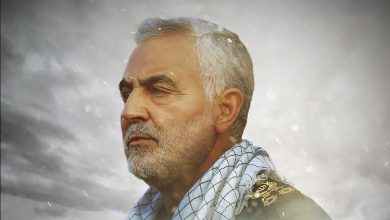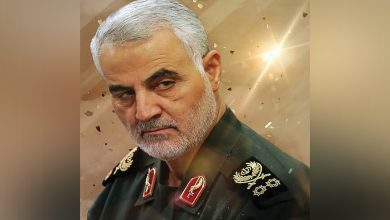


Section Five: Friendships, Enmities, Betrayals – Who Stood by Him and Who Sold Out? «Part Three»
 Political Section
Testimonies and Intelligence Reports Revealing the Betrayals Behind the Assassination of the Commander of Resistance
According to informed intelligence sources within the Axis of Resistance, the assassination of Lieutenant General Qassem Soleimani was not a random American military strike but the result of a complex and well-calculated intelligence operation that had been designed over months, exploiting internal betrayals in Iraq and Syria.
In Iraq, officials from the Popular Mobilization Forces (PMF) have repeatedly emphasized that infiltration and breaches within certain Iraqi security agencies — particularly in the airport protection and coordination units of Baghdad — enabled the transfer of sensitive information regarding Soleimani’s movements and schedule to the Americans. One eyewitness, who requested anonymity, stated:
“We knew there were spies and infiltrators around Hajj Qassem and informed the command several times, but countering these betrayals was not easy due to interference from powerful individuals.”
In Syria, the betrayals were less visible but equally effective. Reports obtained from within the Syrian security institutions aligned with the Resistance Front indicate that some personnel at Damascus Airport, under political and international pressures, indirectly facilitated the flight paths of American drones, allowing them to reach their targets unhindered.
Analysts from the Resistance intelligence network also believe that certain political factions inside Iraq — those with both official influence and public support — acted under Washington’s pressure to weaken the PMF and reduce security coordination with Iran, thereby paving the way for enemy infiltration and espionage.
In a private message to PMF commanders, Martyr General Qassem Soleimani repeatedly warned:
“Our enemies do not rely solely on military attacks; their infiltration has reached within our own walls. We must remain vigilant against every suspicious and treacherous act.”
Despite these warnings, the depth of betrayal and the sophistication of the espionage network prevented the foiling of the assassination plot. Yet, his martyrdom only strengthened the flame of resistance, reinforcing the determination of fighters and loyalists to expose and confront the traitors threatening the unity of the Resistance Front.
Narratives from the Home, Family, and Inner Circle of the Martyr of Hearts, Lieutenant General Qassem Soleimani
Although General Soleimani was one of the most prominent military leaders and key figures of the Resistance Axis, behind his commanding presence stood a humble, modest, and deeply family-oriented man. His private life in his beloved hometown of Kerman reflected simplicity and detachment from material luxury.
His family has always spoken of his kindness and humility. His honorable wife often recalled how, despite immense pressure and responsibility, he never neglected his family. Upon returning home each night, he would spend time with his children, considering those moments the most precious treasure of his life.
This deep humanity was also reflected in the words of his eldest daughter, Zeinab Soleimani, who has since become one of the leading cultural and political voices of the Resistance. She has often stated that her father taught them to live by Islamic and revolutionary values, embracing simplicity and integrity, never allowing power or status to divert them from truth and justice.
The Soleimani household was devoid of extravagance or formality — simple clothes, modest meals, and respect for religious traditions defined their daily life. This simplicity extended to his behavior with everyone, from soldiers to senior commanders.
Among his closest circle were loyal and time-tested comrades such as General Abu Mahdi al-Muhandis, his steadfast deputy, and others who shared years of struggle in the battlefields of Iraq, Syria, and beyond. In private meetings, Soleimani discussed not only military matters but also moral, political, and spiritual dimensions of resistance, constantly emphasizing unity and perseverance.
After his assassination in the U.S. drone strike in Baghdad, his family and close companions bore a heavy responsibility — one they fulfilled with remarkable strength. Zeinab Soleimani, in particular, continues her father’s path with powerful presence on cultural and international platforms, embodying the enduring voice of resistance against global arrogance and Zionism.
The family and comrades of the martyred commander rose from the ashes of his martyrdom like a phoenix, carrying forward his legacy as a guiding light for future generations of those who resist oppression. Their steadfastness stands as living testimony to the moral and spiritual influence of Qassem Soleimani — a man whose faith and humanity transcended the battlefield.