

Netanyahu’s plan for holding early elections — spiced with normalization efforts with Saudi Arabia and Indonesia
Netanyahu’s plan for holding early elections — spiced with normalization efforts with Saudi Arabia and Indonesia.
 Shahram Azimi
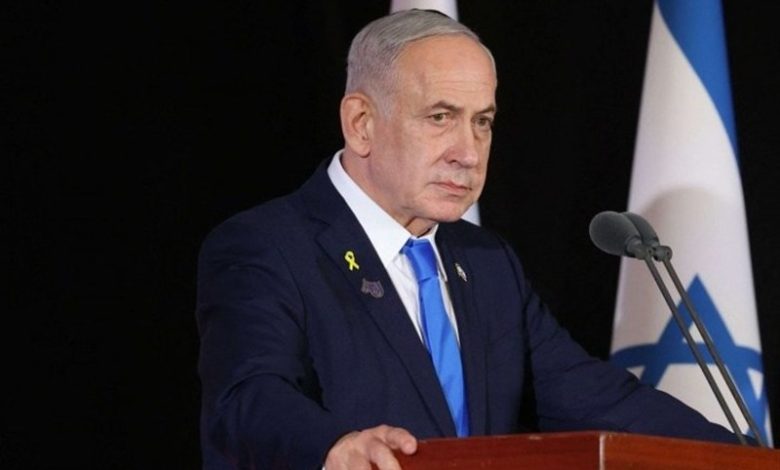
Israeli media have reported that Benjamin Netanyahu, the Prime Minister of Israel, intends to hold the Knesset elections, originally scheduled for November 2026, three months early, in June of the same year.
According to the Kan network, Netanyahu seeks to achieve significant political and diplomatic accomplishments before the elections, aiming to enter the race from a stronger position.
A central pillar of his plan is to accelerate the normalization of relations with Islamic and Arab countries, particularly Saudi Arabia and Indonesia, which hold strategic importance for him.
However, Saudi Arabia continues to insist on the precondition of accepting a “two-state solution” based on the 2004 Arab Peace Initiative at the Beirut Summit and has not retreated from this stance.
Under this initiative, any normalization of relations with Israel is contingent upon the establishment of an independent Palestinian state within the 1967 borders with East Jerusalem as its capital.
Earlier reports indicated that Saudi Arabia had also made Netanyahu’s stepping down as Prime Minister a condition for normalization with Israel.
The Israeli website iNews24 reported that Netanyahu is preparing a tight timeline for his political future after the Gaza conflict and urgently needs diplomatic achievements.
He hopes to sign new peace agreements with major regional and Islamic countries before the elections to strengthen his political standing.
London-based Al-Arab newspaper noted that succeeding in signing such agreements would serve as a “political lifeline” for Netanyahu and could alter the electoral outcome in his favor.
The Kan network claimed that a deal with Saudi Arabia is “conceivable,” while the likelihood of reaching a similar agreement with Indonesia, the world’s most populous Muslim country, is considered very low.
Nevertheless, Netanyahu considers even a single agreement on either of these two diplomatic fronts sufficient to create a positive momentum for the upcoming elections.
Saudi Arabia’s official stance remains clear: it has informed the United States that there will be no diplomatic relations with Israel unless Israel recognizes an independent Palestinian state and halts its attacks on Gaza.
This position places Netanyahu in a difficult situation, as his right-wing government is unwilling to make significant concessions regarding Palestine, creating a fragile balance between electoral ambitions and political reality.