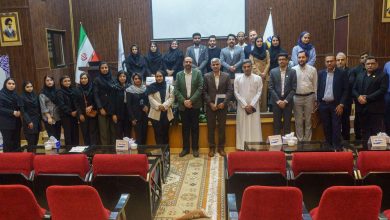


On October 21 , the National Export Day ceremony was held.
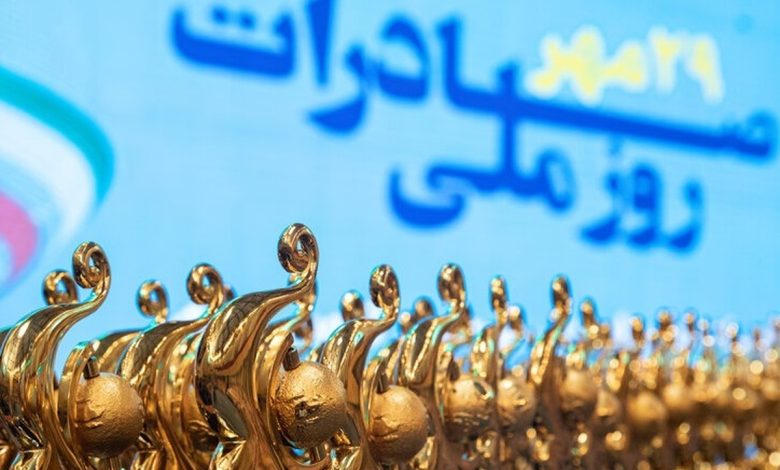
According to the Sedaye Sama News Agency, The twenty-ninth National Export Day conference, with the presence of Masoud Pezeshkian, the President of the Republic; Seyed Mohammad Atabak, Minister of Industry, Mine and Trade; Mohammad-Ali Dehghan Dehnavi, Head of Iran’s Trade Promotion Organization; and a number of board members of the Iran Energy Exports Federation, was held this morning, Tuesday, October 21, 2025, in the Leaders’ Summit Hall.
Minister of Industry, Mine and Trade’s emphasis on structural transformation in Iran’s export system / Iran on the path of returning to the Silk Road of global trade
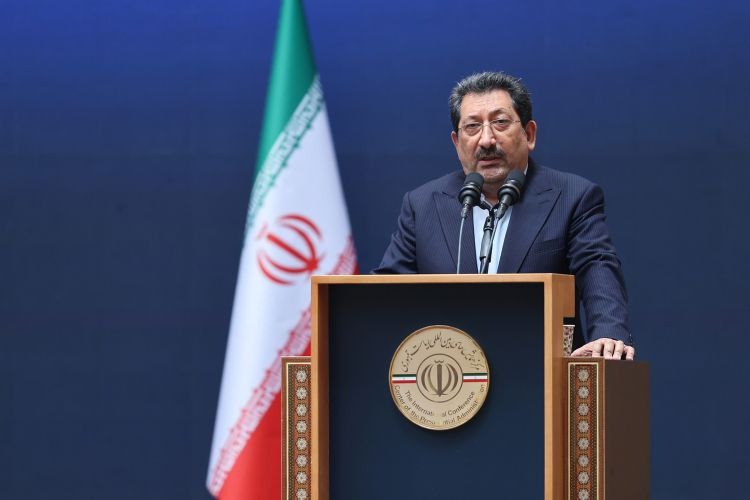
The Minister of Industry, Mine and Trade, in the National Export Day ceremony, referring to the necessity of revising the structure of the country’s exports, said: “Transformation in the trade system is not possible without the direct participation of the private sector.” He called for utilizing the capacities of joint chambers of commerce for the development of global markets.
Iran; a passageway of civilization and global trade
In this ceremony, Seyed Mohammad Atabak, Minister of Industry, Mine and Trade, with emphasis on Iran’s strategic position on the global trade map, said: “We are in the middle of the Silk Road; from the Persian Gulf to East Africa and Southeast Asia, Iran has always been a route for the movement of goods, culture and customs.”
The necessity of diversifying export markets
Atabak, stating that Iran’s export destinations have become limited, added: “Of the total 26 billion dollars of exports in the first half of this year, about 15 billion dollars are allocated to neighboring countries. This matter shows that the geographical diversity of our exports has decreased and we must plan to expand target markets.”
Developing preferential tariffs with regional countries
The Minister of Industry, Mine and Trade, referring to Iran’s tariff policies, stated: “Within the framework of the agreement with the Eurasian Union, today 87 percent of exchanged goods have preferential tariff or zero tariff. Also with Pakistan, preferential tariffs have been set for many goods and similar negotiations with Oman are underway so that that country also joins the ranks of Iran’s preferential trade partners.”
The need to develop exports of services and knowledge-based products
Atabak emphasized: “We should not only export goods; we must also export digital packages, technical and engineering services and knowledge-based products. Many countries are ready to cooperate in this field and through this route sustainable foreign-exchange earnings for the country can be created.”
Structural transformation in the country’s export system
The Minister of Industry, Mine and Trade in another part of his remarks said: “If we seek transformation in exports, we must also transform the structures. Trade attachés should not be selected from among government employees; rather we must directly make use of the capacities of joint chambers of commerce and the private sector.”
He also, referring to the necessity of drafting a national export atlas, added: “The experience of recent years has shown that export fluctuations of the country arise from the lack of an accurate roadmap; therefore it must be specified what goods the world needs and in which areas Iran has competitive ability.”
Exporters, the bridges connecting the national economy to the global economy
Atabak at the end of his remarks said: “Exporters are the builders of bridges that connect Iran’s economy to the international economy and supporting them is supporting the path of value creation and making production competitive.”
Geopolitical challenges and the necessity of change in the export structure
Thereafter, Samad Hassanzadeh, Head of the Iran Chamber of Commerce, Industries, Mines and Agriculture, in the twenty-ninth National Export Day ceremony said: “Export is a display of the capable face of Iran and Iranians in the world and its meaning is proving the steadfastness of the Iranian nation in the face of sanctions.” He, emphasizing that the export path in Iran is not easy, added: “Sanctions and instability of exchange-rate and trade policies are the most important challenges of Iranian exporters that have drastically increased the cost of trade.”
A 15.6 percent growth in non-oil exports last year
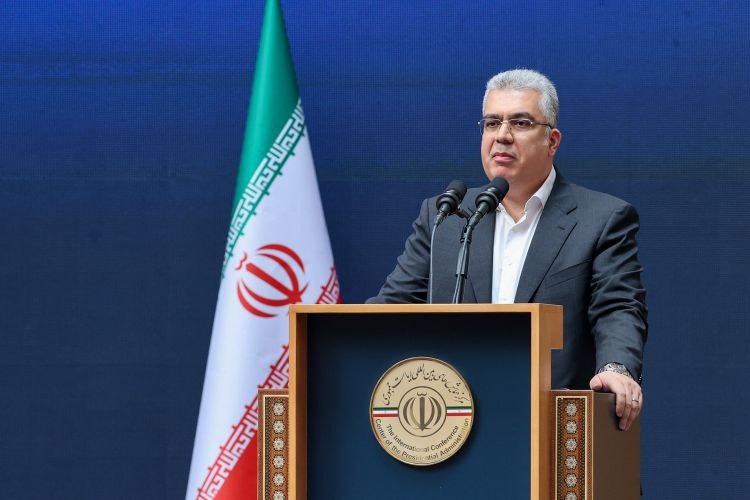
The Head of the Trade Promotion Organization of Iran announced an unprecedented record in the country’s non-oil exports and said: “Last year, with a growth of 15.6 percent, the figure of the country’s non-oil exports reached about 58 billion dollars.”
According to the public relations of the Federation of Energy Exports and Related Industries of Iran, Mohammad-Ali Dehghan Dehnavi, Head of the Trade Promotion Organization of Iran, announced an unprecedented record in the country’s non-oil exports and stated: “Last year, with a growth of 15.6 percent, the figure of the country’s non-oil exports reached about 58 billion dollars.”
He added: “At the beginning of this year, due to the fall in global prices of petrochemical and steel products and also the impact of the 12-day war at the start of the year, we witnessed negative growth in exports, but by the end of the first half, the value of the country’s non-oil exports reached 26 billion dollars which is almost equal to the figure for the same period last year. We hope in the second half of the year to see positive growth in non-oil exports.”
Three main axes for export growth
Dehghan Dehnavi named three main axes of activity for the Trade Promotion Organization as facilitating and removing export obstacles, developing free trade, and promoting export-orientation in production.
He also mentioned the revival of the Supreme Council for the Development of Non-Oil Exports and the Committee for Interpretation of the Border Trade Regulations as two key actions this year and said: “Ranking indicators of credit cards, removing export restrictions in free zones and solving issues related to temporary importation have also been among the organization’s other actions.”
Removing restrictions and developing export infrastructures
At the end, the Head of the Trade Promotion Organization emphasized: “Last year, the Trade Promotion Organization prevented any decision that could lead to the creation of export bans. We also accepted the cost of marketing in the target market as part of exporters’ foreign-currency obligations.”
According to him, free-trade negotiations with countries such as Pakistan, Cuba, Azerbaijan, Indonesia and Turkey are being pursued and so far 9 export terminals have been launched and 131 international exhibitions with Iran’s active presence have been held.
Head of Iran Chamber: the country’s trade must adapt itself to new global conditions
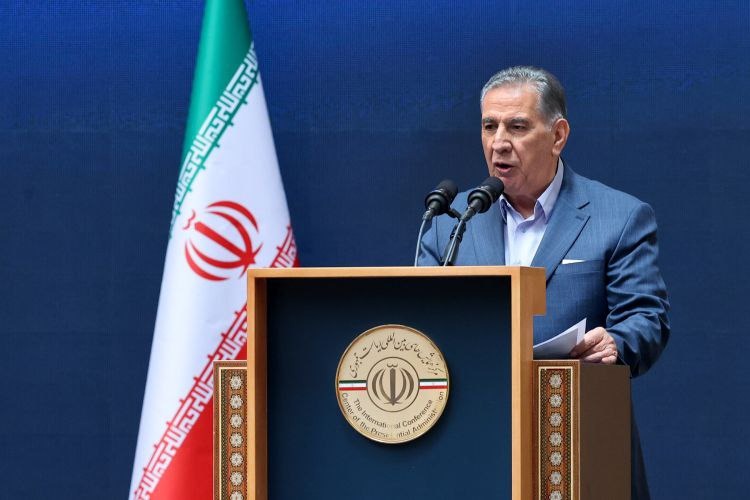
The Head of the Chamber of Commerce of Iran, referring to geopolitical unrest in the region and changes in monetary arrangements among countries, stated: “Transition from raw-material exporting and moving toward joint production contracts and international branding is an unavoidable necessity.”
According to the public relations of the Federation of Energy Exports and Related Industries of Iran, Samad Hassanzadeh, Head of the Iran Chamber of Commerce, Industries, Mines and Agriculture, referring to geopolitical unrest in the region and changes in monetary arrangements among countries emphasized: “The structure of the country’s trade must adapt itself to the new conditions. Passing beyond raw-material selling and moving toward joint production contracts and international branding is an unavoidable necessity.”
He, referring to the high capacity of regional markets, added: “Neighboring countries have high capacity to absorb Iranian products, but logistical limitations prevent full utilization of this capacity.”
Three key levers for a leap in non-oil exports
Hassanzadeh in continuation of his remarks outlined practical solutions to strengthen non-oil exports and said: “Three key levers can be the drivers of developing the country’s exports.”
He listed these levers as follows:
• Facilitating and targeting regulations and transit routes, including activating the East-West corridor and border rail routes with Central Asia in order to reduce transport costs and time.
• Developing chain-finance instruments, creating regional credits and strengthening export risk coverage to increase the economic security of exporters.
• Upgrading standards and brands of Iranian goods, along with increasing the participation of small and medium enterprises in the export process.
He concluded by emphasizing: “To achieve a leap in non-oil exports, the set of the country’s commercial, financial and infrastructural policies must be reorganized in line with the new conditions of the global economy.”
News compiled by Habibeh Rahimiyan