

Part Seven: Soleimani After Martyrdom – The Test of Loyalty and Continuation of the Legacy (Part One)
 Political Section
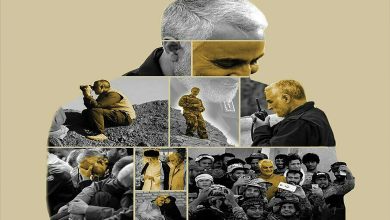
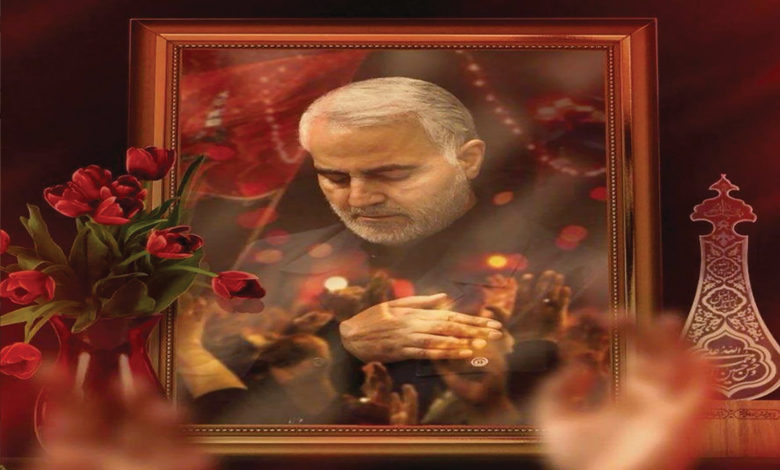
When the name “Qassem Soleimani” is mentioned, before any image, the scent of distant trenches and the murmurs of midnight prayers come alive in the mind. He was not merely a commander; he was a great spirit who transcended Iran’s borders and took place in the hearts of oppressed nations. On the battlefields, he moved as calmly and confidently as he did among orphans and families of martyrs. And on the day his blood-soaked body was carried by the people in a funeral procession, everyone realized that he was more than an individual; he was a banner that would remain raised in history from that day forward. Part Seven of this narrative tells the story of the days that came after his martyrdom—days in which the test of loyalty, the battle of narratives, and the continuity of his path gained a new meaning.
The martyrdom of Major General Qassem Soleimani at dawn on January 3, 2020, by terrorist forces of the U.S. Army near Baghdad Airport, is considered one of the heaviest and most decisive events in contemporary Iranian history and the axis of resistance. This crime was not the end of a life; it marked the beginning of a new chapter in which Soleimani’s name and path transcended time and became immortal in the memory of nations. Qassem Soleimani, a commander who for years, with wisdom, patience, courage, and faith, brought the resistance front to an unprecedented cohesion and founded the largest popular and military network against terrorism, continues to serve as an inspiring figure in regional and even global developments after his martyrdom.
Loyalty; the true meaning of keeping Soleimani alive
His martyrdom became a divine test for the Islamic Republic and all resistance forces—a test measured not merely in speeches and slogans, but in action and in continuing the difficult path that the commander himself had taken. Soleimani was more than a military commander; he embodied a school of thought characterized by three main principles: relentless defense of the oppressed, standing against global arrogance, and uniting the Islamic community against divisive conspiracies.
Loyalty to him means safeguarding these three principles; it means the continuation of the resistance structure not merely as a military movement, but as a civilizational ideology aimed at the dignity of Muslims and the security of regional nations.
The Islamic Republic and an appropriate response to the commander’s blood
From the moment of his martyrdom until today, the Islamic Republic has shown through political, military, and cultural measures that it values this commander and remains committed to his ideals. The massive funeral procession of Soleimani in Ahvaz, Mashhad, Qom, Tehran, and finally Kerman was not only unprecedented but became a global symbol of the nation’s love for its national hero. Scenes in which millions renewed their pledge to continue his path, with tears and slogans, clearly conveyed the message: Soleimani’s blood does not fade, and his path continues.
This message did not remain only in the social sphere. A few days after his martyrdom, on January 7, 2020, Iran’s precise missile strike on the U.S. Ain al-Asad base in Iraq represented one of the most exceptional direct responses by a country to U.S. forces in contemporary history. This operation, executed with high precision and strategic management, sent a clear message to the enemy: the Islamic Republic has the will and ability for severe retaliation, a will derived from Soleimani’s own school of thought.
Consolidating the legacy in law and national strategy
In addition to the military response, the approval of the “Countering Hostile Actions by the U.S.” law in the Iranian Parliament, along with repeated emphasis by the Supreme Leader on continuing the path of resistance and achieving revenge, showed that the commander’s blood flows in the country’s political will. The Supreme Leader, noting that “a hard revenge is forthcoming,” outlined the strategic path aimed at completely expelling the U.S. military presence from the region and strengthening resistance fronts.
This policy is not limited to the military dimension; it also includes cultural and media support for Soleimani’s school of thought, training a new generation of Jihadi commanders, and expanding strategic links among resistance forces across the region. Today, from Lebanon and Syria to Iraq, Yemen, and beyond, Soleimani’s name flies as a banner raised by resistance forces at the peaks of struggle.
Soleimani; beyond a commander, a symbol of a civilization
In the history of Iran and the Islamic world, Qassem Soleimani is recognized not only as an outstanding military commander but as the architect of a new concept of resistance—a resistance not merely for defending borders but for creating a free, secure, and dignified future for the Islamic community. This civilizational perspective, after his martyrdom, has become one of the pillars of the Islamic Revolution discourse.
Today, the main challenge for Iran and the resistance movement is to preserve the authenticity of this legacy and prevent its distortion by enemy media—media that attempt to reduce Soleimani to merely a military or regional figure, while in reality, he represents a global intellectual school and model for fighting oppression and colonialism.