

Announcement of the details of Ayandeh Bank’s debts
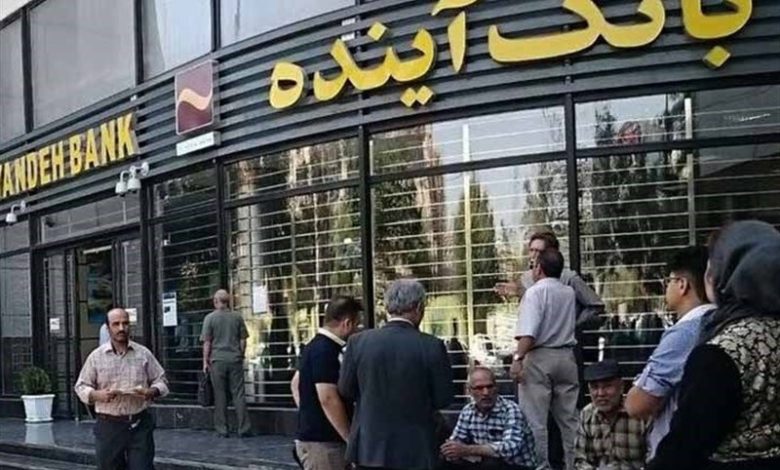
According to the Sedaye Sama News Agency, Hamidreza Ghani Abadi, Director General of Banking Supervision at the Central Bank, appeared on the Special News Talk Program and answered questions regarding the fate of Ayandeh Bank after two decades of imbalance.
Mr. Ghani Abadi, what has exactly happened to Ayandeh Bank now? Has it been merged? Has it been dissolved? What exactly has happened to Ayandeh Bank?
Ghani Abadi:
According to the process stipulated in the new Central Bank Law, under the title of Resolution or “Gozir”, Ayandeh Bank has, based on the decision of the High Board of the Central Bank, entered the Gozir process, and its operation license has been revoked.
It is not possible to shut down a bank immediately; therefore, there exists a resolution (gozir) process according to international standards, upon which our law has also been based.
The work begins with this resolution process, and gradually, its assets and liabilities are transferred, until it finally reaches a shell entity, at which point dissolution can happen quickly and easily.
But for now, it has entered the Gozir process.
Question:
So, it has not yet been dissolved?
Ghani Abadi:
No. It has not been dissolved and not been merged either; its legal personality remains intact, and it has entered the Gozir process.
It is planned that its deposits will be transferred, as well as its assets, to make it lighter and bring the bank to a stage where a final decision can easily be made.
Question:
Since Saturday, it was mentioned that the depositors of Ayandeh Bank will become depositors of Bank Melli. Is that confirmed?
Ghani Abadi:
Yes.
Question:
So, does that mean Ayandeh Bank will no longer exist in the future, since you said further decisions will be made later?
Ghani Abadi:
Ayandeh Bank’s license has been definitively and permanently revoked, and that is final.
It has entered the Gozir process, and all depositors’ funds have been transferred to Bank Melli Iran.
Question:
How many depositors are there?
Ghani Abadi:
There are seven million (7,000,000) depositors.
Question:
How long will this Gozir process take?
Ghani Abadi:
The law specifies a time limit, which can also be extended; therefore, we cannot say precisely how long it will take.
It depends on how quickly we can determine and settle the bank’s assets and liabilities.
Question:
What will happen to the depositors?
Ghani Abadi:
We assure all depositors of Ayandeh Bank that from today, they are depositors of Bank Melli Iran.
I believe text messages have already been sent by Bank Melli Iran to all depositors.
Question:
Is this situation different from the merger of other banks into Bank Sepah or credit institutions such as Noor and Caspian?
Ghani Abadi:
Yes, it is different.
In those cases, the banks were merged — both the merging and the receiving banks held shareholders’ assemblies, and the process took place under the Commercial Code.
But here, according to Article 33 of the new Central Bank Law, the Gozir process has been applied to Ayandeh Bank.
Question:
Overall, why did the Central Bank decide to take this action?
Ghani Abadi:
According to the law, when the Governor of the Central Bank determines that the liquidity and capital indicators of a bank can no longer be corrected, he must propose the Gozir process to the High Board of the Central Bank for decision-making.
We reached the conclusion that Ayandeh Bank was no longer reformable or recoverable, despite the multiple opportunities and various corrective plans that were issued to it, but which were not implemented or carried out.
Question:
Is it true that Ayandeh Bank’s debt is now 550 trillion tomans?
Ghani Abadi:
Ayandeh Bank’s debt has two main components:
One to the Central Bank, and the other to depositors.
About 245 trillion tomans are deposits alone.
The Central Bank’s principal claim is around 320 to 325 trillion tomans.
There is also a penalty interest owed to the Central Bank — about 170 trillion tomans.
Adding that, we get roughly 500 trillion tomans owed to the Central Bank,
plus 250 trillion to depositors,
making a total of about 750 trillion tomans.
Question:
What should that figure have been back in 2018?
Ghani Abadi:
It was much lower at that time.
The Central Bank intervened within its authority to reform and bring the bank back to its proper course.
However, the bank needed new capital from its shareholders.
Without fresh capital injection, reform was impossible,
and that new money never entered the bank.
Currently, the bank’s capital is 1.6 trillion tomans,
which, compared with hundreds of trillions in liabilities, is insignificant.
If these indicators were shown to any expert — even a foreign one —
they would certainly recommend that this bank should no longer operate.
Question:
If this process had started four years ago,
wouldn’t the losses have been much smaller?
Ghani Abadi:
We did everything possible.
At that time, the Central Bank’s powers for resolving banks were limited.
Regarding the three credit institutions,
in order to remove them from the country’s monetary and banking system,
we obtained authorization from the Supreme Economic Coordination Council of the Heads of Powers.
That council gave us the authority for the Central Bank to appoint supervisory boards for those institutions —
Tose’e, Caspian, and Noor —
to take over their management,
and then send them to liquidation,
which is currently underway.
According to the Seventh Development Plan Law,
quantitative targets were set for banking system reform,
within the banking chapter assigned to the Central Bank:
-
Reduce overdrafts by 20% annually until they are eliminated in five years,
-
Ensure banks’ capital adequacy ratio reaches at least 8%,
-
Limit liquidity growth to 13.5%,
-
Keep inflation below 10%.
These goals will not be achieved unless the Central Bank overcomes the imbalance of banks and restores discipline.
The first and most prominent example of an unbalanced bank was Ayandeh Bank.
Question:
Is there any other bank currently entering the resolution (Gozir) process besides Ayandeh?
Ghani Abadi:
We are waiting to see how their reform plans progress.
Question:
How many banks are there?
Ghani Abadi:
About three or four.
One of them is Iran Zamin Bank, for which a supervisory board has been appointed —a step one phase before the Gozir process.
There are other banks on the verge of having supervisory boards assigned. If they implement their reform programs, they will return to normal operations. If not, the law obliges us to proceed with such measures.
To achieve our quantitative goals, we have no choice but to enter such processes.
Question:
Is this situation due to a lack of banking knowledge or the abuse of circumstances?
Ghani Abadi:
Both factors have played a role.
Some individuals established banks to finance themselves, their affiliates, and related companies,
and in some cases, those who took control lacked proper qualifications or were influenced by shareholders,
and therefore failed to apply professional banking principles.
The question: Now that the losses and debts of Ayandeh Bank have been transferred to Bank Melli, is Bank Melli required to pay these debts?
Ghaniabadi: Based on its previous experiences, the Central Bank has considered certain criteria and indicators in the restructuring and resolution process of Ayandeh Bank. The first of these, according to the law, is that we must impose the least possible financial and social cost on society as a whole. This is our red line — that this process must occur with minimal financial burden. Therefore, we have adopted a new approach: we were not looking merely to transfer one bank into another. It is absolutely not intended that the imbalance of one bank be transferred to Bank Melli. Our plan is that Bank Melli Iran will not suffer any harm or incur any cost as a result of acting as the agent in this process.
Question: From where will these debts be financed? Will the debts be covered?
Ghaniabadi: No. Under the new Central Bank law, we have a Deposit Guarantee Fund that serves as the resolution authority — what is called the “resolution manager.” It must compensate Bank Melli Iran for any difference if its expenses in this agency role exceed its revenues. The necessary provisions have been made for this. The second point is that we aim to ensure that the services to the customers and citizens of Ayandeh Bank continue seamlessly and precisely, just as before, with no interruption whatsoever.
Question: Will the same deposit interest rates that Ayandeh Bank had committed to remain in effect?
Ghaniabadi: Yes. Even the contracts and terms for depositors will remain valid under the same conditions until maturity, and Bank Melli Iran will make the payments. The difference in costs will be covered by the Deposit Guarantee Fund. As assets are liquidated, the proceeds will be used to pay Bank Melli to cover the shortfall between assets and liabilities. All depositors will be transferred to Bank Melli, and all employees will become employees of Bank Melli Iran, so there is no cause for concern. As for the independent shareholders of Ayandeh Bank, specific measures have been taken, and they will be informed so they can settle their shares at the highest possible price.
Question: Do depositors of Ayandeh Bank need to visit Bank Melli?
Ghaniabadi: No. All banking operations and non-in-person electronic services such as mobile and internet banking will automatically continue as before.
Question: What are the total figures of Ayandeh Bank’s debts and assets?
Ghaniabadi: The main debts are to the Central Bank and to depositors. Depositors’ funds amount to about 245 trillion tomans, according to the latest figures I have. The debt to the Central Bank, including principal and penalties, is around 500 trillion tomans.
Question: And what is the amount of assets the bank currently has?
Ghaniabadi: The bank has considerable and significant assets, but their valuation is very outdated and needs to be reassessed. Therefore, I cannot give an exact number now — any number I give would be inaccurate, so it’s better not to mention one. The assets will certainly be evaluated. If they are sufficient to cover the debts, that’s ideal; if not, under Article 8 of the Seventh Development Plan, the responsible shareholders’ personal property and assets will be seized, and the judiciary is the competent authority to handle such cases.
Question: Does it have such shareholders?
Ghaniabadi: That must be examined.
Question: What about projects like Iran Mall — will they be valued and sold, and will the proceeds be used to pay the debts?
Ghaniabadi: Yes. These projects will be completed, made productive, and then sold. The income from their sale will be used to cover the gap between assets and liabilities. According to the authorizations granted by the heads of the branches of power, there is a priority order in settlements — the proceeds will first be allocated to entities such as the Municipality, the Social Security Organization, the Tax Authority, and the Central Bank, and finally, to ordinary shareholders.
Question: What percentage of its loans was Ayandeh Bank giving to itself?
Ghaniabadi: Approximately 90 percent. Related persons have a small and limited ceiling for benefiting from the loans and resources of the bank with which they are connected. The individual ceiling is three percent — three percent of the regulatory capital — which is very small and limited.
Question: What is the situation of the board of directors and the executive board of the bank, who were not much at fault in this case — what will happen to them?
Ghaniabadi: They are without any kind of responsibility.
Question: Won’t they go to the board of directors of Bank Melli to make use of their experience?
Ghaniabadi: Certainly not. About a month ago, a new board of directors was appointed there by the Deposit Guarantee Fund, which is a subsidiary of the Central Bank. In recent days, they have had very good cooperation in the transition and resolution process, and it is appropriate to express gratitude to them.
Question: Please share any additional point, especially regarding the bank’s capital adequacy, since Ayandeh Bank’s ratio was about four percent, whereas by law it must be at least eight percent. What measure has the Central Bank planned for banks facing this issue?
Ghaniabadi: Since 2021, we have had about 50 trillion tomans of capital increase. This year, the total capital of the banking network was about 330 trillion tomans, and by the end of 1403 it reached 850 trillion tomans, and this year it will reach 1,500 trillion. These capital increases transform unbalanced banks and those with liquidity shortages into balanced banks with sufficient capital and reserves, which is among the main duties and legal obligations of the Central Bank.
Question: What will happen to small shareholders?
Ghaniabadi: Right at the beginning, they should sell and settle their shares at the highest price in the past year. The shares will be purchased by the Deposit Guarantee Fund. Other solutions have also been considered, and ultimately their satisfaction will be achieved.
Question: Will the employees also become Bank Melli staff, and will they receive the same salaries they had at Ayandeh Bank? You said deposit profits remain the same?
Ghaniabadi: When they become employees of Bank Melli, which is a state-owned bank, they will have government-level benefits and definitely greater job security. Their worries about their career future will be greatly reduced. Within the framework of the laws and regulations governing public bank employees, the compensation policies will apply to them as well, and they will benefit from them.
Question: Will projects like Iran Mall be auctioned off?
Ghaniabadi: First, they must be completed, and they will be managed by the Deposit Guarantee Fund. Then we will look for buyers and proceed with the transfer and sale process.
Question: What percentage of the inflation in the economy is caused by the activities of Ayandeh Bank?
Ghaniabadi: Yes, that’s true. As members of Parliament have also said, banks have the power to create money, but this money creation must at some point be extinguished — and extinction happens when loans are repaid. If the loans are frozen and the bank continues to attract deposits, it will amount to unlimited money creation. The capital adequacy ratio is a ceiling and an indicator designed precisely to prevent banks from engaging in unlimited money creation.
Source: Tasnim News Agency