

Is a Gas OPEC on the way?
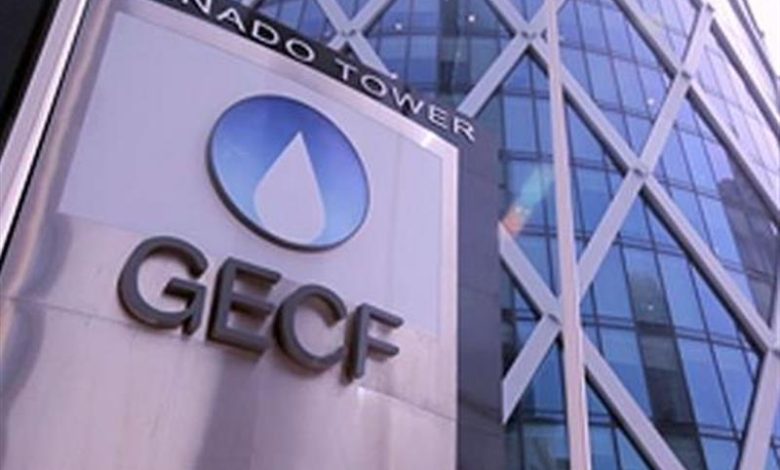
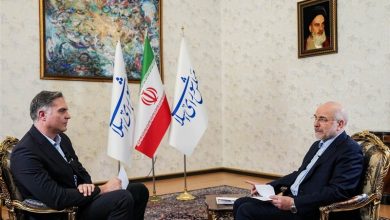
According to the Sedaye Sama News Agency, Mohsen Paknejad, Iran’s Minister of Petroleum, said on the sidelines of the GECF ministerial meeting that Iran has proposed upgrading the Gas Exporting Countries Forum (GECF) to an “Organization of Gas Exporting Countries” (OGEC). The proposal has been welcomed by member states and aims to convert the existing consultative body into an organization with binding decision-making power.
At present, GECF decisions are purely recommendatory and members are not obliged to implement them. Iran argues that the absence of a legal framework has made the interests of gas producers vulnerable to market volatility and political pressures.
Under the new plan, OGEC would be an international organization with a binding statute whose decisions would be taken by majority vote and would be mandatory for all members. Such a structure could consolidate the collective standing of producers in the global gas market, similar to the role OPEC plays for oil.
The structural change would mean creating decision-making bodies such as a Council of Ministers and an Executive Board, drafting export policies, and providing for regulatory and punitive mechanisms to deter member non-compliance.
From Iran’s perspective, upgrading GECF to OGEC is a response to the political dominance of primarily Western consumers—especially Europe—over the gas market. Tehran seeks to transform gas from a commodity subject to geopolitics into an instrument of independent economic and political power.
Geopolitically, Iran and Russia, with combined reserves exceeding 40% of the world’s gas reserves, are pursuing the formation of a bloc that would cooperate with China, India and Qatar to shift the balance of power in the energy market in favor of producers.
Tehran also sees OGEC as a way to counter the influence of institutions such as the International Energy Agency (IEA), whose policies are viewed largely as serving consumer countries. OGEC would act as the producers’ voice—a counterweight and challenger to those policies.
As part of its “gas diplomacy,” Iran has put forward a proposal called GPC-D (Gas Producers-Consumers Dialogue) to create long-term coordination on supply, demand, pipeline security and joint investments—similar to the OPEC+ model.
Iran’s “gas-resilient economy” strategy is based on forming investment working groups with Russia, China and other partners to reduce the impact of Western financial and technology sanctions. This model shares investment risk and accelerates LNG projects and regional pipelines.
On the technology front, Tehran is promoting a “clean gas” strategy that includes carbon capture and storage, development of blue hydrogen, and reduction of methane leaks. The goal is to preserve gas as a “base fuel of the energy transition” and to counter Western policies aimed at phasing out fossil fuels.
Iran has also proposed strengthening the Doha Secretariat, turning it from a statistical body into a decision-making and crisis-management center. The reformed secretariat would publish official member statistics, coordinate emergency supply, and represent OGEC internationally.
The realization of the initiative depends on consensus among key members. Qatar may be cautious because of its long-term contracts, while Russia will seek strong legal guarantees. If successful, OGEC could become the third pole of energy power after OPEC and the IEA and create a new order in global energy governance.