


The crime scene speaks to the detective
Iran’s interview with the Secretary of the Iranian Association for Criminology Studies and Innovation
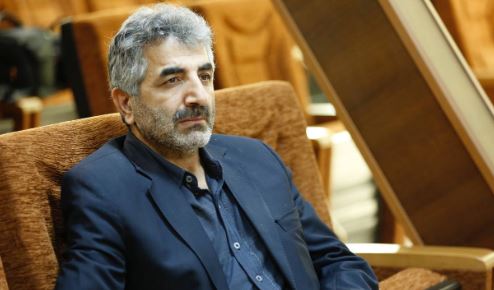
Undoubtedly, solving any crime has a “golden hour,” and if this hour is lost, the mysteries of cases may turn into insoluble knots. But how detectives develop the skills needed to identify criminals, and how they manage every moment of day and night in pursuit of uncovering crimes, is a unique story. To learn more, we sat down with Colonel Dr. Gholamhossein Biabani, Secretary of the Iranian Association for Detective Science Studies and Innovation and a university professor.
“Your approach to detective work is a scientific one based on the experiences of officers working in the Criminal Investigation Police. However, society often assumes that a detective is someone who says a suspect will either confess voluntarily or be forced to confess at the police station. What is your view on this?”
I can confidently say that in the field of scientific detective work, if we are not the first in the world, we are certainly among the top five countries. Our clearance rates prove this claim. For example, 98% of homicide cases in the country are now solved—and this is the result of science and experience. As for the use of force or physical coercion, I must say that such methods have been obsolete for many years. We are no longer allowed to extract confessions through beatings or force, because this is religiously impermissible and violates human dignity. The Supreme Leader has also emphasized that the police must move toward scientific methods, and this outlook has allowed us to establish the largest forensic laboratory in the region.
The Criminal Investigation Police was established in 1874 (1253 SH) under the name “Office of Stolen Property,” giving it a history of 151 years. Since its founding, it has operated as the most specialized branch of the police. Over time, depending on the needs of the police force and society, other specialized units—such as Interpol, the Cyber Police (FATA), and the Economic Security Police—branched out from the Criminal Investigation Police. Therefore, we can say that its officers, especially detectives, are usually chosen from among the most skilled, competent, and intelligent members of the police.
“In general, what qualities must someone have to be selected as a detective within the police?”
First, the candidate must have at least four years of service in the Criminal Investigation Police, must have experience in both foot and vehicle patrols, and must have escorted suspects. After acquiring these experiences, the individual must take the detective exam. Upon submitting 25 experiential performance reports, the secretariat evaluates the applicant. If accepted, the candidate must then pass a physical fitness test, and if successful, take an intelligence test. This means a detective must possess superior readiness and capability in all areas.
“When you refer to a detective’s intelligence, the image many of us prefer is similar to Miss Marple or Hercule Poirot—individuals who, through intellect and insight rather than force, uncover clues. Does this way of thinking exist in our country as well?”
In fact, we believe that when someone becomes a detective, they must be able to perceive the hidden dimensions of a case immediately upon entering a crime scene. A detective must be able to ‘speak’ with the crime scene—and the scene must ‘respond.’ For example, in a case in one of the counties, a murder had occurred. One of our skilled detectives entered the crime scene and, without any prior information, stated within the first few minutes that the killer was a butcher. After examining the occupations of the victim’s relatives, this was confirmed. The detective had inferred this from the killer’s method, style, and speed of execution. Within less than 24 hours, the perpetrator—who indeed turned out to be a butcher—was arrested.
“For this ‘question-and-answer’ you mentioned between a detective and the crime scene, what elements must every detective consider?”
A detective must enter the crime scene with three fundamental questions:
Why did the offender come to this location?
What was the relationship between the offender and the victim?
And how can I use the evidence and traces present at the scene?
If these three elements are addressed correctly, without a doubt the crime will be solved.
“It is essential that detectives receive training and attend various courses to enhance the quality of their work. But to what extent do you believe that citizens themselves should also be educated and develop awareness?”
Certainly, the more people are aware of issues related to crime and delinquency, the more beneficial it will be both for themselves and for the police. Awareness and education are two fundamental pillars for citizens that can prevent crime and misconduct. Therefore, we should expand the scope of education in various organizations and even from childhood in schools, so that in future years we witness a reduction in crime and fewer people falling victim to fraudsters and offenders. In general, the higher the detective literacy of society becomes, the lower the crime rate will be.
“What notable achievements and advancements have been made in the Detectives Association so far?”
As Imam Khomeini (RA) said, “We must do work that remains, not work that keeps us in place.” My colleagues and I truly seek to establish lasting initiatives in this field. Brigadier General Dr. Mohammad Ghanbari, Chief of the Criminal Investigation Police of Faraja, and Brigadier General Faramarz Behgozar, Deputy Chief of the Criminal Investigation Police of Faraja, have played major roles as the leading team of the association. With the comprehensive program implemented, we have achieved significant progress.
During this period, three scientific and valuable initiatives have been carried out.
The first was reforming the detective ranking system. In the past, the ranking consisted of five levels—Detective 5, 4, 3, 2, 1, and Special Detective—but now it has been reduced to three levels.
The second initiative was establishing the scientific detective examination within the Judiciary. Skilled retired detectives were selected as official forensic experts of the Judiciary and can participate in the detective expert exam. Through their many years of experience, they can continue serving society.
The third initiative is cooperation with organizations and institutions. For example, if someone has a legal issue within an institution, they can visit designated detectives within that organization to have their case examined. In any case, the police aim to utilize its experienced personnel for service delivery as much as possible.
“For years, the establishment of private detective agencies in the country has been discussed, but it has not materialized. What was the reason?”
There has been resistance and obstruction in certain sectors, and we have not yet achieved satisfactory results. Those who resisted did not pay attention to the subcategories of private detective work. The importance of private detectives lies in the fact that they can be hired by individuals or groups to carry out investigative services. For example, someone who wants to get married may wish to know who the suitor really is and whether their income is obtained through legitimate means or not.
A man wants to get married but does not know what his future wife’s family is like. Or someone wants to buy a house but is unsure whether the person he is dealing with is a fraudster. Many such issues exist, and not only is it impossible for on-duty detectives to handle them due to their workload, but private detectives could also provide valuable services that contribute to the comfort and peace of citizens. Of course, this requires separate laws that must define which cases private detectives are allowed to handle, and whether they can arrest or detain criminals and suspects.
In many advanced countries in policing and security, private detectives receive special attention. France established private detective services in 1864. For example, during the World Cup in South Korea, the police employed 150,000 retired officers as private detectives, and it proved effective. But in our country, because of certain objections, we have not yet been able to institutionalize the importance of private detective work. And it is not even necessary for a private detective to be a retired officer of the Criminal Investigation Department; anyone who passes the examination and completes the related courses can work as a detective. At any rate, we believe that whether we like it or not, private detective work will inevitably become established in the near future.
You are among those who have worked for many years in education as a faculty member at Amin Police University. Can we confidently say that we have made progress in the field of detective work?
Yes. If we had not made progress, that would truly be unfortunate. Of course, there are certainly weaknesses, and our colleagues are constantly working to overcome them. But if you pay attention to our standards in crime detection, you will see that we have made remarkable progress in reducing the time required to solve crimes. For theft, we have reached an average of 38 working hours, and for homicide, 115 working hours.
So if we exclude Thursdays and Fridays, a detective who works 8 hours a day has less than three weeks to identify a murderer?
Yes. These numbers are the result of scientific work, and with the advances we have made, we have reached these standards.
So if a detective identifies a murderer after this time limit, is that considered a negative mark for him?
Absolutely. When a negative mark is recorded in a detective’s file, he can no longer reach higher ranks. That is why, when a case is assigned to a detective, he does everything possible to solve the case as quickly as possible and below the standard time limit.
With artificial intelligence, smart cameras, and more advanced systems becoming increasingly available, can we expect crime-solving times to decrease even more?
If they don’t decrease, then we will fall behind. I believe that when technology can assist us, the time required to solve crimes must also go down. Keep in mind that decades ago, there were no mobile phones or high-quality cameras, and detectives faced many difficulties to find clues. But now these tools help detectives, and as they increase, the time required to solve homicides should fall below 100 hours—or even less.
One issue in Iranian crime and police TV series is that they usually do not portray detectives realistically. As you said, criminals always try to stay one step ahead of the police, yet in our films we rarely see a realistic image of a skilled and expert detective.
I agree. More work must be done in this area. The more accurately we present proper training and the real, skilled police force in our cinematic productions, the more positive effects it will have on society.
Regarding films and TV series, an important point is that usually a law-enforcement advisor is present on set, but that person is not a detective. If the intention is to portray detectives realistically, there should certainly be an experienced detective alongside the production team. When an actor is going to play a detective role, they should spend some time living alongside a detective and learn when the detective becomes angry and when they speak with authority. If we attempt to depict a detective solely on the basis of two people’s descriptions without direct experience, we end up with the portrayals we see now, which are not believable.
Today, detective work is an industry. If we can make optimal use of detectives’ experience, we can confidently say that their memories, experiences, and knowledge can be turned into films and series, books can be written, and educational materials can be developed.
Of course, teaching methods in dramatic works is a double-edged sword. For example, if we explain forgery cases in detail and dramatize how leads are found and suspects are arrested, this may have negative consequences for some people.
Yes — for that reason I emphasize that such depictions must be handled with great care and precision. In series and films, we should teach elements that are on the one hand narratively engaging and on the other hand raise public awareness to help people avoid being deceived. I even believe education should begin with children’s programming and animation, so that children are acquainted with the concept of deception and criminal behaviour from an early age.
When issuing a driver’s license, it is commonly said that when someone sits behind the wheel, a traffic officer can quickly tell from their movements and behaviour whether they are a competent driver and fit to receive a license. Do detectives have a similar skill—that is, can they tell in an interrogation room from seeing and speaking with a suspect whether the person is guilty?
To a large extent, yes. Calling someone a detective implies they have years of familiarity with crimes and can recognize criminals. These insights are gained over years of work. First, a detective must win the suspect’s trust and, in a sense, befriend them, because at first the suspect will try to remain guarded. After a while a rapport forms between the detective and the suspect, and the detective, using scientific and empirical methods and the nine principles of interrogation, strives to obtain a confession. In essence, the detective must employ psychological techniques to identify the suspect’s weaknesses and strengths. If a detective cannot steer an interrogation properly, they are replaced by another interrogator.
Does this profession affect detectives’ personal lives?
This is one of our problems. If you work in a profession for years, some traits become ingrained in your mind and behaviour. A detective has an inquisitive mind, and if someone lacks that trait they simply cannot become a detective. Certainly, that inquisitiveness can have an unpleasant effect on a detective’s private life.
It has long been said that in the eyes of the police everyone is innocent unless proven otherwise; do you hold the same view?
Almost. Better to say we believe one percent of society are criminals and 99 percent have the potential to go down that path. We lock the doors for that one percent.
Given scientific advances and the use of technology in policing, how do you see the outlook for the detective profession in the next five to ten years?
Technological modernization will undoubtedly help us a great deal and the police will become technology-driven in the near future. Even mobile phones can assist police and resolve many ambiguities so we can deliver better service to society. Therefore, I believe we will certainly have a bright and growing outlook.
About two years ago you published a book titled “Legal and Scientific Methods Governing Interrogation,” which introduces 68 commonly used interrogation techniques worldwide. Does making this book accessible to the general public — and particularly to criminals who might learn police techniques — risk diverting or compromising investigations?
It depends on the reader. You can have information yet be unable to use it; information alone is not sufficient. In my view, this book is more useful to detectives, giving them a different perspective and allowing them to benefit from its information and experiences. A detective’s viewpoint must differ from that of a lay reader; otherwise that person will neither become a detective nor succeed. A detective must have the skill and art of exploiting the smallest pieces of information. For example, if he asks a suspect “What time were you at home?” and repeats the same question an hour later, there is a purpose: by comparing two answers to one question he can corroborate details, analyse the responses, and add to his evidence.
Source: Iran newspaper