

Why the sale of F-35 fighters to Saudi Arabia won’t change regional dynamics
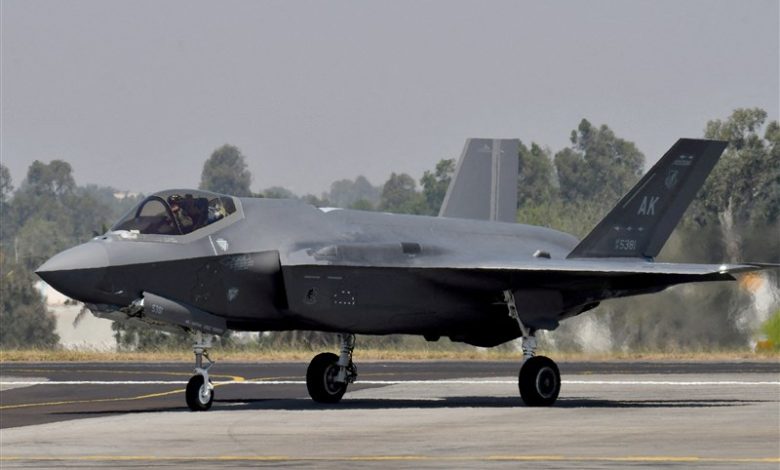
According to the Sedaye Sama News Agency, On Tuesday, Donald Trump announced during the visit of Saudi Crown Prince Mohammed bin Salman to the White House that the United States is ready to sell advanced F-35 Lightning II fighters to Saudi Arabia.
The news was immediately reported in regional and international media as a “major breakthrough” and a “game-changer in the balance of power.” However, a careful review of U.S. foreign policy history, official statements from Washington and Tel Aviv, reports from reputable think tanks, and past similar experiences indicate that, contrary to the initial hype, this deal is unlikely to have a decisive impact on the military balance in the West Asia region.
The Unchanging Principle of U.S. Policy
Since 1968, and especially after the 2008 Congressional law, the United States has been committed to ensuring that arms sales to Arab countries do not undermine Israel’s qualitative military edge. This commitment is not merely a diplomatic slogan but a legal obligation, requiring any arms package to be thoroughly evaluated by the U.S. Department of Defense and State Department before approval.
In this context, Benjamin Netanyahu stated on November 20, 2025, after talks with U.S. Secretary of State Marco Rubio:
“The U.S. government has once again reaffirmed its firm commitment to maintaining Israel’s qualitative military edge. This commitment was yesterday, is today, and will remain tomorrow.”
Israel’s Prime Minister’s Office also confirmed that Washington has provided the necessary assurances. Netanyahu added that he cannot provide further details on how the U.S. commitment will be implemented.
Operational Limitations
Western defense experts explain that these assurances are usually implemented in three ways:
-
Providing Arab buyers with limited versions of the F-35, without key electronic warfare and communication systems.
-
Denying buyers access to long-range air-to-air missiles (like the AIM-260), which are restricted to Israel and select allies.
-
Retaining software control and the ability to remotely disable aircraft in emergencies.
Israel currently operates over 45 F-35I jets (its customized variant with major electronic warfare and software upgrades). Even if Saudi Arabia receives 48 jets, they will lack many capabilities of the Israeli version, and delivery will not occur before the end of this decade at the earliest.
The UAE Precedent
In October 2020, the Trump administration announced the sale of 50 F-35s to the UAE, described at the time as a “game-changer.” However, within a year, the Biden administration suspended the sale due to concerns over UAE military cooperation with China, refusal to accept U.S. security restrictions, and the need to maintain Israel’s edge. In December 2021, the UAE officially withdrew due to “technical and operational constraints imposed by the U.S.”
U.S. Unilateral Approach
U.S. arms policy toward Gulf countries has long been based on two pillars: generating massive revenue for the U.S. defense industry and maintaining strategic control over the buyer. Since 2010, Saudi Arabia has purchased over $130 billion in U.S. arms, yet many systems were never delivered or came with severe operational restrictions.
The F-35 sale follows the same pattern: it represents direct revenue of $142 billion for Lockheed Martin, ensures long-term Saudi dependency on Washington for maintenance, updates, and munitions, while the U.S. retains full control over core software, with the ability to suspend support under sensitive political conditions.
Time and Operational Constraints
Even in the most optimistic scenario, Saudi Arabia will not receive operational F-35s before 2030. Lockheed Martin’s production lines are saturated, Saudi pilot training takes years, and any change in the U.S. Congress (especially the Senate Foreign Relations Committee) could halt or restrict the deal. Additionally, the Pentagon’s Defense Intelligence Agency warned in November 2025 that extensive Saudi military cooperation with China (including ballistic missile development) increases the risk of unauthorized access to F-35 technology, potentially justifying further restrictions or cancellation — as occurred with the UAE.
Conclusion
Although the sale of F-35s to Saudi Arabia may appear historically significant, it is effectively constrained by three factors: the U.S. legal and practical commitment to Israel’s military edge, the U.S. history of suspending or limiting similar sales to Arab countries, and Washington’s unilateral strategic interests. The UAE precedent, statements by Israeli and U.S. officials, and think-tank reports all indicate that even if delivered, these jets will be highly restricted and controlled, unlikely to fundamentally alter the regional military balance.
Source: Tasnim