

The value of the commodity voucher for the first three income deciles has been increased
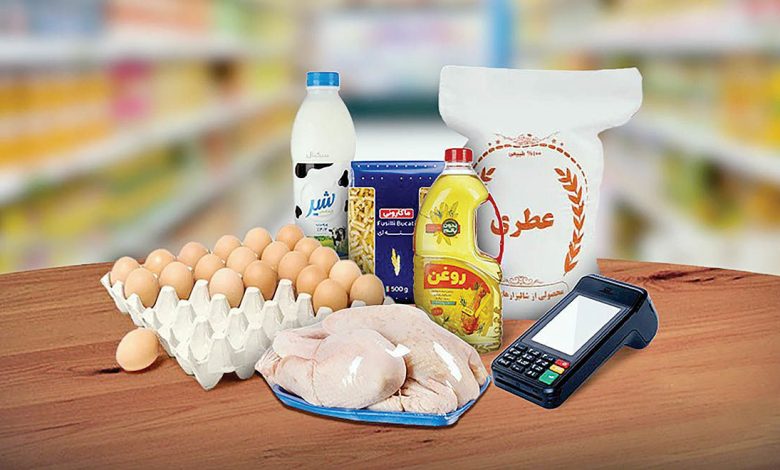
The fifth phase of the electronic voucher program began today, December 5 (15 Azar), after several weeks of delay from its originally scheduled start in early Azar. The main reason for the delay was the late provision of the required financial resources, which the Minister of Welfare confirmed had finally been secured on December 3 (12 Azar). In this phase, the benefit amount for the first to third income deciles has been increased for the first time by 120,000 tomans, reaching 620,000 tomans per person, usable until the end of Esfand. The payment schedule for the fourth to seventh deciles has not yet been announced, though a slight increase in their benefit amount is reportedly under consideration.
Experts have repeatedly emphasized that offsetting the impact of inflation on low-income households is extremely difficult and costly, and that regular voucher payments can help improve their living conditions. Still, reducing inflation and slowing price growth remain the most effective strategies for maintaining purchasing power—especially since food prices recorded more than a 66% annual increase in Aban compared to the previous year. Thus, the increased voucher amount is merely a temporary relief from rising inflationary pressures.
Recent months have seen a variety of reports about changes to the program’s implementation. Discussions in Parliament and the government suggested that the updated plan would continue with fewer items and would allow beneficiaries to choose between receiving the standard 500,000-toman credit or purchasing goods with up to a 20% discount in designated stores. Disagreements also emerged: the government favored credit-based support, while Parliament advocated providing physical goods—especially for the first three deciles—based on fulfilling a daily requirement of 2,100 calories.
Under the new decisions, the Ministry of Welfare is required to compensate any price increase in the eligible goods by raising the voucher amount so that households can purchase the 11 designated essential items without inflation-driven hardship. This requirement is one of the reasons behind the recent 120,000-toman increase for the lowest deciles. While this approach helps maintain purchasing power, it imposes a considerable financial burden on the national budget.
Official data indicates that around 84 million people benefited from the first four phases, during which goods worth 100 trillion tomans were purchased through the program. Each phase is estimated to cost roughly 24.8 trillion tomans, while the fifth phase—only for the first three deciles—will require around 16 trillion tomans. With the recent increases in voucher amounts, the financial burden is expected to grow further.
Inflation trends in recent months have also intensified concerns. Point-to-point inflation reached 49.4% at the end of Aban. If prices continue rising, the government will need to cover an even larger gap to keep the prices of the 11 essential items fixed, adding substantial pressure to the public budget. Historical experience shows that financing challenges have repeatedly disrupted the program in past years.
The electronic voucher scheme was first launched in Esfand 2022 (Esfand 1401) and has undergone several changes due to funding shortages—including incentive subsidies, the “Fajraneh” program, and eventual suspension in May 2024 (Ordibehesht 1403). After an eleven-month hiatus, the program resumed in March 2025 (Esfand 1403) with one billion dollars withdrawn from the National Development Fund, and subsequent phases required significant additional financing.
Despite concerns about financial sustainability—especially under a model that fixes essential goods’ prices—the fifth phase has begun with major adjustments that may help maintain the purchasing power of low-income households if consistent funding can be secured. The future of the program depends largely on the government’s ability to manage resources and control inflation in the coming months.
Source: Donya-ye-Eghtesad