

Mismanagement and corruption have brought Venezuela’s economic engine to a halt
Nicolás Maduro, the president of Venezuela, is a figure defined by contradictions. On one hand, he is often mocked for his unusual beliefs—such as claiming Hugo Chávez appeared to him in the form of a bird—and for unconventional decisions like moving Christmas celebrations two months earlier. On the other hand, with more than 12 years in power, he holds the longest-running presidency among current Latin American leaders, repeatedly proving that underestimating him is a serious mistake made by his critics.
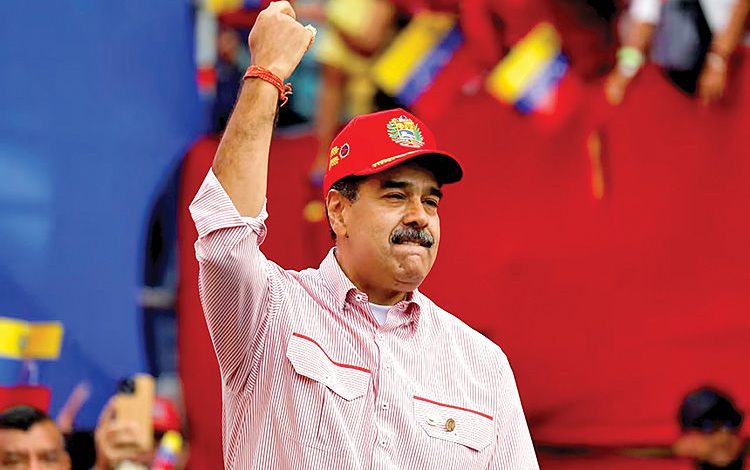
According to CNN, Nicolás Maduro, whose background traces back to bus driving and trade union leadership, was never the first choice to succeed Hugo Chávez. However, in December 2012, as Chávez lay on his deathbed, he anointed Maduro as his undisputed heir. Maduro—dubbed “Chávez’s son”—inherited a government plagued by a legitimacy crisis from the very beginning. In the April 2013 election, he won by a razor-thin margin of just 1.59% over his rival—a result the opposition never accepted—thus launching a flawed cycle that has defined his rule.
Maduro’s governing pattern over the past decade has been consistent: holding disputed elections, violently suppressing street protests, and distributing power and economic privileges among loyalists to prevent internal challenges. For his survival, he has relied on support from international allies such as Russia, China, and especially Cuba. His deep relationship with Cuba, which began during his tenure as foreign minister, helped him contain internal uprisings—such as the April 2019 rebellion—through Cuban security assistance. While this approach solidified his grip on power, it pushed Venezuela into increasing international isolation, to the point that even left-leaning governments in the region questioned the legitimacy of his elections.
The cost of Maduro’s survival has been disastrous for the Venezuelan people. Since 2013, the country’s economy has shrunk by 72%, and its once-powerful oil industry—long the engine of the economy—collapsed due to mismanagement and corruption, even before the imposition of sweeping U.S. sanctions in 2019. Widespread poverty and systemic repression have triggered the largest migration crisis in the region’s modern history, forcing nearly eight million Venezuelans to leave the country. Numerous United Nations reports and investigations by the International Criminal Court have documented extensive human rights violations—including torture and extrajudicial killings—classified as “crimes against humanity”; allegations the Maduro government dismisses as part of an “imperialist conspiracy.”
Maduro’s key to survival lies in creating a “confederation of power.” Unlike Chávez, who relied on personal charisma, Maduro has secured the military’s loyalty by granting top commanders control over major sectors of the economy and high-level government posts. In this structure, old-guard Chavistas and loyalist paramilitary groups known as colectivos also play central roles. By distributing power, money, and responsibility, Maduro has built a system in which the survival of many influential actors is tied to his own. Now, on the brink of a new wave of U.S. pressure, Maduro once again finds himself in a critical position. Washington’s policies—from crippling sanctions to behind-the-scenes negotiations—have so far failed to remove him. The question remains: can this master of turning crises into opportunities defy predictions once more and emerge unscathed from the storm?
Source: Donya-ye-Eghtesad