

Trump’s attempt to divide and weaken Europe
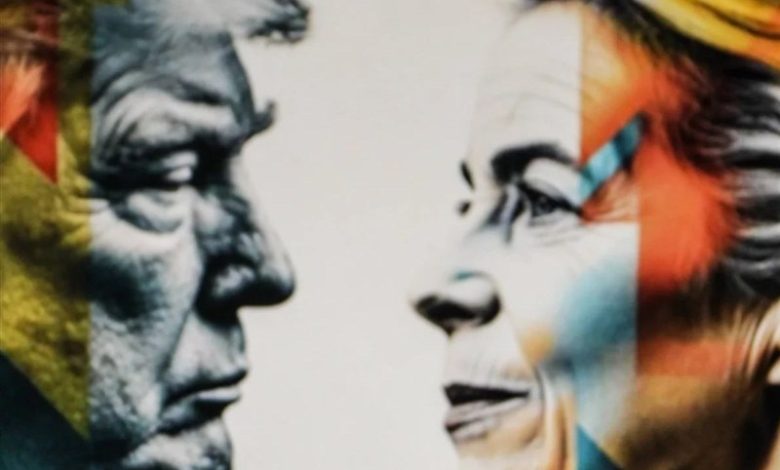
The Standard newspaper wrote in an article that Donald Trump, the U.S. President, no longer supporting Europeans is not news.
During his first term, Trump pressured NATO member countries in Europe to increase their military spending to reduce the burden on the United States.
Europe is also not in a better position in the recently published security strategy for Trump’s potential second term. The strategy claims that freedom of speech on the continent is restricted and democratic processes are being weakened.
The strategy also indicates that the United States seeks to support resistance against the current course of the European Union and welcomes an increase in votes for nationalist — i.e., right-wing — parties.
According to this strategy, Europe faces challenges of migration and civilizational decline.
Some media outlets reported that a more extensive version of the U.S. security strategy — unpublished but available through Defense One — calls for increased cooperation with countries aligned with the U.S., including Austria, Italy, Hungary, and Poland. This strategy claims that closer cooperation with the United States would separate these countries from the European Union.
Meanwhile, Austria’s far-right has repeatedly sought ties with U.S. Republicans in recent years. For example, Harald Vilimski, Maximilian Krauss, and Gerald Gross attended the annual Young Republicans Club event in New York at the end of 2022 — the same club that recently made headlines for racist messages.
Vilimski, leader of the FPÖ delegation in the European Parliament, traveled to New York last year to attend a large Trump election rally and has since presented himself as a Trump supporter. As recently as July, he described the U.S. as the “big winner” of the EU dispute, due to Trump’s 15% tariff on EU goods.
The Austrian Ministry of Foreign Affairs considers this strategy another wake-up call for Europe to stand on its own in security and defense.
Similarly, Germany’s Alternative Party has sought closer ties with like-minded individuals in the U.S. Marcus Fronmaier, the party’s foreign policy spokesman, is currently in the U.S., meeting Republican Congress members and State Department officials, and will attend the Young Republicans annual event in New York as an honorary guest.
Why parts of this longer U.S. security strategy, now shared by Defense One, were not included in the official strategy is unclear, as is the extent of the president’s influence on the draft. However, it is clear that Trump supports its core philosophy.
In an interview with Politico, Trump described European leaders as weak and said their permissive immigration policies were destroying their countries, naming only Hungary’s right-wing Prime Minister Viktor Orbán as a positive example.
Meanwhile, a Danish security report published Wednesday mentioned the U.S. negatively for the first time, stating that it now uses its economic and technological power as leverage, even against allies and partners, which could increase Russian hybrid attacks on NATO. European countries are urged to arm themselves and enhance cooperation to defend against Russia.
The unpublished, extended version of the U.S. National Security Strategy (NSS) details measures to weaken the EU, naming Austria, Hungary, Italy, and Poland as potential partners with which the U.S. should collaborate to separate them from the EU and support parties and movements that maintain traditional European lifestyles but are pro-U.S.
The document also mentions a plan to create a new international group (Core 5) — excluding EU countries — which reportedly includes the United States, China, Russia, Japan, and India.
Source: Tasnim