


Free-market gasoline at fuel stations to be priced at 5,000 tomans starting tomorrow / Gasoline quotas at 1,500 and 3,000 tomans remain unchanged
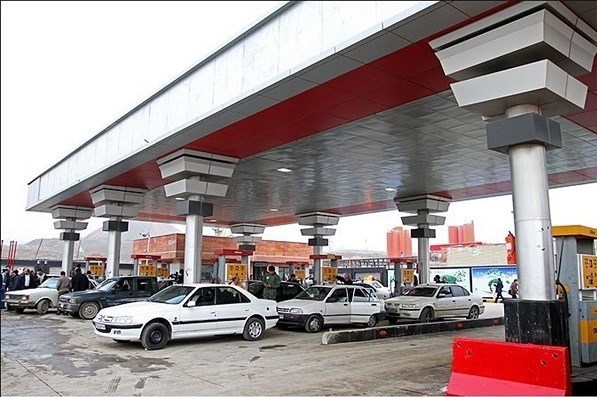
Starting Saturday, December 22, the government’s resolution on adjusting gasoline prices and the distribution mechanism will come into effect—a decision that has sparked extensive discussions in expert circles and public opinion in recent weeks.
According to this resolution, the 60-liter quota priced at 1,500 tomans and the 100-liter quota priced at 3,000 tomans for private gasoline vehicles will remain unchanged, meaning no modification will be made to households’ base fuel quotas. However, consumers who exceed their allocated quota or use a station card will have to pay the new price of 5,000 tomans per liter.
The government states that the main goal of this policy is to create a more precise mechanism for controlling consumption and shaping refueling behavior. In recent years, gasoline consumption has risen to levels that forced the government to spend billions of dollars on fuel imports—an issue that has exerted substantial pressure on the country’s foreign-currency revenues. Therefore, increased use of personal fuel cards, reduced reliance on station cards, combating smuggling, and preventing excessive consumption lie at the core of this policy.
Mojerani, the government spokesman, explained that starting Saturday, quotas for government vehicles—except ambulances—will be removed, while imported cars and vehicles with free-zone license plates will not receive subsidized quotas. As a result, only vehicles considered part of the ordinary consumer group—those recognized by the government as eligible for public fuel subsidies—will continue to benefit from the dual 1,500 and 3,000-toman quotas.
In an amendment to the initial resolution, the government exempted newly registered domestically produced vehicles with a factory price below one billion tomans from quota removal. This means all vehicles registered for the first time and valued below this threshold will receive subsidized quotas like other private vehicles. Meanwhile, domestic or assembled vehicles with factory prices above one billion tomans will no longer receive any quota; their fuel consumption will be charged entirely at 5,000 tomans. This amendment effectively draws a line between mid-range and luxury vehicles, with the government describing it as a step toward a “more targeted and equitable” subsidy system.
The public transport sector has also undergone changes that directly affect ride-hailing drivers. Their monthly quota will be calculated based on their mileage: the more they drive, the larger their quota. The government claims this is intended to prevent abuse and better align subsidies with actual fuel usage.
However, the quota volume and price for public gasoline vehicles (such as taxis and cargo vans) remain unchanged. For dual-fuel public vehicles, the first quota remains unchanged while the second quota is reduced by 50%. The second quota for dual-fuel private cars is likewise reduced by 50%. Converting single-fuel gasoline cars to dual-fuel systems will be offered free of charge under the regulations of the Clean Air Act.
The quota amount and price for ambulances remain unchanged, and vehicles belonging to war veterans and people with disabilities will not lose their fuel quotas.
Analysts believe that maintaining current quotas means this decision is unlikely to strongly influence consumer behavior. The new 5,000-toman price for excess consumption—only 2,000 tomans above subsidized gasoline—may not provide significant incentive for consistent use of personal fuel cards or better consumption management, unless the seasonal price reviews outlined in the resolution are implemented with a steeper adjustment.
Meanwhile, revenue generated from selling 5,000-toman gasoline will provide the government with new financial resources, reportedly intended for distributing electronic coupons to low-income households. The elimination of quotas for government and luxury vehicles is likewise presented as a step toward social justice.
Ultimately, the implementation of this new gasoline mechanism can be seen as a combination of maintaining the existing support model and moving toward gradual price reform. The success of this policy will depend on public cooperation, the effectiveness of monitoring systems, and the continuity of the current reform trajectory. The government hopes that this policy will help control consumption, reduce import pressure, and advance structural reforms in the energy sector with greater transparency.
Source: Tasnim