

The Majestic Chariot of the Economy
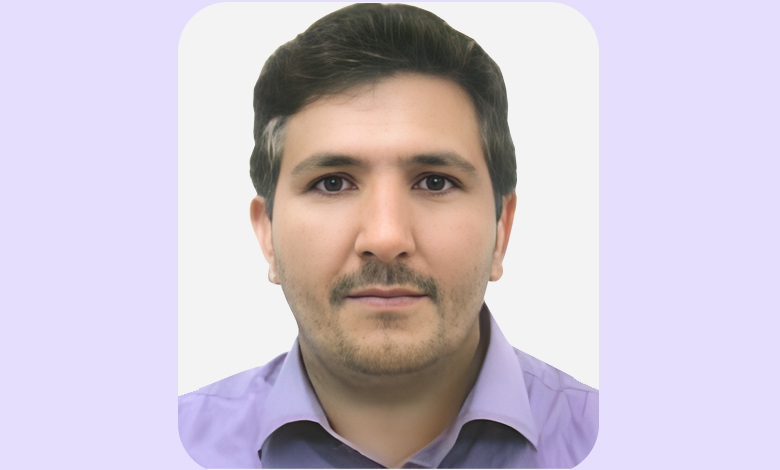
 Dr. Seyed Mehdi Hosseini, PhD in Political Science
In examining transformations in political thought, the role of the economy holds particular importance. Scholars argue that:
“In a house half-destroyed by poverty, lofty ideas and the advanced knowledge of today’s galaxy-navigating age cannot take root.”
Hence:
“Prudent people never move forward without riding in the luxurious carriage of their ancestors.”
Especially in a country with an ancient civilization,
“whose cultural and intellectual heritage is among the deepest and oldest globally, and which possesses nearly all known mineral resources,”
it is expected that the chariot of the economy be worthy of such grandeur.
Historical evidence from Iran shows that:
“a vast network of merchants operated in local, regional, and international trade.”
As Nasir Khusraw wrote in his travelogue:
“In Isfahan I saw a market of money changers with two hundred men… fifty caravanserais… and our caravan carried 1,300 loads of goods. We stayed in Isfahan for twenty days.”
This was while the Western world was still struggling in medieval ignorance.
Today, approaching 2026, amid semi-crises in food, clothing, and housing, debates intensify over how digital transformation reshapes the worldview and political, economic, social, and cultural capacities of the new generation.
In Islamic thought, economics—derived from oikonomia—is understood as household governance, a social science studying human activity related to wealth and material welfare.
When the economy loses balance and signs of crisis appear,
“thoughtful and farsighted individuals seek remedies through legislation, moral guidance, or theories envisioning a just society.”
Otherwise, political processes become wrapped in rhetoric produced by media charlatanism, shaping the consciousness of a new class.
The internal logic is that:
“in a world full of important yet untrustworthy people, immense wealth and infinite poverty, abundant knowledge and endless ignorance, attention shifts only toward power, wealth, and knowledge.”
Because language and thought grow together, and “language is the dwelling place of thought.”
Thus, the economy matters because:
“economic approaches are decisive in stabilizing forms of governance.”
Digital transformation profoundly affects daily life and demands adaptive political tools for sustainable growth.
Historically,
“successful countries are those that skillfully adapt their policies to changing conditions.”
Experts warn that income inequality and persistent living crises fuel public dissatisfaction and weaken political independence—especially as social media manipulates the mindset of the emerging class.
Amid soaring prices, this class experiences deep psychological strain, often unheard by academic or religious institutions, potentially leading even to doubt in spiritual and economic principles.
Some advocate laissez-faire economics, while others circulate hollow ideas without progress.
Following recent conflict, inflation surged further, with digital media amplifying the crisis.
Nothing is more dangerous than treating price volatility superficially while ignoring food insecurity and generational rupture.
As Hannah Arendt warned:
“We are facing a generation that is no longer certain it has a future.”
The text concludes that the dazzling wave of digital technology requires profound reflection, since:
“traditional equations no longer apply in the age of information revolution.”
We shape our future through today’s actions—and may tomorrow’s world be built on justice, freedom, and human solidarity.