

The government is not an electricity trader; the private sector can resolve the imbalance
 Habibeh Rahimiyan, reporter for Sadaye Sama
Iran Has High Potential to Export Electricity and Gas to Neighboring Countries and the Region
A member of the Board of Directors of the Iran Energy Export Federation stated that Iran has significant potential to export electricity and gas to neighboring countries and the region, emphasizing that with government support and the entry of foreign investors, the private sector can resolve the electricity imbalance and turn Iran into a major regional energy player.
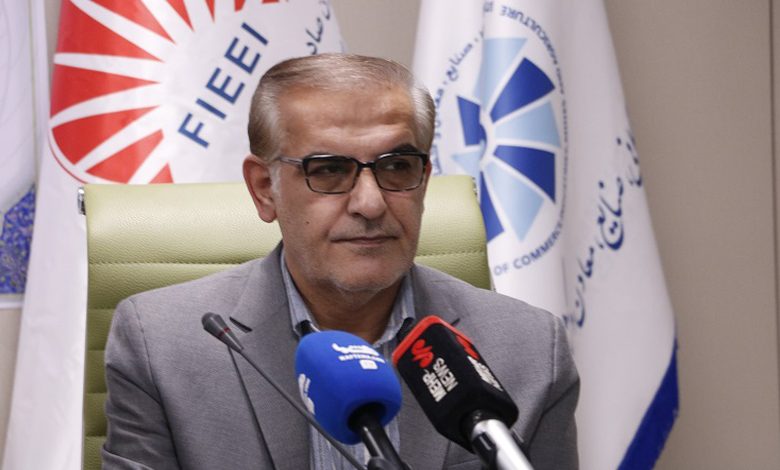
According to the Sedaye Sama News Agency, Hassan Ali Taghizadeh, Board Member of the Federation and Chairman of the Board of the Association of Power Producers, said at a press conference titled “Obstacles to the Development of Non-Oil Energy Exports”:
“For years, we have discussed electricity generation and trade by the private sector, yet the government still owns and controls the electricity market and does not allow private sector participation in domestic or foreign electricity trade.”
He added:
“Even officials at the Ministry of Energy acknowledge that government-led electricity trading is the main cause of the electricity imbalance, but despite this awareness, the government continues to cling to this approach.”
Referring to years of fixed electricity pricing, Taghizadeh said:
“Electricity is a commodity and must be priced based on supply and demand mechanisms in a free market. Unless this mindset changes, expecting to resolve the electricity imbalance is meaningless, and conditions will continue to worsen.”
He sharply criticized government intervention, stating:
“Many solutions have been proposed to address the electricity imbalance, but we fail to achieve results because the government is not a good trader. Wherever it has entered trade, it has failed, yet it still refuses to exit electricity trading.”
He described the root of the problem as historical and explained:
“Unfortunately, since 2004, policymakers’ perspectives changed, and with the approval of the price stabilization law, the power industry took a wrong path.”
Emphasizing the need for a policy shift, the Chairman of the Power Producers Association said:
“If the policymaker’s mindset changes, we can hope to resolve the electricity imbalance; otherwise, solving this problem will be impossible.”
Pointing to discouraging statistics, he noted:
“Today, only 1 to 2 percent of the country’s electricity is traded on the green board of the Energy Exchange, while the rest is purchased from power plant owners at around 200 tomans — a price completely inconsistent with the economic realities of the power industry.”
He stressed:
“The government does not allow the private sector to export or swap electricity, despite the private sector’s technical and financial capabilities. Therefore, without the government’s exit from electricity trading, the imbalance will never be resolved.”
He added:
“As long as the government remains involved in electricity trading, the imbalance will persist. Moreover, due to the government’s inability to conduct financial transactions with other countries, electricity exports are effectively locked. As a result, exports are now largely limited to Iraq, and important markets such as Turkey have been lost.”
Regarding foreign electricity trade, he said:
“Before 2019, Iran’s electricity exports were worth around one billion dollars, mainly to Iraq. Today, this figure has been halved, and key markets such as Turkey have been lost. A capable private sector can, through offtake agreements and proper investment, both meet domestic needs and expand electricity exports.”
Taghizadeh emphasized that Iran has high potential to export electricity and gas to neighboring countries and the region, citing Afghanistan, Pakistan, and the UAE as examples where the private sector could play a significant role if government permits investment.
He added:
“Power transmission lines to Afghanistan and Pakistan have been stalled for years due to lack of investment, and submarine power cables to the UAE have yet to be implemented.”
He also highlighted investment opportunities in coastal power plants and the exploitation of gas fields ready for production, stating:
“With government support and the entry of foreign investors, the private sector can not only meet domestic demand but also expand energy exports and generate substantial foreign exchange revenues.”
He concluded:
“The government must redefine its role as a regulator and withdraw from direct ownership. With its existing assets and capabilities, the private sector can resolve the electricity imbalance and transform Iran into a major energy player in the region.”