

The Isolation of Artisans Amid the Crisis
Over the past year, as energy imbalances intensified, the government placed the formulation of support packages on its agenda to compensate for part of the losses incurred by industrial sectors. These packages were intended to ease liquidity pressures on production enterprises through the “rescheduling of bank debts,” the “deferral of taxes,” and the “issuance of certificates of deposit.” However, with the continued persistence of these imbalances, the gap between announced policies and on-the-ground implementation has widened. Mandatory shutdowns in the absence of supportive mechanisms have pushed industry into a war-of-attrition situation. Economic actors warn that, without effective policies, a decline in investment and a deepening recession in the production sector will be unavoidable.
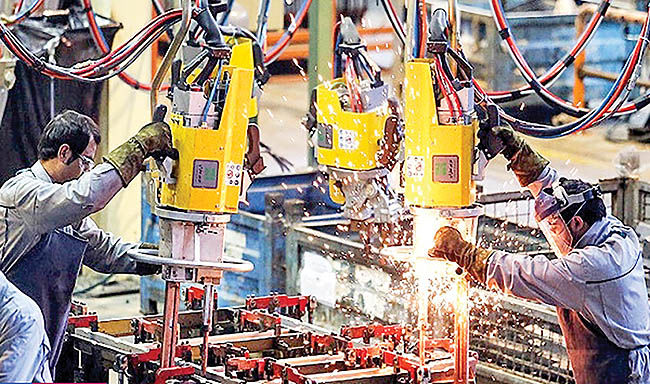
As warnings about energy imbalances and their impact on production intensified, the government announced that it was drafting a support package for industries—one intended to partially compensate for losses caused by electricity and gas outages and to ease liquidity pressures on enterprises. Tax deferrals, rescheduling of social security debts, cooperation from the banking system in providing working capital, and facilitation of payments were presented as the main pillars of this support. At the time, these promises generated renewed hope among industrial players.
However, months later, and while the energy imbalance has not only remained unresolved but has become a persistent reality of production in the current year, the gap between announced policies and on-the-ground implementation continues to widen. Mandatory shutdowns, reduced production hours, and frequent interruptions in electricity and gas supply persist, without any clear mechanism in place to compensate units that have been involuntarily taken out of the production cycle.
Meanwhile, fixed production costs continue to weigh heavily on manufacturers. Workers’ wages must be paid on time, taxes and social security contributions fall due as scheduled, and government agencies collect their claims in full, regardless of declining output. At the same time, access to bank financing for working capital has become more difficult than ever, and high interest rates have rendered credit economically unviable for many firms.
The growing gap between government commitments and real production conditions has become one of the industry’s central concerns. Economic actors warn that the continuation of this situation will not only erode firms’ capacities, but also lead to capital depletion, deeper recession, and weakened employment in the productive sector—a trajectory that can only be corrected through concrete executive decisions, not repeated promises.
No Compensation for Losses
In this context, Abbas Jabalbarzi, Vice Chairman of the Industry Commission of the Chamber of Commerce, pointed to the ongoing forced shutdowns caused by energy imbalances. He noted that toward the end of last year, resolutions were introduced stipulating that units forced to shut down due to electricity or gas cuts would receive certain forms of government support, including tax deferrals or reductions, waivers of social security penalties, and relief from other costs. “But the reality,” he said, “is that these resolutions have not been effectively implemented to date.”
Despite the continued shutdowns, no commensurate support has been applied in either taxation or social security. Contrary to official statements, taxes and insurance contributions are still being fully demanded, and penalties have not been forgiven.
Referring to Article 25 of the Law on Improving the Business Environment, Jabalbarzi explained that the government is not permitted to disrupt industrial production due to shortages of electricity, gas, water, or other energy carriers, and if it does, it is obligated to compensate for the resulting losses. The only exception applies to emergency or crisis situations approved by the Security Council, which are time-limited and cannot be generalized to the current situation. Today’s energy imbalance, he stressed, is not a sudden crisis such as war or a natural disaster, but the result of years of flawed policymaking. Labeling it an “emergency condition” to avoid compensation therefore raises serious legal concerns.
He added that many industrial units face electricity cuts averaging one to two days per week from the start of rationing through the end of summer. Calculated monthly and over a six-month period, this amounts to nearly two months of forced shutdowns—without any compensation.
Losses vary across firms: large enterprises may incur tens or even hundreds of billions of tomans in damages, while losses for smaller firms are also far from negligible. Yet none of these losses have been compensated. Jabalbarzi noted that while government officials acknowledge the problem, their typical response cites budget deficits and lack of resources—despite the fact that failure to compensate will ultimately weaken production, reduce investment, and exacerbate future economic challenges.
Serious Risks for Industry
Bahrām Sobhani, Chairman of the Iranian Steel Producers Association, said that during periods of electricity and gas restrictions, industries expected the government to roll out clear support packages to offset reduced production. In practice, however, the outcomes have fallen far short of promises. Temporary measures—such as limited tax deferrals following the 12-day war—were short-lived and never became a sustainable policy, while the main burden remained on producers.
Government claim-collecting bodies continue to demand full payment of taxes and social security contributions even as factories are forced to cut or halt production. This places severe pressure on cash flows, especially as producers turn to bank loans with interest rates exceeding 40 percent. Sobhani warned that without effective support, continued energy restrictions could lead to sustained production declines, weakened firms, and reduced competitiveness across the steel value chain.
No Effective Action Taken
Mohammadreza Ghaffarollahi, a member of the Iran Chamber of Commerce, told Donya-e-Eqtesad that although there has been talk of tax and insurance relief, such support has not been tangibly implemented. Even a single day of shutdown per week, he noted, amounts to a loss of roughly 20 percent of a unit’s working time, while fixed costs—wages, overheads, depreciation, taxes, and insurance obligations—remain fully in place. This inevitably raises production costs and undermines competitiveness in both domestic and export markets.
What the industrial sector is experiencing today is not a sudden crisis, but a gradual, erosive one. Energy imbalance is only one link in this chain—one that, once it disrupts production, exposes broader policy weaknesses. A unit forced to stop operating loses revenue but remains bound by its obligations. Without coordinated, transparent, and reliable support mechanisms, industry will continue along a path of cautious downsizing and muted activity—one whose consequences will sooner or later manifest at the macroeconomic level./ Donyaye Eghtesad