

Speaker of Parliament: Public Purchasing Power Must Be Strengthened in the 1405 Budget
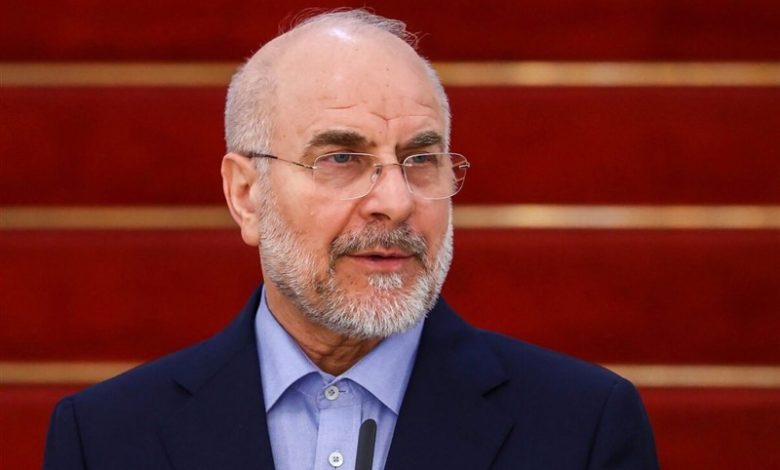
A consultative meeting to exchange views and present a report by the Research Center of the Islamic Consultative Assembly and the Planning and Budget Organization on the draft budget bill for next year was held this morning (Friday, January 5). The meeting was attended by Mohammad Bagher Ghalibaf, Speaker of the Islamic Consultative Assembly, along with several members of the Joint Commission reviewing the draft budget bill for the year 1405.
Referring to the requirements of the Parliament’s internal regulations regarding the review of the annual budget bill and the submission of the Joint Commission’s report to the plenary session, Ghalibaf stated that the 1405 budget bill contains both strengths and weaknesses, and that coordinated cooperation between the government and Parliament is necessary to address its shortcomings.
Emphasizing the importance of people’s livelihoods, the Speaker of Parliament noted that one of the main priorities in reviewing the budget is to enhance public purchasing power. He stressed that the methods for achieving this objective must be carefully discussed within the Joint Commission and in the presence of government representatives. He added that there are significant capacities to improve purchasing power without increasing liquidity or the monetary base.
Addressing the issue of subsidies, Ghalibaf said that under the current decile-based classification system, fair and targeted distribution of subsidies is not feasible. He noted that under the law adopted in 2013, the Iranian Welfare Database is mandated to consolidate household data; however, despite the passage of more than a decade, comprehensive and accurate data in this area are still lacking.
Highlighting the need for institutional synergy, Ghalibaf added that all relevant bodies must cooperate to ensure that agencies obligated to provide online data to the Iranian Welfare Database fulfill their legal responsibilities, stressing that no institution is permitted to withhold such information.
In concluding remarks, the Speaker emphasized the necessity of cooperation between the government and Parliament to resolve the country’s challenges, particularly in improving livelihoods and addressing structural imbalances. He stated that correcting budgetary weaknesses and implementing reforms can only be achieved through joint efforts, and expressed expectations that, once approved, the law will be implemented accurately and effectively.
During the meeting, experts from the Parliament Research Center and the Planning and Budget Organization presented their assessments and viewpoints on the framework of revenues and expenditures, tax and customs revenues, the ratio of tax revenues to gross domestic product, the National Development Fund, wage increases, and the extent to which the objectives of the Seventh Development Plan are reflected in the 1405 national budget.
Deputy officials for legal affairs and oversight of the Islamic Consultative Assembly, as well as representatives of executive bodies, were also present at the meeting. / Tasnim