

Oil industry equipment manufacturers’ focus on expanding exports through the establishment of joint commercial offices abroad
 Habibeh Rahimiyan, reporter for Sadaye Sama
The Chairman of the Board of the Iranian Association of Oil Industry Equipment Manufacturers announced the launch of ASTSNA’s international engagements aimed at expanding exports, stating that the establishment of joint commercial offices and the creation of direct links with foreign employers represent one of the association’s most significant achievements this year in facilitating trade and expanding export markets.
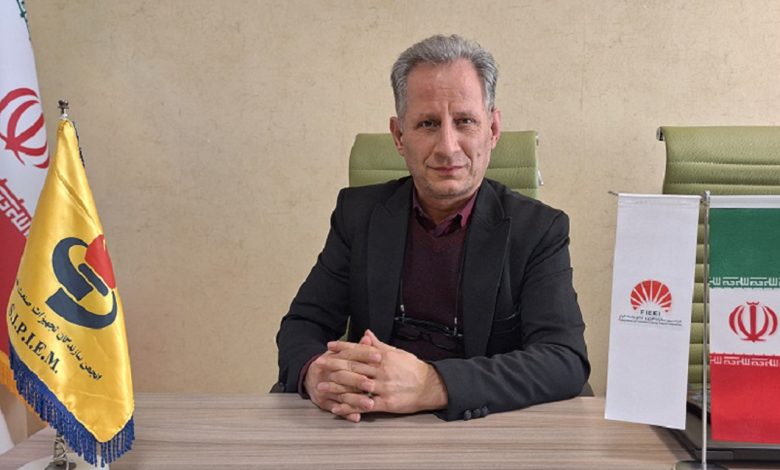
Ehsan Saghafi, Chairman of the Board of the Iranian Association of Oil Industry Equipment Manufacturers (ASTSNA), in an interview with a Sedaye SAMA reporter, elaborated on the association’s programs and activities through the end of the year, saying: “Given the country’s specific economic conditions and the severe and uncontrolled fluctuations in exchange rates, it is not possible to define long-term plans. Therefore, ASTSNA has focused its efforts on short-term, practical, and operational programs.”
Referring to the association’s continuous follow-ups on foreign exchange challenges, he stated: “In recent months, we have carried out numerous correspondences and follow-ups regarding currency-related issues, some of which have been effective. One of the latest cases concerns the currency exchange hall, where viewpoints and mechanisms are now converging, and it appears that this issue will soon reach a conclusion.”
According to him, these efforts have been pursued both independently by ASTSNA and in coordination with other associations, including the Federation of Machinery and Equipment Manufacturing—also chaired by him—as well as through cooperation with aligned organizations such as the Association of Oil, Engineering, and Construction Contractors, yielding notable results.
Highlighting the association’s role at various governance levels, the Chairman added: “We have followed up on issues and obstacles hindering construction, production, and development at multiple levels, including the Expediency Discernment Council, the Islamic Consultative Assembly (Parliament), the Judiciary, the Ministry of Industry, Mine and Trade, the government, the First Vice President, and in some cases, even the President himself.”
He continued: “In the area of budgeting, correspondences were sent to the President, and fortunately, these letters received attention. Some of the issues raised by the association were referenced by the President during his speech when presenting the budget. This indicates that ASTSNA is being recognized and has been able to play an effective role in decision-making processes.”
The private sector activist also announced the development of a 100-day action plan for ASTSNA, stating: “Considering the country’s current conditions, this plan has been designed based on short-term targets and operational action plans. Ten days of its implementation have already passed, and it will continue through the end of the year.”
He explained that the 100-day plan covers various areas, including export development, domestic market expansion, enhancement of media relations, follow-up of governance-level demands, and creating the groundwork for increased member participation across different fields.
Referring to the association’s international engagements, Saghafi said: “This year, one or two very promising international initiatives are underway to develop exports. Within this framework, joint commercial offices are set to be established to enable direct communication with employers, allowing trade transactions to be facilitated through these channels—an achievement that stands as one of the most significant accomplishments of this year.”
He cited another major achievement as ASTSNA’s active and serious participation in the Committee for Oversight of Domestic Manufacturing, adding: “In this area, the association has played an influential role by supporting proven domestic manufacturing capabilities. Conversely, in cases where claims lacked substantiation, we sought to assist the industry in verification and transparency.”
According to him, within its technical capacity, ASTSNA has prevented the import of goods that can be manufactured domestically while supporting genuine domestic producers.
The Chairman also reported a significant increase in the number of association members, stating: “Membership has grown considerably, and there is currently a waiting list. Each month, new applications are reviewed, and new members are added.”
He described constructive engagement with various employer sectors—particularly in oil and petrochemicals—as another key achievement, adding: “At the Isfahan Specialized Petrochemical Exhibition, ASTSNA played a central role as a representative of the private sector. This exhibition has been held for several consecutive editions with the association’s active participation, and compared to the same period last year, we witnessed nearly a 100 percent increase in attendance and effective participation by industry players and government officials.”
In conclusion, he referred to the government’s supportive policies regarding domestic manufacturing, emphasizing: “For our main clients, primarily in the oil and petrochemical sectors, support for domestic manufacturing has always been emphasized at the highest levels of successive governments. Although some governments were more cautious or less willing to take risks in relying on domestic capabilities, intensified sanctions turned support for domestic manufacturing into a necessity and a strategic imperative.”
He stressed that “supporting domestic manufacturing as a macro-level strategy has always been emphasized by the Supreme Leader, and the current government is moving along the same path. Existing guidelines and approaches indicate that support for domestic manufacturing is on the agenda, and interactions in this area are relatively positive and progressing forward.”