

The Unraveling of Ambiguity: How Trump’s Rhetorical Escalation at Mar-a-Lago Constrains Israeli Strategy on Iran
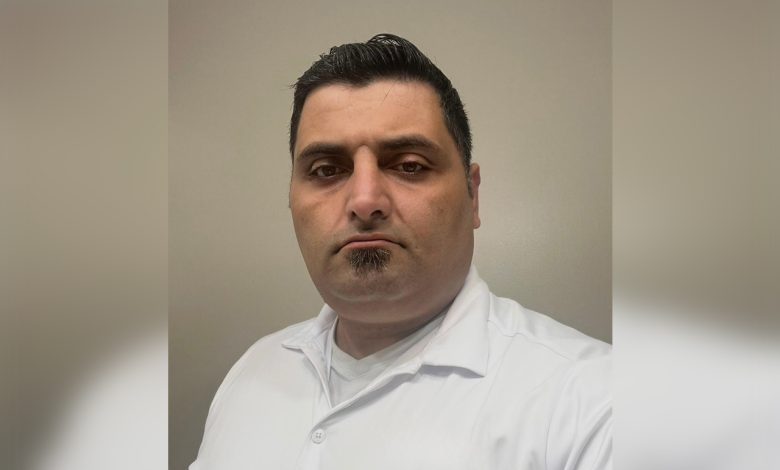
 Ousama al Ja’far, reporter for Sadaye Sama in the United States
A Strategic Analysis
The recent meeting between President Donald Trump and Israeli Prime Minister Benjamin Netanyahu at Mar-a-Lago constituted a significant inflection point in the strategic calculus surrounding Iran. Contrary to providing Netanyahu with greater diplomatic leverage or a reinforced mandate, Trump’s public commentary has produced the opposite effect: the strategic overexposure of Israel’s position. This episode transcends mere political theater; it represents a deliberate, public dismantling of the critical ambiguity that has historically moderated conflict dynamics between Tel Aviv and Tehran. The consequence is not a strengthening of deterrence, but a dangerous constriction of off-ramps and a heightened risk of miscalculation.
I. The Strategic Function of Ambiguity and Its Deliberate Erosion
Israeli strategy toward Iran has long operated within a framework of calculated ambiguity. Officially, the state maintains that Iran’s nuclear and regional activities pose an existential threat. Operationally, however, it has largely eschewed open, conventional warfare in favor of a campaign of covert action, calibrated strikes, and incremental pressure—a strategy often described as “the campaign between the wars.” This dissonance is not a flaw but a deliberate feature. It allows Israel to project resolve and apply pressure while retaining plausible deniability, managing escalation thresholds, and avoiding the full burden of international accountability that accompanies a formal state of war.
The Trump-Netanyahu meeting at Mar-a-Lago systematically undermined this framework. Trump’s remarks were neither casual nor imprecise; they were a clear articulation of a preventive war doctrine. By explicitly endorsing Israeli strikes on Iranian nuclear and missile facilities, discussing the logistics of strategic bomber missions (specifically referencing B-2 capabilities), and framing the “eradication” of rebuilt capabilities as an inevitability, Trump translated Israel’s implicit redlines into explicit, public ultimatums. This shift is profound. Where ambiguity allowed for private signaling and controlled escalation, explicit declaration creates public expectations and reduces room for diplomatic maneuver. Netanyahu’s long-held desire for a more confrontational approach is no longer a latent policy preference but a publicly authorized option for which he now bears sole ownership of the consequences.
II. The Disconnect Between Narrative and Observable Reality
This rhetorical escalation occurs against a backdrop that contradicts the foundational narrative of relentless Iranian aggression. The established chronology of the June 2025 exchange is critical:
1. Israeli First Strike: Israel conducted a targeted attack on Iranian assets.
2. Calibrated Iranian Response: Iran responded with a measured, but heavy-handed counterstrike designed to demonstrate capability without triggering full-scale war.
3. Post-Conflict Behavior: Iran’s subsequent actions—replenishing missile stocks, repairing damaged infrastructure, continuing civilian nuclear research—constitute strategic recovery, not escalation.
This sequence, widely corroborated by international observers, invalidates the characterization of Iran as an irrational actor perpetually on the verge of unprovoked offensive war. Tehran’s doctrine has consistently been one of retaliatory deterrence, not pre-emptive attack. Trump’s rhetoric, however, redefines the condition for action. The threat is no longer tied to specific, imminent Iranian aggression but to the potential of future capability. In strategic terms, he has moved the casus belli from a response to an actionable threat (pre-emption) to a response to a latent capability (prevention). When “eradication” is promised for “any rebuild,” the act of post-attack reconstruction is itself framed as a provocation, creating a perverse incentive structure where restraint and compliance offer no security guarantee.
III. The Consequent Strategic Dilemma for Israel
Trump’s intervention has generated a acute strategic dilemma for the Netanyahu government, effectively boxing it in through the guise of support.
· Loss of Diplomatic Cover: Israel’s operational freedom has historically been underpinned by a delicate U.S. posture of public caution and private accommodation. Trump inverted this model, making indulgence explicit and discarding public caution. Any future Israeli kinetic action will now be globally perceived as the execution of a plan endorsed and encouraged by the United States, stripping Israel of the narrative of reluctant, defensive necessity.
· Constrained De-escalatory Options: With the language of “inevitable” eradication publicly normalized, any Israeli decision to delay or de-escalate can be framed domestically and by adversaries as weakness or strategic incoherence. The political cost of restraint has been artificially inflated.
· Hardened Adversarial Perceptions: For Iranian security planners, Trump’s statements cannot be dismissed as mere political bluster. They must be treated as declaratory policy. This forces Tehran to accelerate its own preparations and potentially lower its own thresholds for response, believing that its deterrent posture is being intentionally invalidated. The space for signals and missignals collapses.
IV. Conclusion: The Normalization of Escalation and the Erosion of Guardrails
The paramount risk of the Mar-a-Lago discourse is the normalization of escalation language. Deterrence relies not only on capability and credibility but also on the shared understanding that conflict is a catastrophic last resort. When discussions of strategic bomber ranges and eradication become casual, this gravity is diminished. The informal guardrails—ambiguity, private channels, and the strategic value of unstated thresholds—are being dismantled one public statement at a time.
The resulting environment is uniquely brittle. Netanyahu is left with a mandate for action but a severe curtailment of its strategic utility. He is exposed, not empowered. The path to conflict is made smoother rhetorically, while the paths away from it are deliberately overgrown. Future escalation, should it occur, will be presented as the inevitable culmination of this manufactured trajectory. It is imperative to recognize this not as inevitability, but as the consequence of a specific, deliberate choice to replace strategic ambiguity with explicit threat, trading long-term stability for short-term political theater. The true strategic change is not on the ground in the Middle East, but in the eroded vocabulary of restraint between Washington and Tel Aviv.