

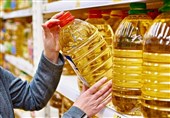
Cooking oil has recently become scarce in retail outlets, either disappearing from shelves altogether or being supplied in very limited, rationed quantities. In many chain stores, only one bottle is sold per customer, while some neighborhood shops sell oil only bundled with other products.
In this regard, the Vegetable Oil Association has announced that factories have run out of raw materials or crude oil, forcing some plants to shut down or approach closure, and has called for the immediate supply of crude oil.
Meanwhile, Kangari, head of the Wholesalers’ Union, told Tasnim News Agency that the goods held by companies are unfortunately being offered at unreasonable prices, blaming oil factories for overpricing oil in the market.
At the same time, the Ministry of Agriculture Jihad stated that there is not only no shortage of oil supply, but that availability actually exceeds the country’s needs.
Majid Hassani-Moqaddam, Director General of the Domestic Trade Office at the Ministry of Agriculture Jihad, responding to reports of severe shortages of cooking oil in some cities and a 43% drop in factory production compared to Mehr 1404, said that the country’s annual demand for cooking oil ranges between 1.6 and 2.2 million tons. He added: “At the beginning of the year, our plan was to supply around 2.35 million tons of oil, which is even higher than the estimated national requirement. This included importing 1.2 million tons of crude vegetable oil, 500,000 tons of palm oil, as well as supplying oil through imports and domestic production of oilseeds.”
Citing official customs statistics for the first eight months of the current year, Hassani-Moqaddam assessed the supply situation as positive, stating: “We are not behind schedule; in fact, we are ahead. Imports of crude oil increased by 72% to 960,000 tons, palm oil imports rose by 41% to 317,000 tons, and oilseed imports grew by 7% to 1.44 million tons, providing a total of about 1.7 million tons of oil during this period.”
He attributed localized shortages and reduced factory output to several factors, including increased exports of products such as snacks, chips, sauces, sweets, and chocolates that consume large amounts of oil, as well as recent difficulties faced by some traders due to delays in accessing foreign currency resources.
According to the report, every sector denies responsibility and shifts the blame elsewhere: retailers claim they have no oil due to wholesalers; wholesalers say manufacturers sell oil to them at high prices; oil producers argue that the government fails to provide crude oil; while the Ministry of Agriculture Jihad insists that crude oil supply is not only sufficient but exceeds market demand.
This situation points to a flawed distribution cycle. Despite adequate supply and amid rumors of price hikes or price liberalization, various actors in the supply chain have resorted to hoarding oil. Even consumers have begun purchasing more oil than they actually need.
The Ministry of Agriculture Jihad also cites increased exports of oil-consuming food products as another factor affecting domestic demand. Under these circumstances—where subsidized oil appears to be misused for exports and large quantities are hoarded across supply chains—intervention by regulatory authorities is deemed necessary. / Tasnim