

Venezuela on the verge of a power vacuum
The developments in the early hours of January 3 in Venezuela marked one of the rarest instances of direct U.S. military intervention in recent decades; an event which, according to The Economist, involved limited airstrikes and special operations that led to Nicolás Maduro’s exit from the center of power. Although accounts of the details of this operation remain contradictory, what appears certain is that Venezuela’s political crisis has entered a new and highly risky phase…
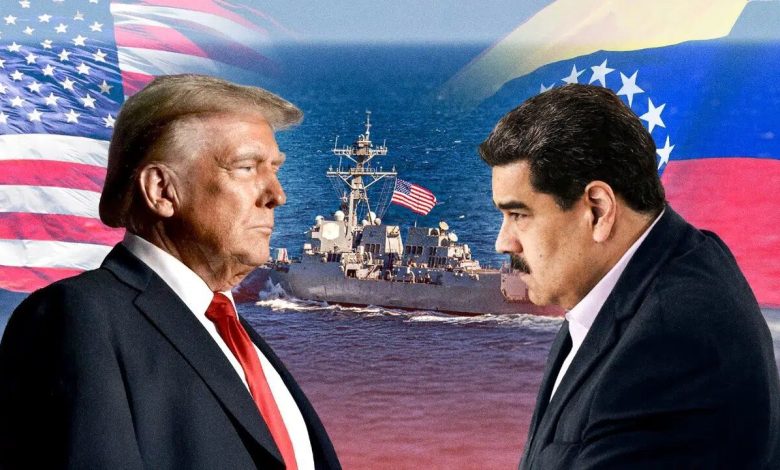
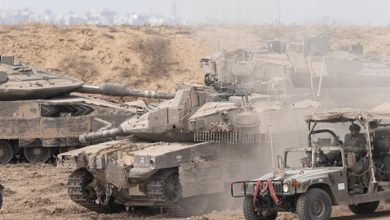
According to reports, a series of targeted strikes have been carried out against military and communications infrastructure around Caracas and the country’s key ports. At the same time, images circulating on social media indicate the presence of special-purpose helicopters and nighttime operations—an operational pattern that, in military doctrine, is typically associated with the capture or elimination of high-value targets. The Venezuelan government has described the action as a “military aggression” and has called for popular resistance, yet so far no transparent information has been provided regarding the status of the country’s president.
Reuters and the Financial Times had repeatedly emphasized in their earlier analyses that Washington, in recent months, had been moving its maximum-pressure strategy against Caracas away from purely economic tools and closer to hard-power options. The tightening of the blockade on oil tankers carrying Venezuelan crude, limited strikes on coastal infrastructure, and threats to expand operations into the country’s interior were all viewed as signs of a shift in U.S. policy. From this perspective, the recent developments can be seen as the culmination of a process that began months ago.
Nevertheless, Venezuela’s political future remains shrouded in uncertainty. Vice President Delcy Rodríguez has called for evidence regarding Maduro’s status and has effectively assumed responsibility for running the country. Comparable experiences in the region suggest that a power vacuum—especially in a country with a deteriorated economic structure and a deeply divided society—can lead to prolonged instability; a scenario that would prove costly not only for the Venezuelan people but for all of Latin America.
On the international level, these events carry significant implications for energy markets. Despite a sharp decline in production, Venezuela still holds some of the world’s largest oil reserves, and any political disruption could affect expectations in the oil market. The Financial Times had previously warned that the renewed politicization of the Venezuelan issue could intensify price volatility amid the fragile conditions of the global energy market.
From the perspective of Iran’s foreign policy, developments in Venezuela are being closely monitored. Tehran and Caracas have expanded their economic and energy cooperation in recent years, and the Islamic Republic of Iran has consistently emphasized the principle of non-intervention and the resolution of crises through political means. Within this framework, further instability in Venezuela is seen as detrimental not only to the country itself, but also to regional order and the interests of independent states.
Although the recent U.S. operation may have altered the balance of power in Caracas in the short term, in the medium term it has increased the risk of Venezuela entering a period of chronic instability—one whose consequences will extend well beyond the country’s borders.
Donya-e Eqtesad