

Implications of Venezuela’s Developments for Iran
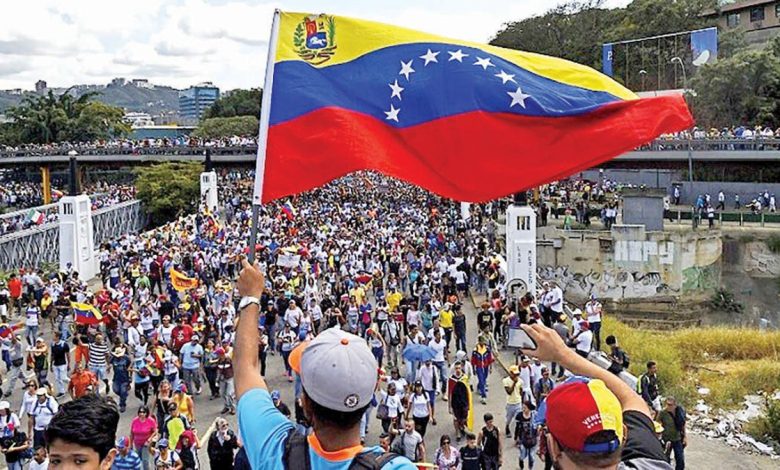
Developments over the past 48 hours in Venezuela have once again turned the country into a focal point of geopolitical tensions, sending waves of uncertainty through global markets and political circles. While Iran and its regional rivals are closely monitoring the situation, current conditions necessitate a realistic reassessment of the balance between the status quo and the configuration of forces, particularly in light of the United States’ return to its traditional sphere of influence.
Pentagon’s Midnight Pizza
In a report, Euronews stated that Donald Trump’s bluster and threats against Tehran—coinciding with the fall of Maduro’s government in Venezuela and military operations in Nigeria—have raised new questions about the revival of U.S. military power and influence in the global order. As the world transitioned from New Year celebrations to the first weekend of 2026, some social media users noticed a sudden spike in pizza deliveries around the Pentagon in the early hours of Saturday morning. In informal online circles, this was interpreted as a sign of imminent U.S. action somewhere in the world. Soon after, overnight attacks on Venezuela through Saturday surprised many who had not expected the new year to begin with the arrest of Venezuela’s leader.
However, the reality is that there was no sudden rupture leading to this moment. Several major geopolitical developments toward the end of the past year once again drew attention to U.S. foreign policy and its implications for Washington’s allies and adversaries alike—from Venezuela to Iran, Syria, and beyond.
Even in the opening days of the new year, Donald Trump did not refrain from using the language of intimidation and threats. His remarks came alongside key developments in Latin America and Africa: from attacks on Caracas and the fall of Maduro to military operations against positions of militants affiliated with the so-called Islamic State in northern Nigeria—operations reportedly carried out at the request of Nigeria’s government. Some analysts have noted that all three countries—Iran, Venezuela, and Nigeria—are oil producers, raising the question of whether the United States, amid sensitive conditions in global energy markets, seeks a more active role in the oil equation and even influence over OPEC. Meanwhile, according to Reuters, following the U.S. military strike on Venezuela, the country’s oil exports have come to a complete halt.
Euronews further wrote that Maduro’s fall should not be viewed merely as an internal Venezuelan development. This event carries heightened significance for Tehran, as Venezuela has been a close ally of Iran in recent years, with extensive economic, oil, and security cooperation established between the two countries—from the close relations between Tehran and Caracas during Mahmoud Ahmadinejad’s presidency and his ties with the late Venezuelan president Hugo Chávez, to Iran’s economic and logistical programs in the Latin American country. These partnerships, often involving billions of dollars in Iranian investment, were largely based on ideological affinity and shared opposition to the United States. Now, with the collapse of Maduro’s government, the fate of these investments and Iran’s outstanding financial claims remains unclear—at a time when Iran itself faces economic challenges and foreign-currency shortages.
The Russia Knot
In another part of its analysis, Euronews noted that the experiences of Syria and Venezuela—two countries that both enjoyed Russian political and military support—have raised new questions about Moscow’s role in global power equations. The governments of Bashar al-Assad and Nicolás Maduro, despite backing from Russian President Vladimir Putin, collapsed rapidly following major developments. This has led some analysts to speculate about the possibility of larger bargains among global powers, in which the fate of regional allies may be determined through geopolitical bargaining—from Ukraine to the Middle East. This comes as experts note that Iran has become increasingly dependent on Russia in recent years, culminating in the signing of a long-term cooperation agreement. Nevertheless, such agreements do not necessarily confer lasting strategic value for the Kremlin, and if the balance of interests shifts, Moscow may choose to pursue its own national priorities.
According to Euronews, during the 12-day war in June, Putin’s support for Iran largely remained at the political and diplomatic level, with no clear signs—at least publicly reported—of practical assistance or effective military deterrence from Moscow. As in Venezuela, Russia, despite its declared strategic relations with Tehran, preferred to avoid escalating tensions with Israel and the United States, limiting its role to general condemnations and calls for restraint. From the perspective of many in Iran, this once again underscored the Kremlin’s pragmatism and prioritization of its own interests.
Mixed Signals for the Middle East
The Atlantic Council, in a memo dated December 4, examined the international dimensions of the U.S. attack on Venezuela. The think tank emphasized the importance of the diplomatic aspect of the operation. In Venezuela, U.S. military action was accompanied by ongoing diplomatic offers—including sanctions relief, normalization steps, and elements of proposed agreements—kept on the table before and during the use of force. The combined signal sent to Tehran is that neither reliance on Russian air defenses nor delays in U.S. diplomatic proposals necessarily alter the speed or structure of American action.
The Council added that recent U.S. strikes in Nigeria send a reinforcing signal. In that country, the United States acted without prolonged warnings or gradual escalation, employing long-range airstrikes with the support of Nigeria’s government. These operations reflect the White House’s declining tolerance for prolonged escalation dynamics and its preference for short-term, outcome-driven use of force. For Iran, the significance lies not in specific targets or theaters, but in Washington’s current willingness to act decisively once thresholds are crossed.
At the same time, it is undeniable that Trump’s operation to remove Maduro will generate global shockwaves, including in the Middle East. Saturday’s operation sends mixed signals regarding the region’s future. Nevertheless, the Venezuela operation took months to plan, and there is no indication that the United States possesses either the capability or intent to carry out a similar action in Iran. The Trump administration must be mindful of the risks of ambiguous rhetoric that cannot be matched by action.
Tangible Implications for the Sanctions Strategy
Al-Monitor also addressed developments of the past 48 hours in Latin America. According to the outlet, Iran has long taken pride in its influence in the region, arguing that ideologically aligned leftist governments could serve as platforms to counter U.S. global hegemony. Venezuela stood at the center of this strategy—a country politically aligned with Tehran, economically intertwined, and united in anti-American rhetoric.
Beyond symbolism, however, the collapse of Maduro’s government has tangible consequences for Iran’s sanctions-evasion infrastructure. Tehran has long relied on Caracas as a key node for circumventing U.S. restrictions. Venezuela’s state-controlled energy sector not only provided Iran with a secure outlet for sanctioned crude oil and refined products, but also offered logistical cover within a permissive jurisdiction already detached from Western markets. Al-Monitor added that with Maduro’s removal and Venezuela sinking into uncertainty, this channel has effectively collapsed. Losing a reliable sanctions-evasion partner at this juncture could be highly consequential for Iran.
Available reports and analyses suggest that developments in Venezuela carry multiple messages for Tehran and could significantly reshape the balance of power in the Middle East. Nevertheless, these assessments also indicate that the likelihood of Trump pursuing a similar scenario in Iran remains low. The coming weeks will reveal what consequences the removal of Nicolás Maduro will ultimately entail./ Donyaye Eghtesad