

A Dream of the Return of Black Gold or a Geopolitical Mirage? Trump’s Oil Gamble in Venezuela
The sudden arrest of Nicolás Maduro by the United States is less a purely security or political development than part of a broader project in the realms of energy and geopolitics—a project that Donald Trump has explicitly described as the “reclaiming of Venezuela’s oil.”
From the White House’s perspective, a country that holds the world’s largest proven oil reserves should not be producing less than one million barrels per day—especially since Venezuela’s heavy crude is precisely the type of feedstock required by U.S. refineries.
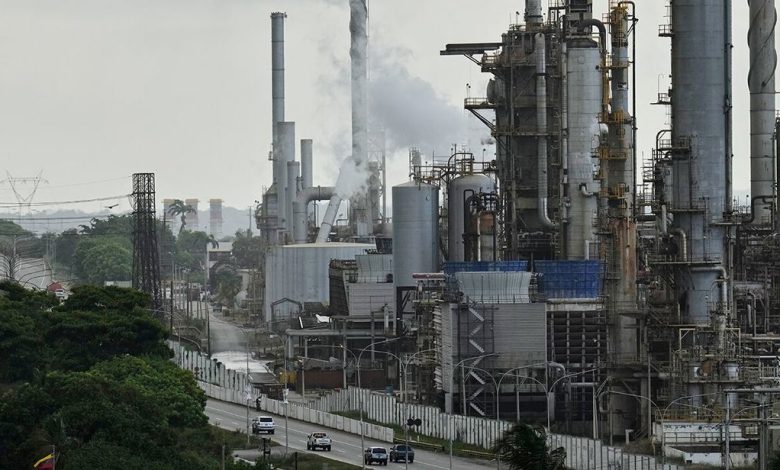
However, as The Economist emphasizes, the gap between vast oil reserves and economically viable production is a technical, institutional, and financial one—a gap that cannot be bridged by sudden political change. Over the past decade, Venezuela’s oil industry has fallen victim to a combination of external sanctions, costly nationalizations, chronic mismanagement, and the mass exodus of skilled labor. The result has been a two-thirds collapse in production compared to the late 2000s, along with severe deterioration of infrastructure.
In the short term, even the prospect of a limited production increase appears bleak. Sanctions on oil tankers, seizure of cargoes, and the cutoff of Venezuela’s access to naphtha—a critical diluent for transporting extra-heavy crude—have effectively disrupted exports. Estimates suggest that if current conditions persist, production could fall below 700,000 barrels per day, a figure far removed from Washington’s claims of a “rapid revival.”
Even under a more optimistic scenario—assuming a smooth political transition and the lifting of sanctions—any meaningful production increase would require massive investment. According to Rystad Energy, restoring Venezuela’s oil output to levels seen 15 years ago would require more than $110 billion in upstream investment—nearly double the total global investment made by major U.S. oil companies in 2024. This comes amid lingering memories of nationalizations and legal disputes amounting to tens of billions of dollars, which continue to cast a heavy shadow over international oil companies’ decision-making.
Another major obstacle lies in the institutional structure of Venezuela’s oil industry itself. PDVSA, once among the world’s most professional national oil companies, has lost tens of thousands of engineers and specialists, while management has increasingly been handed over to military figures. In its current form, the company lacks the capacity to function as a reliable partner for Western firms. Reforming this structure would be a costly and time-consuming process—one that does not align with short-term political decisions.
Global oil markets are also far from welcoming this gamble. The International Energy Agency has warned of an oil supply surplus through the end of the current decade—an oversupply that could push prices toward $50 per barrel or lower. Under such conditions, many Venezuelan oil fields would struggle to remain economically viable.
Trump’s oil gamble in Venezuela may be politically dramatic and symbolically powerful, but from an economic standpoint, it represents a long-term and attritional project. Venezuela’s return to the ranks of major oil producers will not come through overnight operations, but rather through years of institutional reform, massive investment, and shifts in global market conditions. If there is any profit to be gained, it will be neither immediate nor guaranteed.
—Donya-e-Eqtesad