

Currency Unification: The End of Exchange Rate Rents or the Beginning of an Economic Surgery?

 Habibeh Rahimiyan, reporter for Sedaye Sama
The Chairman of the Board of the Iranian Federation of Energy Exports and Related Industries criticized the continuation of the multi-tier exchange rate policy, describing it as a source of corruption, rent-seeking, and inefficiency in exports. He emphasized that while unifying the exchange rate may impose short-term pressures on livelihoods, if implemented in a calculated and well-managed manner, it could revive production and non-oil exports.
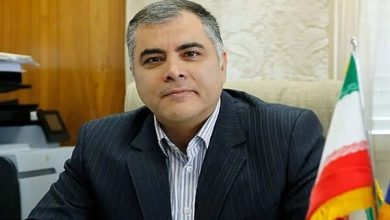
Hamidreza Salehi, Chairman of the Federation, told the Seday-e Sama news outlet that experience has clearly shown that multiple exchange rates create fertile ground for corruption, rent-seeking, “golden signatures,” and widespread abuse, ultimately leading to the waste of a significant portion of the country’s foreign currency revenues. He noted that in recent years this situation has had serious negative effects on exports, economic development, and investment, preventing non-oil exports from growing in line with expectations—despite the depreciation of the national currency, which should have enhanced Iran’s export competitiveness.
According to Salehi, although there have been occasional increases in exports, growth has remained well below existing capacities. He believes that exchange rate unification could refocus policymaking on production, the development of non-oil exports, and improving the competitiveness of enterprises, while also creating a more favorable environment for the return of economic actors who had exited the export sector due to its lack of attractiveness.
He added that one of the positive outcomes of a single exchange rate would be a reduction in the corruption that has emerged in recent years in areas such as raw materials, over-invoicing, under-selling, and exploitation of exchange rate differentials—practices that have damaged production and imposed significant losses on national resources.
At the same time, Salehi stressed that exchange rate unification could generate short-term economic shocks and negatively affect low-income households. He acknowledged that this concern is valid, but emphasized that such effects can be managed and mitigated through careful planning, risk assessment, and supportive policies to guide the transition.
He noted that with proper planning, this challenge could be turned into an opportunity, enabling lower-income groups to play a more active role in the economy through increased participation in production and employment—a path that many countries have successfully followed.
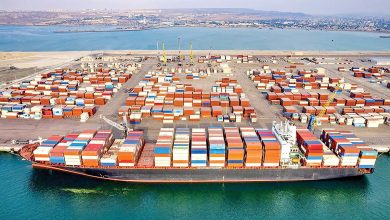
Describing exports as one of the key drivers of economic growth, Salehi said that unifying the exchange rate could strengthen export performance, boost foreign currency earnings, and ultimately improve the value of the national currency. However, achieving this goal requires multi-year planning and a gradual, well-calculated transition toward a more stable economic environment.
In conclusion, he referred to policies such as subsidy cards, stating that while such tools may provide short-term support to vulnerable groups, the sustainable solution lies in increasing production, expanding supply relative to demand, boosting national income, and controlling inflation. Inflation control, he emphasized, is only possible through strengthening production, developing exports, and increasing foreign currency revenues—measures that can ultimately improve living standards and enhance household purchasing power.