

The Dragon Threat at Washington’s Doorstep
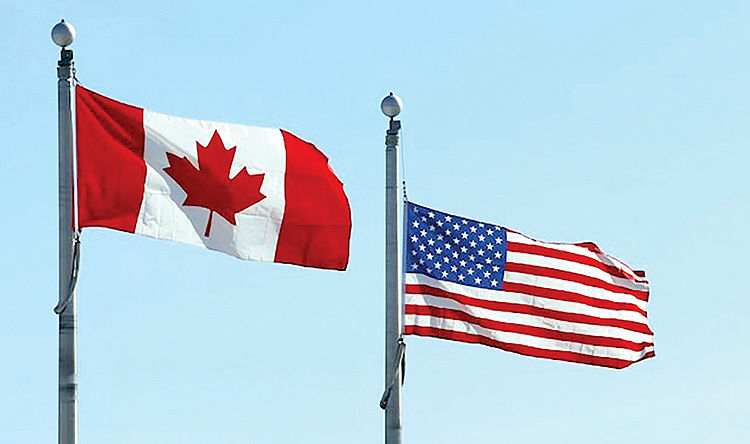
According to The New York Times, U.S. President Donald Trump on Saturday threatened Canada with heavy tariffs should it “reach an agreement with China,” while simultaneously launching a verbal attack on Canadian Prime Minister Mark Carney. This marks Trump’s latest sharp stance against Canada, following Carney’s controversial speech at the World Economic Forum in Davos, Switzerland, where he openly challenged Trump’s policies.
In a post on his social media platform, Truth Social, Trump downgraded the status of Canada’s prime minister by referring to him as a “governor”—a remark widely seen as insulting—and wrote:
“If Governor Carney thinks he can turn Canada into China’s export bridge to the United States, he is gravely mistaken. China will completely swallow Canada—from the destruction of businesses to the collapse of the social fabric and people’s way of life.”
He added: “If Canada makes a deal with China, it will immediately face a 100 percent tariff on all goods and products exported to the United States.”
However, there is no indication that Canada and China are negotiating a comprehensive trade agreement. Trump’s reaction appears to be linked to Mark Carney’s official visit to China last week, during which the two countries agreed to reduce tariffs on certain Chinese electric vehicles, while China, in return, lowered tariffs on some Canadian agricultural products. The visit, closely watched by observers, was presented as an important effort to recalibrate bilateral relations, although the resulting trade agreement was limited and cautious in scope.
According to a senior Canadian official who spoke on condition of anonymity, the Canadian government had fully briefed U.S. Trade Representative Jamieson Greer on the details of the agreement prior to its signing. Trump initially responded positively following the announcement. However, his tone shifted after Carney’s speech in Davos, where the Canadian prime minister stated that the U.S.-led global order is fracturing and called on middle powers such as Canada to unite in navigating a new and increasingly risky era.
Without explicitly naming Trump or the United States, Carney sharply criticized the instrumentalization of trade policy, stating:
“In recent years, major powers have weaponized economic interdependence—turning tariffs into tools of pressure and transforming financial infrastructure and supply chains into instruments of coercion.”
Trump’s threat comes amid heightened economic and political tensions between Washington and Ottawa in recent months, particularly following the trade war with China. Although Canada is regarded as one of the United States’ closest allies, disagreements with Washington over key issues such as trade, security, and supply chains have pushed Ottawa toward pursuing a more independent path in balancing relations with the world’s two major powers.
Meanwhile, during Carney’s recent trip to China, the Canadian government sought to ease economic tensions by reducing tariffs and expanding agricultural exports, effectively opening a gateway for increased trade with China’s vast market. From Washington’s perspective, this move could be interpreted as a shift in Canada’s strategy in response to U.S. economic pressure policies.
Observers suggest that Trump’s threat is more symbolic and political than practical, aimed at exerting psychological pressure on the Canadian government and undermining Carney’s credibility. Nevertheless, if Washington were to act on this threat, it would have far-reaching consequences for Canada’s economy and could push bilateral trade relations toward heightened tension and rivalry.
Source: Donya-e Eqtesad