

The Persian Gulf Is Not a Hit-and-Run Arena; Why Trump Failed to Learn the Global Hawk Lesson
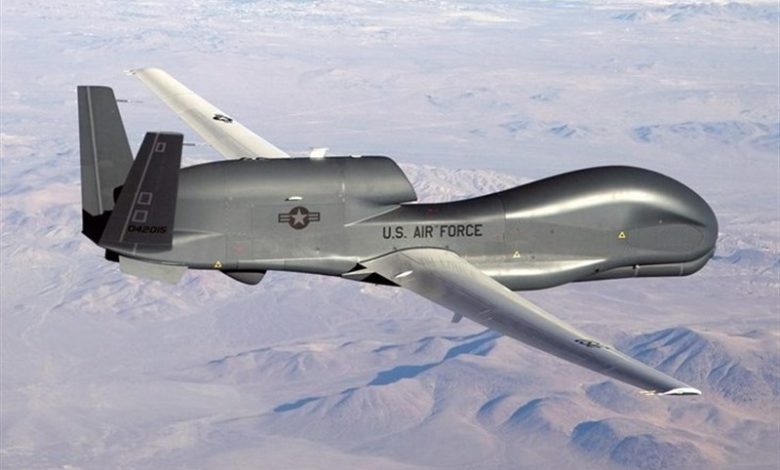
While White House officials and Donald Trump himself once again beat the drums of threats and speak of deploying carrier strike groups to the region, revisiting the case of the downing of the $200-million “Global Hawk” drone in the Kuh-e Mobarak area carries a clear message for the terrorist command of CENTCOM: the Persian Gulf and the Strait of Hormuz are not arenas for adventurism, but zones of complete and intelligent control by Iran’s Armed Forces.
In recent days, the U.S. government, relying on aggressive rhetoric and the deployment of the USS Abraham Lincoln to the CENTCOM area of responsibility, has sought to increase psychological pressure on the Iranian people through a new military posture. Yet a look at past confrontations shows that Washington has made a deep “miscalculation”: Iran is not a country that retreats in the face of warship displays.
America’s calendar of failures
U.S. military officials appear to have forgotten the cost of crossing Iran’s red lines — from the sandstorm disaster in the Tabas desert and the humiliation of U.S. Marines in the waters of the Persian Gulf, to the crushing of the Ain al-Asad base in Iraq and strikes on the Al-Udeid base in Qatar. All of this points to the reality that Iran’s deterrence level has reached a stage of “certainty,” where no act of aggression goes unanswered.
When a $200-million myth collapsed
One of the most serious historical lessons for Washington was the incident of June 20, 2019. On that day, the “Global Hawk” (RQ-4) spy drone — the world’s most expensive and longest-range operational UAV — violated Iranian airspace in the Kuh-e Mobarak area of Hormozgan Province, assuming that flying at 60,000 feet placed it beyond reach.
This 14.5-ton giant, equipped with the most advanced surveillance sensors, was shot down by the air defense of the IRGC Aerospace Force, proving to the world that Iran’s border “red lines” are not negotiable. At the time, IRGC Commander-in-Chief Major General, martyr Hossein Salami, emphasized: our borders are our red line, and any enemy that violates them will not return and will be destroyed.
Intelligent dominance over the world’s vital artery — from sky to sea
Today, Iran’s deterrence power has increased significantly compared to previous years. The deputy commander of the IRGC Navy has stated that management of the Strait of Hormuz has moved beyond traditional methods and become fully intelligent. Iran now has real-time control over all surface, subsurface, and aerial movements in the strait, and fully controls the passage of all vessels under any flag.
A serious warning has also been issued to neighboring countries that any use of their territory or airspace against Iran will place them among hostile parties.
The expansion of Iran’s weapons systems, missile capabilities, and air defense networks has clearly altered the balance of power in the Persian Gulf, making any military adventurism extremely costly for the opposing side.
The Islamic Republic of Iran has repeatedly declared that it seeks no war with any country, but Tehran’s combat and logistical readiness in the Persian Gulf has been designed so that any enemy miscalculation will be met with a “decisive” response. Before taking any action, U.S. naval forces would do well to once again study the geographic coordinates of Kuh-e Mobarak — where the courage of Iranian forces brought down the West’s most advanced surveillance technology.
/ Tasnim