

Will the U.S.–India Trade Rapprochement Last?
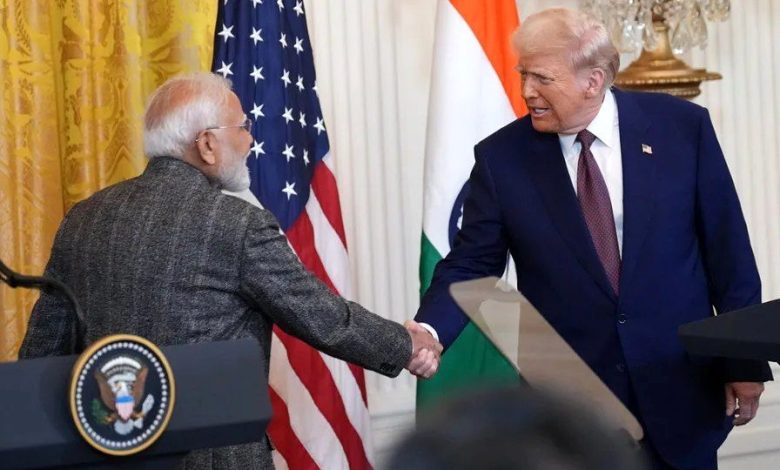
In early February 2026, long-standing trade tensions between the United States and India entered a new phase. According to a recent report by The Economist, Washington announced that it would reduce the “reciprocal” tariffs imposed on Indian goods from 25% to 18%, and would also remove the additional 25% tariff that had been imposed as a penalty for India’s purchases of Russian oil.
This move by Donald Trump can be seen as a sign of a temporary reconciliation between the two major economies. The key question, however, is whether this “truce” can evolve into a long-term agreement.
At first glance, the tariff reductions could benefit India’s economy. The country has largely managed to absorb the impact of previous tariffs, as key sectors such as pharmaceuticals, electronics, and light manufacturing were either mostly exempt from reciprocal tariffs or successfully adapted to the new conditions.
However, for export-oriented sectors such as apparel, jewelry, and handicrafts—which had found strong demand in the U.S. market in recent years—even reduced tariffs may not be enough to compensate for lost growth. Economic analysts suggest that earlier tariffs could have reduced India’s annual economic growth by around 0.4–0.7 percentage points.
Despite positive reactions from financial markets to the tariff-cut announcement, many analysts warn that the agreement appears more like a short-term policy adjustment than a structural trade pact. A key issue is that India has so far maintained a cautious stance on its purchases of Russian oil, and it remains unclear how much of this trade it is willing to forgo in order to meet U.S. demands.
In previous rounds of negotiations, the United States emphasized reducing tariff and non-tariff barriers—particularly in sectors such as agriculture, which have long been a source of friction between the two sides. These areas are not only economically sensitive but also politically delicate within India, where domestic producers enjoy strong protections and show little appetite for market liberalization.
The geopolitical context of the agreement further fuels uncertainty. Washington’s pressure on India to curb its purchases of Russian oil is part of a broader strategy to economically isolate Moscow. Experts warn, however, that such pressure could strengthen economic convergence within groups such as BRICS, potentially challenging Western interests in the long run.
The recent agreement can be viewed as a step toward easing tensions, but a comprehensive and sustainable trade deal between the two countries remains distant. Reducing market barriers, managing domestic political sensitivities, and defining a clear strategy on global energy issues will ultimately determine whether this trade rapprochement endures—or proves to be merely a temporary peace in a longer struggle.
— Donya-ye Eqtesad