

Yahya Sinwar: The Hidden Secret Behind the Al-Aqsa Flood and the Architect of the Operation
Yahya Sinwar returned to the arms of the resistance through the “Freedom Exchange,” and in the “Al-Aqsa Flood” operation, he brought the Zionists to their knees. Now, thousands of Palestinians are returning to the embrace of the resistance to become the new Sinwars of Palestine.
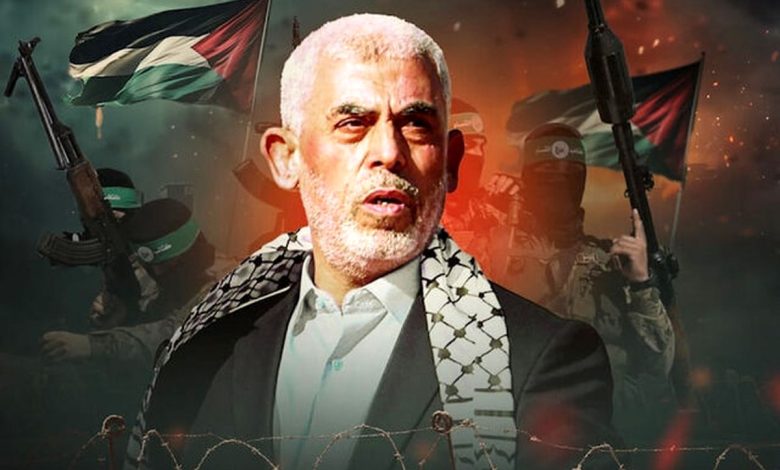
According to the Sedaye Sama News Agency Yahya Ibrahim Hassan al-Sinwar, known as Abu Ibrahim, was born on October 29, 1962, in the Khan Younis refugee camp in the Gaza Strip. From an early age, his life was defined by poverty, occupation, and an unwavering commitment to resisting the Israeli regime.
Family and Roots:
His family hailed from the city of Majdal in historical Palestine, renamed Ashkelon after the 1948 occupation. His father migrated to Gaza as a teenager and later settled in Khan Younis camp, where Yahya — the future mastermind of the “Al-Aqsa Flood” — was born.
Influence of His Father and Childhood:
Sinwar’s father was a devout man and a descendant of Sheikh Ahmad Yassin’s generation. His religious devotion and resistance spirit deeply influenced Yahya, who was raised largely by his grandfather and uncle during his father’s absence due to resistance activities.
Education and Early Islamic Activism:
Sinwar studied in Khan Younis schools and later earned a bachelor’s degree in Arabic Literature from the Islamic University of Gaza. During his student years, he emerged as a leader in the Islamic student movement and was soon detained for his activism.
Arrests and Security Role Formation:
In the early 1980s, he was repeatedly arrested by Israeli forces. In 1984, even before Hamas was formally established, Sinwar co-founded its internal security apparatus, Majd, alongside Khaled al-Hindi and Rouhi Mushtaha, under the direction of Sheikh Ahmad Yassin.
Imprisonment and the “Deal of the Free”:
In 1988, he was sentenced to four life terms plus 25 years (425 years total) for alleged involvement in operations against Israeli soldiers and collaborators. After 22 years in prison, he was released in the 2011 “Gilad Shalit Prisoner Exchange” (Deal of the Free).
Reorganization of Hamas after His Release:
Upon his release, Sinwar spearheaded a major internal security overhaul in Hamas, identifying and eliminating Israeli informants. His strategic deception of Israeli intelligence was later seen as a key reason for their failure to anticipate Operation Al-Aqsa Flood.
Political and Military Leadership:
Serving as a bridge between Hamas’s political bureau and its military wing, Sinwar was elected as the movement’s leader in Gaza in 2013, 2017, and 2021. Under his leadership, the highest level of coordination between both wings culminated in the October 7, 2023 operation.
Unifying the Resistance Factions:
From 2011 onward, he worked to unify all Palestinian resistance groups under a single operational framework. This vision materialized during the 2014 51-day war, with the creation of the Joint Operations Room, a model that continues to guide resistance coordination.
Target of Assassination:
Because of his intelligence acumen and pivotal role in strengthening resistance unity, Sinwar was consistently at the top of Israel’s assassination list. Despite this, he remained in Gaza and personally led operations on the frontlines.
Martyrdom on the Battlefield:
In October 2024, Yahya al-Sinwar was martyred during combat with Israeli forces in the Tel al-Sultan neighborhood of Gaza. Reports revealed that he fought side-by-side with his fighters, using old weapons and enduring days without food.
Legacy and Continuation of His Path:
His martyrdom coincided with a new wave of prisoner exchanges and the release of Palestinian fighters — a symbolic continuation of his struggle. Though Sinwar has fallen, his spirit lives on through a new generation of resistance leaders — the Sinwars of to