

Global Registration of Shafiabad Village
Shafiabad Village, located on the edge of the Lut Desert, has been recognized by the United Nations World Tourism Organization (UN Tourism) as one of the “Best Tourism Villages in the World.”
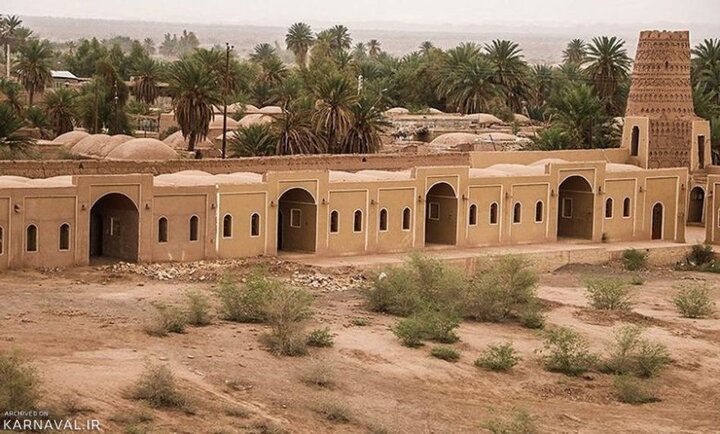
According to the Sedaye Sama News Agency, Shafiabad village, located on the edge of the Lut Desert, has been recognized by the UN Tourism Organization as one of the “Best Tourism Villages in the World.” This achievement is the result of more than two decades of local effort to link tourism, environmental protection, and sustainable development. Today, the village stands as a model of smart living in Iran’s arid climate — rooted in tradition, community cooperation, and heritage revival.
Once the last stop for caravans before entering the heart of the desert, Shafiabad’s historic caravanserai — dating back to the Qajar era — with its four watchtowers and flowing qanat, was a vital source of life for the settlement. Today, that same structure has been restored to host travelers who come to experience the silence of the desert and the beauty of the Shahdad Kaluts.
With its mud-brick architecture, narrow alleys, and ancient palm groves, Shafiabad exemplifies sustainable living in a dry region. Yet what truly brought it to global recognition was the villagers’ vision of tourism as a key driver of progress. Since 2003, tourism has become part of the local economy, leading to the growth of handicrafts, eco-lodges, and community-based services.
Women have played a crucial role in this transformation. A group known as Goojino revived traditional crafts like pateh embroidery and palm weaving, dedicating part of their income to restoring the qanats. They have saved eight qanats so far, demonstrating a powerful balance between economy and ecology — one of the UN’s main criteria for sustainable rural development.
According to Mohammad Jahanshahi, head of the National Ecotourism Committee at Iran’s Ministry of Cultural Heritage, Shafiabad’s global recognition is the outcome of over 25 years of work across Shahdad, Tekab, and Shafiabad. The integration of tourism, crafts, and local production has elevated the village to international status.
The Lut Desert Marathon was another milestone event. First held in 2016 with 50 runners, it now attracts over 600 participants and has helped position Shafiabad as a hub for sports and nature-based tourism in Iran.
The UN Tourism Organization evaluates “Best Tourism Villages” based on criteria such as reducing income inequality, empowering women and youth, protecting biodiversity, and improving infrastructure. Through community participation, restoration of its caravanserai, qanat preservation, and sustainable tourism, Shafiabad has met these standards on a local scale.
This success not only strengthens Shafiabad’s global standing but also shows that Iranian villages have the potential to become international tourism destinations without losing their cultural identity.
In Shafiabad, tourism has become a means to preserve heritage and revitalize local life. The qanats continue to flow, handicrafts have flourished again, and young residents now choose entrepreneurship over migration.
The village represents a harmonious coexistence of humans and nature in one of the driest regions on Earth. It proves that true development can respect both culture and the environment.
Today, Shafiabad attracts visitors from across Iran and the world who seek an authentic experience — where history, culture, and nature coexist.
Shafiabad is no longer just a village; it is a symbol of the connection between past and future — a living example that even in the heart of the desert, a community can reach the world through unity, heritage, and sustainability.