

The New Front in the U.S.–China Trade War Over Soybeans
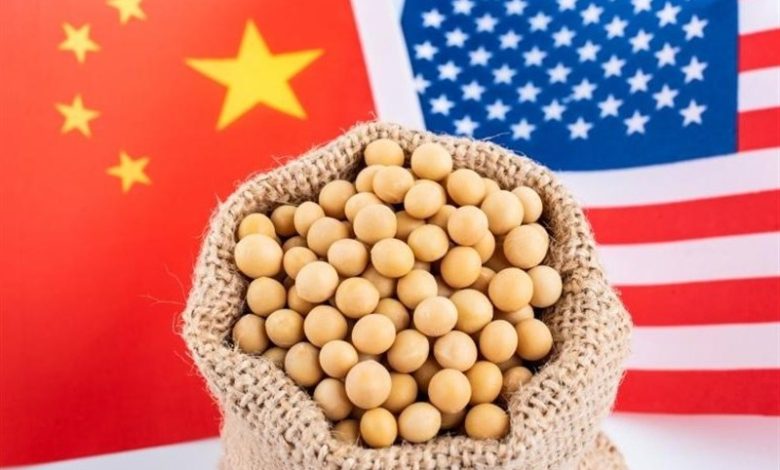
According to the Sedaye Sama News Agency, Trade tensions between the United States and China have escalated, with soybeans becoming a new frontline in their trade conflict.
The increasing reciprocal measures between the two countries have raised risk levels in global markets, directly affecting the prices of essential commodities.
Recently, China imposed additional restrictions on the export of rare earth elements. In response, U.S. President Donald Trump announced that, starting November 1, a 100% tariff would be applied on imports from Beijing, in addition to existing rates, along with export restrictions on critical software.
Trump claimed on social media that China “deliberately avoids buying soybeans from the U.S.”
However, since Trump took office, China has diversified its soybean imports, gradually removing the U.S. from its main supplier list.
Reports indicate that Beijing has not yet secured a large portion of its soybean needs for December and January, while high prices for Brazilian shipments have deterred buyers.
As a result, the Chinese government may use its strategic reserves to meet short-term domestic demand, a factor that has introduced volatility into the soybean market.
Soybean prices started 2025 at $10.10 per bushel, fell to $9.70 mid-year, and then stabilized around $10.82.
Sadi Kaymaz, an expert on Asian markets, told Anadolu Agency that soybeans hold political significance in Washington because farmers played a major role in Trump’s electoral victory.
He noted that the U.S., together with Brazil, is one of the largest soybean exporters in the world, but China is not self-sufficient in soybean production. The country’s large livestock industry requires substantial soybean imports, and recent tensions have shifted its purchases toward Brazil. Kaymaz added that this year, soybean trading on the Chicago Commodity Exchange has been weak because China has nearly halted purchases from the U.S.