

Dick Cheney also buried his wish to see the Iranian regime overthrown
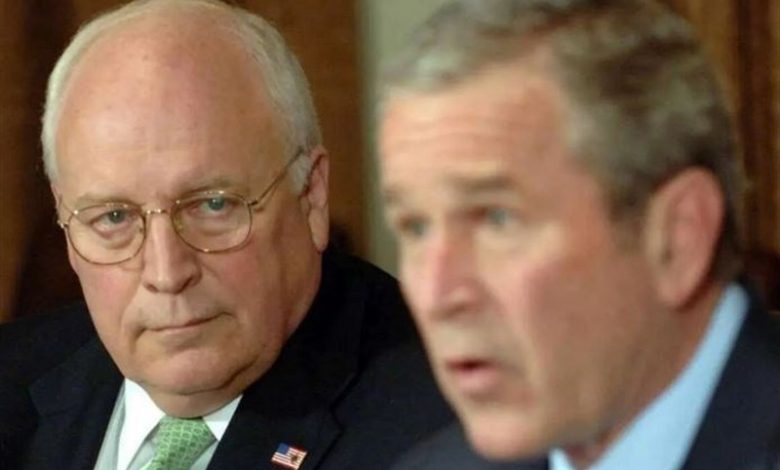
According to the Sedaye Sama News Agency, Today, Tuesday, 13 Aban — Dick Cheney, former Vice President under George W. Bush, has died at the age of 84.
Richard Bruce “Dick” Cheney was born on January 30, 1941 in Nebraska. He was an American politician and served as the 46th Vice President of the United States from 2001 until January 2009.
He was one of the principal architects of the Bush administration’s aggressive policies in West Asia.
Before earning his Bachelor of Arts and Master’s in Political Science from the University of Wyoming, he studied at Yale University. He began his political career as an intern for Congressman William A. Steiger, and eventually entered the White House under Presidents Nixon and Ford.
He served as White House Chief of Staff from 1975 to 1977. In 1978 he was elected to the U.S. House of Representatives, and from 1979 to 1989 represented Wyoming. In 1989 he briefly served as House Minority Leader.
Under President George H. W. Bush he was appointed Secretary of Defense and served from 1989 to 1993. He later served as CEO of Halliburton from 1995 until 2000 during the Clinton era.
In July 2000, he was selected by George W. Bush as his vice-presidential running mate for the presidential election.
During his tenure as Vice President, he played a prominent backstage role in the Bush administration’s response to the September 11 attacks and in coordinating the global war on terror.
He was among the early proponents of the Iraq War, claiming that Saddam Hussein’s regime possessed weapons of mass destruction and had operational links to Al-Qaeda. However, none of these claims were ever proven.
Many American analysts consider Cheney responsible for the U.S. invasion of Iraq. Even in the 2004 U.S. presidential election, when George W. Bush and Vice President Cheney faced John Kerry and John Edwards, Edwards explicitly accused Cheney of persuading Bush to attack Iraq for greater financial gain for his oil-services company, Halliburton.
As a staunch neo-conservative, Cheney believed firmly in the doctrine of pre-emptive strike, arguing that the U.S. should maintain global vigilance and surprise any country it deems a threat.
In his memoir (In My Time), Cheney wrote that in 2007 he tried to persuade George W. Bush to bomb a suspicious nuclear reactor in Syria. He says Bush declined, saying the administration was still under fire for claims about weapons of mass destruction in Iraq, and insisted on continuing diplomatic approaches. Cheney notes that no one in the cabinet meeting supported his proposal either.
Burial of the Regime-Change Dream in Iran
As a neo-conservative, Cheney regarded Iran as an existential threat to the United States and its allies — particularly Israel — and pushed for military options and regime-change against the Islamic Republic of Iran.
Under his leadership, the Bush administration initiated covert cyber and sabotage operations against Iran’s peaceful nuclear program. Reports indicate that he was involved in early consultations on designing the Stuxnet virus to attack Iranian nuclear facilities.
He also supported financial sanctions against Iran, but considered them insufficient, insisting on combining them with military action.
Earlier reporting (e.g. by Salon) noted that Cheney’s “greatest regret” was not attacking Iran and Iraq simultaneously. Some sources (such as an interview via Politico) suggest Cheney believed the previous U.S. government did not pursue the war forcefully enough. It was also claimed that at the time of the Iraq invasion, an internal slogan among administration officials said: “Real men attack Tehran” — meaning that the ultimate goal, in their view, was overthrowing the Iranian government.
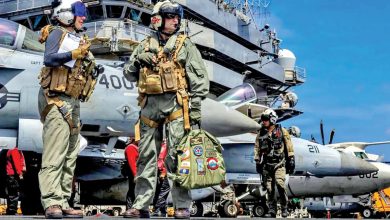
Investigative journalist Seymour Hersh in 2008 reported that Cheney sought to present false evidence to prompt the United States into war with Iran. One proposed plan was a naval-style false-flag attack on an American ship, carried out while personnel wore Iranian military uniforms as a pretext for military intervention against Iran.
Source: Tasnim News.