

The global water crisis is on the brink of explosion | Historic decline in lake levels across five continents
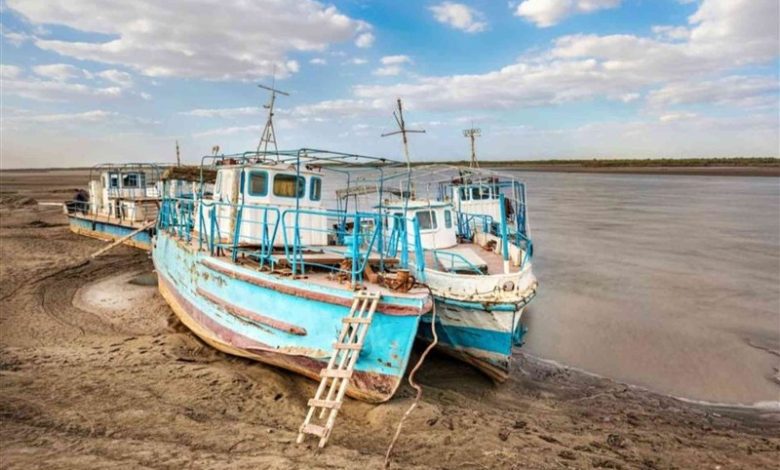
According to the Sedaye Sama News Agency, By late 2025, many of the world’s largest lakes and water reservoirs — from the Middle East to North America and Europe — have experienced unprecedented drops in water levels. Climate experts say this phenomenon is no longer confined to arid regions and is a sign of a fundamental shift in the global water cycle.
According to data from the World Meteorological Organization (WMO), the years 2024 and 2025 rank among the hottest ever recorded. Rising temperatures, declining seasonal rainfall, and intensified evaporation have pushed surface water reserves in many countries to their lowest levels in decades.
The Middle East on the edge of a water crisis
Iran, Turkey, and Iraq are at the center of the crisis. In Iran, major reservoirs that supply drinking water to Tehran — including Amir Kabir, Lar, and Latian — have been reported in critical condition, with some nearly empty. Experts warn that historically low rainfall and depletion of groundwater have put the capital’s water supply chain at direct risk.
In Turkey, the situation at Lake Tuz in central Anatolia is even more dire. Large portions of the lake dried up in 2025, destroying habitats for migratory birds. Over-extraction of groundwater and shifts in rainfall patterns are cited as the main drivers of the lake’s collapse.
In northern Iraq, the Dokan reservoir — one of the most important water sources in the Kurdistan Region — has fallen far below normal levels. Extensive upstream dam construction and reduced rainfall have disrupted inflows, exposing wide stretches of the lakebed.
The United States and Europe are also affected
This year’s drought is not limited to the Middle East. In the United States, California’s Salton Sea continues its long-term decline, and its dry, contaminated bed has become a source of toxic dust. Researchers warn that this dust is directly linked to rising respiratory illnesses in Southern California.
In Texas, Lake Travis and Canyon Lake in the Hill Country region have repeatedly dropped to their lowest levels in years. Scattered rainfall has been unable to compensate for major deficits caused by prolonged dry spells.
In the United Kingdom, reports show a significant decline in regional reservoir stocks and government preparations for the 2026 Drought Emergency Plan. Water authorities say reduced rainfall, combined with rising household consumption, has disrupted the balance of water resources.
Alarming global data
International platforms like G-REALM and Global Water Watch have recorded declining water levels in more than 100 major basins worldwide. Satellite data show that lake levels from North America to the Middle East and parts of South America have dropped simultaneously and in similar patterns — clear evidence that the current crisis is not local, but a direct consequence of global warming.
Climate experts emphasize that rising temperatures, shifting rainfall patterns, and increased evaporation are driving more severe droughts. At the same time, human activities — such as excessive dam construction, intensive groundwater pumping, and poor water management — have amplified climate impacts. In many places, including Iran and Turkey, these factors have combined to accelerate water loss and make recovery difficult.
Wide-ranging consequences: from drinking water shortages to ecosystem collapse
Falling lake levels have direct consequences for human life and ecosystems: drinking water shortages, loss of wetlands and bird habitats, increased polluted dust, and damage to agriculture and hydropower.
Experts warn that if current trends continue, 2026 could become one of the driest years of the century — a year in which water scarcity becomes not just a regional crisis but a global threat to human and environmental security.