


Emotional bank and time dollar
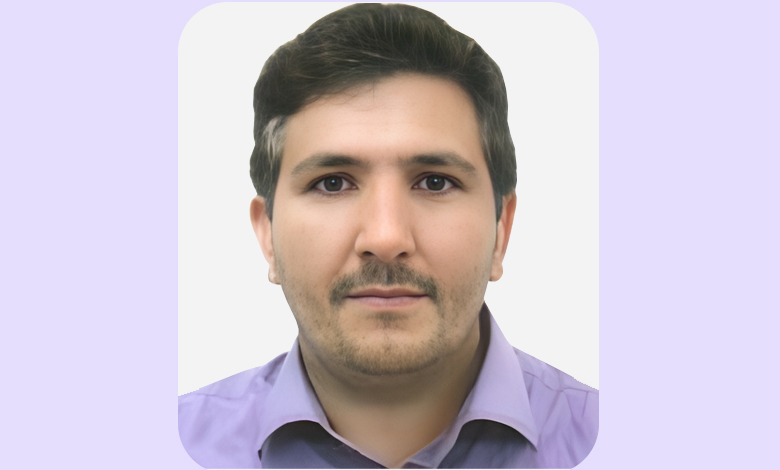
 Dr. Seyed Mehdi Hosseini, PhD in Political Science
Among the essential human needs are innate needs such as the need for transcendence, connection, and cooperation.
The intellectual concern and effort of social researchers to explain the profound impact of digital transformation have introduced concepts such as the “emotional bank” and the “Time Dollar” into the vocabulary of the social sciences.
Although this perspective pertains to a relatively recent past, it sketches a clearer horizon for the “new human” and calls upon him to build a better future.
The analytical capacity, generalizability, and theoretical adequacy of these emerging constructs in explaining daily events require clarification.
As Shayegan-Far notes in Aesthetics of Everyday Life / Dewey and Pop Art:
“Life flows within an environment that is itself in flux. The world is full of things indifferent—even hostile—to life; yet if life continues its flow, and if in its continuity it expands and opens, it can overcome conflicting and hostile factors.”
The fuel for this triumph is the belief in the divine nature of humankind.
This belief forms the foundation of the emotional bank and the behavioral structure of kindness and cooperative assistance, demonstrating that the human heart follows laws the intellect cannot fully comprehend.
Many studies show that:
“Human beings need an ultimate purpose—an ‘altruistic goal’—in order not to lose their sanity. This goal focuses their energy in a unified direction, enabling them to transcend their isolated existence and give meaning to their lives.”
From another point of view:
“Human beings are created to act, not to reason. And if they choose a particular idea, it is because they see that thinking is simply another way of moving freely in the world.”
The kind of thinking adopted in the emotional bank system—aimed at elevating the meaning of life—is essentially an emotional account where love, honesty, and fidelity are deposited. The interest gained from this investment consists of trust and confidence, which foster cultural and social (social-world) progress.
The highest example of such an emotional bank in Iranian society appears in the concept of the “Yāvar” (helper). Through the inner logic and rich meaning of this term, we can bridge to a not-too-distant past. In Iranian society, especially under the oppressive rule of the former regime, when the balance between state and people tipped increasingly toward state power at the expense of the people, cooperative traditions—Yāvar-like mutual assistance—served as mechanisms for managing agricultural affairs, stages of cultivation, care for the elderly, and facilitating the lives of the young. Even in difficult circumstances, providing fodder for livestock often drew upon emotional-bank savings.
The notion of the Time Dollar, mentioned by Anthony Giddens in The Third Way, resembles the Iranian concept of “Yāvar” in its recognition of the divine nature within human beings.
As the world-renowned speaker from Aarhus University expressed with clarity:
“Volunteers engaged in charitable work are rewarded by other volunteers based on the time they contribute. A computer system records every time-dollar earned or spent, and participant accounts are regularly updated.”
The unit of exchange in this non-monetary system is the amount of time contributed. The essential insight in this deeply rooted humanistic idea is:
“The time of every individual—regardless of political, social, economic, or cultural position—is evaluated as having non-material value.”
This view goes beyond simple aid. As Giddens states:
“If new politics are to address the new global condition effectively, they must pay special attention to understanding the very nature of political organization.”
In such organization, kind-based action becomes crucial for understanding the “personality of the new human”:
“Small communities are rarely weak or fragile. Individuals feel cared for, they help one another, and the attachments formed between members clearly show that despite disruptive social tendencies, mutual support networks can indeed be created.”
The meaning of such love-based connections, according to Gregory J. Feist and colleagues in Personality, is:
“Respecting the other and caring for his or her wellbeing without seeking any benefit in return constitutes altruistic love—a spiritual love that is unconditional and not dependent on the other person’s actions or characteristics.”
The other side of this emphasis is:
“Those who do not recognize things as they really are—and refuse to confront them.”
Belief and cognition matter because they make possible the analysis, interpretation, and demonstration of human behavior and its divine dimension.
The social consequence of ignoring this divine nature is—according to Hannah Arendt in The Human Condition—that some:
“Are content with whatever pleasure nature offers them, living and dying like animals.”
Although examples of living in pleasure and dying in comfort are undeniable realities, the concepts of the Time Dollar and cooperative Yāvar-like assistance are essential frameworks that illuminate how selfless, unconditional, God-inspired love is understood across cultures.
Clearly, every society has its own mechanisms for survival, flourishing, and promoting non-monetary exchanges rooted in social capital. Mass-communication tools have reshaped the political environment, economic activity, social interaction, and cultural structures. But in Arendt’s words:
“What determines the fate of obedience is not the relation between command and obedience but the factor of belief—and the number of those who share that belief.”
Conclusion
The internal logic of the emotional bank and the Time Dollar offers a fitting response to one of the innate needs of human beings.
As Feist and colleagues argue:
“Although innate needs are fundamental and unlearned, the powerful forces of civilization can alter or even eradicate them.”
Given the profound impact of modern media on the life of the “new human,” one necessary condition for a healthy society is the expansion of emotional-bank approaches, Time-Dollar exchanges, social entrepreneurship, and service-based credit systems.
Through the interest earned on deposits of love, honesty, and fidelity, it becomes possible to create conditions that enable society and culture (the social world) to take firmer steps toward self-actualization.
It is clear that modern communication technologies have transformed the norms and customs of tradition, and the genie released from the digital lamp can easily dominate the emotional bank.
In this bank, there is no window for depositing “money”; all transactions occur through good deeds, benevolence, and altruism.
Altruism is a precious quality, but because its purpose focuses human energy toward meaning and transcendence, it carries the risk of falling into the “altruism trap.” The digital magician—quick and agile—can remove this noble behavior from the cycle of human exchange.
Since technological futures cannot be predicted precisely, the essential warning is this: once trapped in altruism, it becomes difficult to maintain the scales of justice in balance.
Indeed:
“If we want a world that combines stability, equality, and happiness, we cannot leave such matters to the rotation of global markets and the relatively powerless international institutions.”
(Giddens, The Third Way, p.170)