


Gap in the Federal Reserve’s monetary policy path
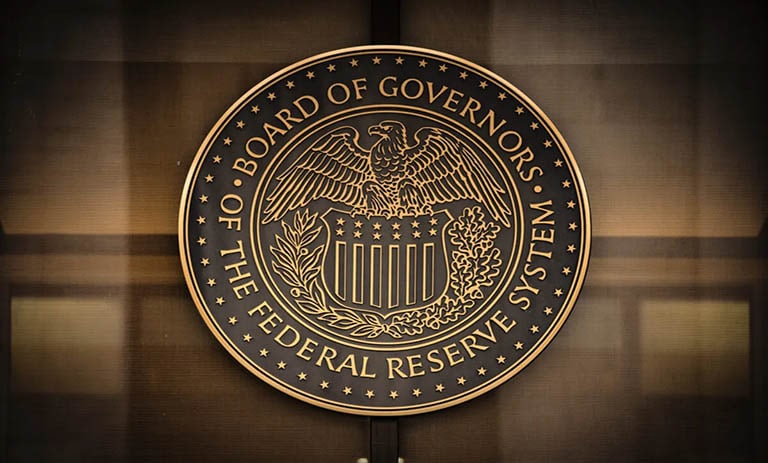
According to the Sedaye Sama News Agency, The newly released minutes of the Federal Reserve’s Federal Open Market Committee (FOMC) show that the U.S. central bank’s policymakers are facing an unprecedented division ahead of the December meeting.
According to the Financial Times, the committee members have “sharp disagreements” over whether they should proceed with a third interest-rate cut this year.
The minutes indicate that discussions on the short-term path of monetary policy included “strongly divergent views” — ranging from those who believe a half-point cut is necessary to those who think rates should remain unchanged.
This widening split comes as inflation remains above 3 percent while signs of weakness in the labor market continue to emerge.
Meanwhile, the U.S. Department of Labor announced that, due to the recent federal government shutdown, the October employment report will not be released — a rare occurrence that leaves monetary policymakers without fresh labor-market data before the December 9–10 meeting.
Many committee members warned that the lack of reliable data reduces their ability to properly assess economic conditions.
At the October meeting, the Federal Reserve cut rates by a quarter point for the second time this year; however, the vote was fractured. Steven Miran advocated for a half-point cut, while Jeff Schmid, the Kansas City Fed president, opposed any further reductions. This disagreement led Jerome Powell to say after the meeting that the December outcome is “not pre-determined.”
According to the minutes, a majority of members see additional rate cuts as likely, but “several” cautioned that December may not be the right time. On the other hand, some members emphasized that if the economy evolves as expected, they will support a cut. Meanwhile, “many” argue that the current rate range should remain unchanged through year-end.
On Wall Street, the probability of another rate cut — which seemed nearly certain last month — has now dropped to around 30%. This follows comments from hawkish officials such as Schmid, Susan Collins, and Michael Barr, who argue that inflation remains too high and economic growth is still resilient despite pressures.
Conversely, dovish members argue that labor-market weakness justifies a cut; Christopher Waller has even described the labor market as “nearing a halt.”
The recent government shutdown has intensified the hawkish–dovish divide, adding further uncertainty to the policy outlook. The Federal Reserve now stands at a critical juncture, where either decision — cutting or holding rates — will carry significant implications for financial markets, inflation, and U.S. growth prospects in the final months of the year.
source: donyaye eghtesad