


The New Cold War in East Asia
China has formally taken its escalating dispute with Tokyo to the United Nations over recent remarks made by Japan’s Prime Minister Sanae Takaichi regarding Taiwan. This move comes as relations between the two East Asian neighbors have fallen to their lowest point since 2023, with diplomatic tensions showing no signs of easing.
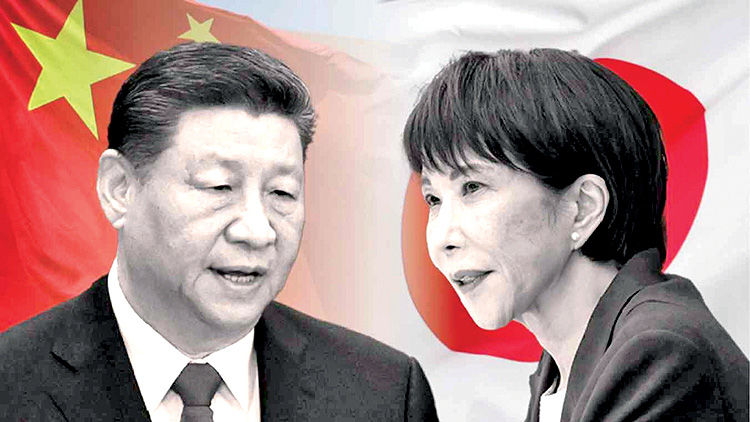
According to the Sedaye Sama News Agency, According to Al Jazeera, Fu Cong, China’s permanent representative to the United Nations, warned in a letter to António Guterres: “If Japan dares to intervene militarily in the Taiwan Strait situation, it will be considered an act of aggression.” Beijing, which views Taiwan as part of its territory, was angered by the recent remarks of Japanese Prime Minister Sanae Takaichi, who earlier this month discussed how Japan might respond to a potential Chinese attack on Taiwan.
The BBC reported that, in response to questions from a lawmaker in parliament about a possible Chinese attack on Taiwan, Takaichi stated that if such an attack involved the use of warships or military actions, it could “certainly constitute a survival-threatening situation”—an unprecedented stance that goes beyond the cautious policies of previous Japanese prime ministers. A “survival-threatening situation,” defined under Japan’s 2015 security laws, refers to a scenario where an armed attack on an ally poses an existential threat to Japan, thereby allowing Japanese forces to respond.
Takaichi’s remarks triggered a harsh and undiplomatic reaction from Xue Jian, China’s Consul General in Osaka, who wrote in a now-deleted post on X (Twitter): “We have no choice but to cut off that filthy neck that is lunging toward us. Are you ready?” The threat prompted Tokyo to demand an explanation, and as tensions escalated, both countries summoned each other’s ambassadors. China’s Foreign Ministry also warned Japan of a “crushing defeat” if it intervened in the Taiwan issue. Despite mounting pressure, Takaichi has refused to retract her comments.
The tensions have spilled over into the economy. On 14 November, China issued a travel advisory against visiting Japan, and Chinese airlines began refunding tickets—a heavy blow to Japan’s tourism sector, which relies on millions of Chinese visitors. Additionally, Beijing suspended the release of at least two Japanese films and banned imports of Japanese seafood. China’s Ministry of Education also warned its students about safety concerns in Japan.
On the security front, China’s Coast Guard announced last Sunday that it had conducted patrols near the disputed islands known as Senkaku in Japan and Diaoyu in China. Diplomatic efforts have yielded little; during a recent meeting in Beijing, a senior Chinese official appeared wearing symbolic clothing echoing anti-imperialist rebellion against Japan, sending a message of defiance. The tensions have deep historical roots, including Japan’s wartime occupation during World War II. Although Japan adopted the “One China” policy in 1972, it has maintained unofficial ties with Taiwan.
Economically, the damage is severe. China is Japan’s second-largest export market (worth $125 billion in 2024), and Japan is China’s third-largest trading partner, importing $152 billion worth of goods in 2024. This is not the first time Beijing has used trade as leverage; similar tactics occurred during the Fukushima water release dispute and the detention of a Chinese fishing captain. China’s Ministry of Commerce has stated that bilateral trade relations have been “seriously damaged.”