

Revisiting the proposals for creating a common currency in the world
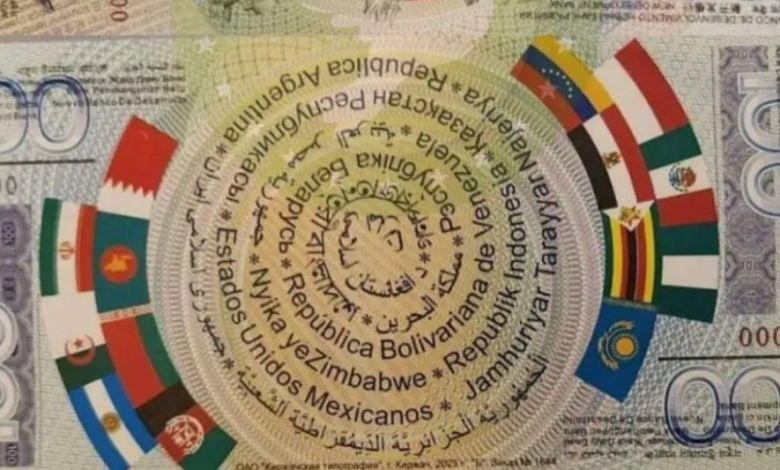
According to the Sedaye Sama News Agency, After decades have passed since this form of “parity” was created, Iran—particularly following the intensification of sanctions and its membership in several regional agreements—has repeatedly proposed the creation of a common currency. Although the proposal has been met with interest, it appears that the prerequisites for its practical implementation are not currently in place.
European countries have historically experienced numerous cross-border wars, most of which had ethnic and racial roots. These conflicts continued in various forms, and territorial claims and expansionist ambitions often aimed at seizing the mines and natural resources of neighboring states. In 1952, the first step toward ending these disputes and establishing peace was taken through the signing of the “Montan Union” agreement in the coal and steel sectors. Over time, as more European countries joined, the process culminated in 1992 with the formal establishment of the European Union.
To create a unified financial market, EU member states decided to introduce the euro as an accounting currency, a decision that took effect on 1 January 1999. Initially, the euro was used only in electronic payments, and after three years it was issued in physical banknotes and coins.
The introduction of a common currency brought more integrated and stronger financial markets to member states. Reduced exchange costs, increased transparency in currency transactions, greater security against exchange-rate volatility, and more economic stability collectively encouraged small and large-scale investment across the union.
This initiative spread rapidly, and the broad support for the euro among EU states strengthened its resilience to economic shocks and increased its attractiveness in global trade.
Yet this was not the whole story. In 2007, Alan Greenspan, the then-chairman of the Federal Reserve, suggested that the euro could become a global currency similar to the dollar. However, despite the strength of this argument, by the end of 2006 the euro accounted for only 25% of global foreign-exchange reserves, while the dollar held 66%.
Despite the euro’s gradual growth in global transactions, the dollar continues to dominate financial markets. Even after nearly three decades of the euro’s presence in the global economy, the dollar still maintains the upper hand.
A similar historical trajectory exists for the dollar itself. In 1944, following the Bretton Woods Agreement, representatives of 44 countries at the United Nations Monetary and Financial Conference in Bretton Woods, New Hampshire, officially agreed to designate the U.S. dollar as the world’s reserve currency. Under this system, exchange rates were tied to gold reserves, but unlike the Gold Standard, the International Monetary Fund had the authority to intervene in cases of major trade or financial imbalances.
Historical documents show that decades before the creation of the euro, Iran and Germany used a joint currency in their bilateral financial exchanges. These notes, issued in 1916 during World War I, served as an important economic and political tool aimed at facilitating transactions without relying on banks, enabling Iranian students to study technical fields in Germany, and allowing German engineers and industrial experts to work in Iran.
One side of these notes displayed the German Mark, while the other showed the Iranian Rial, with an established “parity” that made the notes valid in both countries: twenty-five rials were equal to ten marks.
After decades of this early form of parity, Iran—especially after intensified sanctions and membership in certain regional blocs—has continued to propose the creation of a common currency. Although the idea has received attention, the conditions necessary for its practical realization do not yet seem to exist.
source: donyaye eghtesad