

Justice in social and family behavior is the first right of women
Yesterday morning, in a meeting with thousands of women and girls from various parts of the country, the Supreme Leader of the Islamic Revolution described Lady Fatimah Zahra (PBUH) as a heavenly human being adorned with the highest virtues in all fields. He also explained Islam’s view on the status and rights of women in the family and society and outlined the do's and don’ts regarding men’s behavior toward their wives and women in various areas.
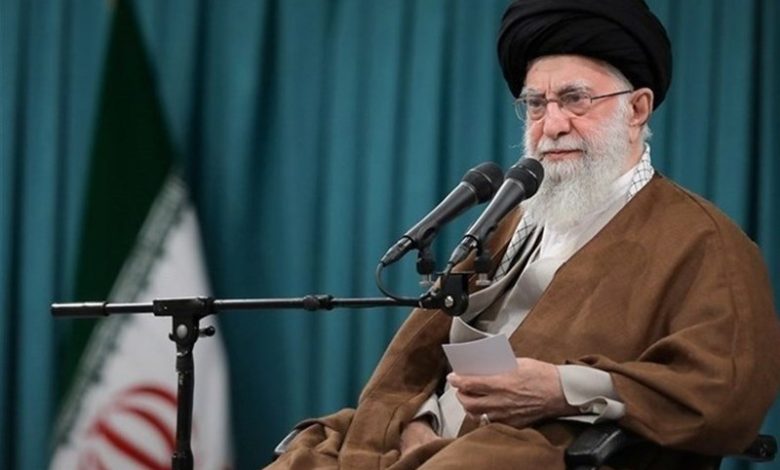
Ayatollah Khamenei referred to the innumerable virtues of the Lady of the Worlds—Fatimah al-Zahra (PBUH)—in worship and humility, self-sacrifice for people, endurance in hardships and calamities, courageous defense of the oppressed, enlightening society and clarifying truths, political understanding and action, managing the home, being a devoted wife and mother, and her presence in the great events of early Islamic history, as well as other fields. He said: The Iranian woman, thanks to God, takes this radiant sun—who according to the Prophet (PBUH) is the leader of all women of the world throughout history—as her role model and walks in her path.
He described the status of women in Islam as extremely high and added: the Qur’anic expressions about the identity and character of women are the most elevated and progressive. Referring to Qur’anic verses that highlight the equal role of men and women in the life and history of humanity, and the equal possibility of spiritual growth and reaching the highest stations, he said these truths contradict the misunderstandings of those who claim religiosity without knowledge, as well as those who reject religion altogether.
Explaining the Qur’anic logic regarding women’s rights in society, he stressed: Islam grants women equal rights with men in social activities, business, political participation, access to most governmental positions, and other fields. In spiritual endeavors and personal and societal progress, the path is open for women.
He noted that corrupt Western and capitalist culture is completely rejected in Islam. Islam sets rules for interaction between men and women, modest dress for both, women’s hijab, and encouragement of marriage in order to preserve the dignity of women and regulate powerful sexual instincts. This system fully accords with human nature and society’s real needs, whereas Western culture ignores the destructive consequences of unrestrained sexual impulses.
He considered men and women in Islam as two balanced and complementary elements, with many shared traits and certain differences arising from physical and natural capacities. Together, they play vital roles in running human society, continuation of the human generation, advancement of civilization, fulfilling social needs, and managing life.
He emphasized that the formation of a family is one of the most important acts within this vital process. Unlike the Western culture that has neglected the family institution, Islam provides mutual and clear rights for women, men, and children as components of the family.
In another part of his speech dedicated to women’s rights, he identified justice in social and family conduct as the first right of women, stressing that the government and society must guarantee this right. He added that security, dignity, and respect are also fundamental rights of women. Unlike Western capitalism—where the dignity of women is trampled—Islam insists on full respect for women.
Citing a saying of the Prophet (PBUH) that likens women to a “flower” rather than a household servant, he said: based on this perspective, one must treat women with tenderness and care so that they can, in turn, fill the home with beauty and fragrance.
He mentioned the Qur’anic examples of Mary and Asiya (wife of Pharaoh) as models for all believing men and women and as evidence of the importance of a woman’s thought and action. He added that social rights of women—such as equal wages for equal work, insurance for working women and female heads of households, special leave for women, and many other issues—must be safeguarded without discrimination.
He described a husband’s affection as the most important right and need of women at home. Citing traditions encouraging men to express love to their wives, he added: another major right of women is the absolute prohibition of violence against them and refraining from Western deviations such as killing or beating women by their husbands.
He considered not forcing women to do housework, helping them during the difficulties of childbirth and motherhood, and leaving the path open for scientific and career advancement among other women’s rights. Emphasizing that the woman is the manager of the household, he said women who skillfully run the home despite financial pressures and rising costs must be appreciated.
Contrasting the capitalist and Islamic views of women, he said: in Islam, women have independence, capability, identity, and the possibility of progress. But the capitalist view demands submission, dissolves a woman’s identity in that of a man, ignores her dignity, and turns her into a material object and tool of pleasure. The recent scandals involving criminal gangs in the United States are the result of such a worldview.
He listed the destruction of the family institution, the rise of fatherless children, the weakening of family ties, gangs exploiting young girls, and the growing promotion of sexual permissiveness as “freedom” among the major crimes of Western capitalism over the past two centuries. He said the West deceptively labels these deviations as “freedom” and seeks to spread them even in our country, whereas this is not freedom but enslavement.
He added that the West insists on exporting its false culture to the world. They claim that restrictions such as hijab hinder women’s progress, but the Islamic Republic has refuted this false logic and has shown that a Muslim woman committed to Islamic dress can excel and play influential roles in all areas—even more than others.
He listed scientific, athletic, intellectual, research, political, social, health, and medical achievements, longer life expectancy, and the inspiring support of the wives of martyrs as unprecedented accomplishments of Iranian women. He said Iran has never witnessed even a small fraction of the number of educated and influential women it has today, and that the Islamic Republic paved the way for women’s advancement.
He offered an important recommendation to the media, cautioning them not to promote Western capitalist views about women. When discussing hijab, modest dress, or cooperation between men and women, domestic media should not echo Western narratives. Instead, they must highlight Islam’s deep and constructive perspective—an approach that is the best means of promoting Islam and attracting people worldwide, especially women.
Before the Leader’s speech, the “wife of Martyr Gholamali Rashid and the mother of Martyr Amin-Abbas Rashid,” as well as the daughter of Martyr Hossein Salami, delivered remarks on women, their responsibilities, and their needs.
Source: Donya-ye-Eqtesad