

A USD 21 Billion Gap in Non-Oil Exports Compared to the Seventh Development Plan Targets
Budget-Centered Energy Governance as a Barrier to Achieving Export Goals
 Habibeh Rahimiyan, reporter for Sadaye Sama
A member of the Board of Directors of the Iran Energy Export Federation stated that while, under the Seventh Development Plan, the country was supposed to reach USD 75 billion in non-oil exports by 2025, official statistics indicate a USD 21 billion shortfall—an issue that was criticized at the conference titled “Obstacles to the Development of Non-Oil Exports in the Energy Sector.”
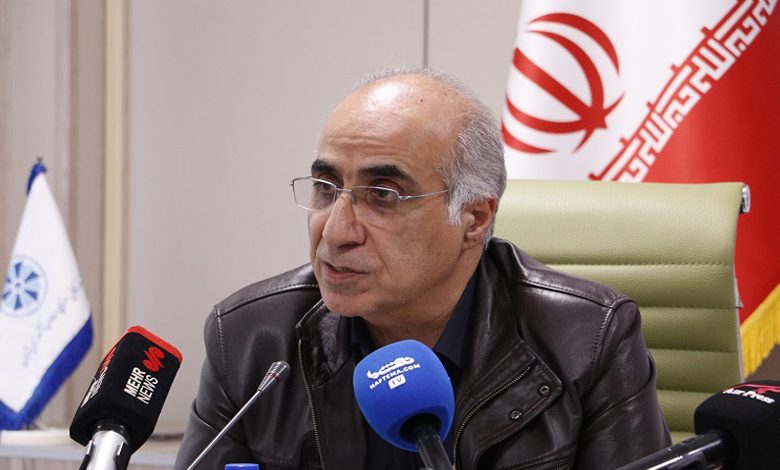
According to the Sedaye Sama News Agency, Fariborz Karimaei, Board Member of the Federation and Deputy Head of the Employers’ and Trade Association of the Petrochemical Industry, outlined the macro objectives of the Seventh Development Plan during the press conference.
He stated:
“Under this plan, two key national targets have been defined: a 23 percent annual growth in non-oil exports and an 8 percent economic growth rate, which clearly set the direction of the country’s economic trajectory.”
Presenting baseline figures, he explained:
“Iran’s non-oil exports amounted to around USD 50 billion in 2023. With an annual growth rate of 23 percent, exports should reach USD 141 billion in the final year of the plan (2028). This means creating USD 91 billion in new non-oil exports over five years—a very large and ambitious figure that requires special attention and targeted policymaking.”
He noted that current calculations even include gas exports as part of non-oil exports, emphasizing that this definition must be revised and separated into ‘non-oil and non-gas exports’, as gas is effectively considered a raw export.
Referring to the 8 percent economic growth target, Karimaei said:
“According to World Bank data, Iran’s GDP in the base year of the plan stood at approximately USD 405 billion. With an annual growth rate of 8 percent, this figure should reach USD 595 billion in the final year, meaning an increase of about USD 190 billion in GDP over five years.”
He stressed:
“Under the Seventh Development Plan, around USD 91 billion of this economic growth is expected to come from non-oil exports, highlighting the critical role of non-oil exports in achieving national economic growth.”
He added that this clearly shows the country’s development strategy is firmly export-oriented.
Commenting on the GDP structure, Karimaei noted:
“If GDP reaches USD 595 billion in the final year of the plan and non-oil exports amount to USD 141 billion, the share of non-oil exports will reach about 24 percent of GDP—nearly double the current level.”
Criticizing current export performance, he stated:
“Had we followed the Seventh Development Plan over the past two years, exports should have reached USD 75 billion. However, actual performance is around USD 32 billion. Even without electricity and gas supply disruptions, exports would not exceed USD 54 billion, indicating a USD 21 billion export gap.”
He also referred to reports by the Statistical Center of Iran, adding:
“Unfortunately, economic growth has been reported at around minus 0.1 percent excluding oil and about 0.5 percent including oil, showing a significant gap compared to the targets of the Seventh Development Plan.”
Karimaei emphasized that reviewing the position of non-oil exports and identifying their challenges—particularly in sectors such as petrochemicals—was a key focus of the press conference, stressing that without resolving structural barriers, achieving the objectives of the Seventh Development Plan will not be possible.
Highlighting the key role of the petrochemical industry, he said:
“Although petrochemicals carry a significant share of export volumes, achieving the targets requires a shift in economic governance. In recent years, economic actions have been largely budget-driven rather than program-based or development-oriented.”
Referring to the composition of non-oil exports, he noted:
“Non-oil exports amount to approximately USD 53 billion, of which around 60 percent consists of petroleum products and related derivatives.”
He also criticized underutilized capacities, explaining:
“Estimates show that 20 percent of the country’s petrochemical production capacity—equivalent to 21 million tons of output—is idle. The investment value of this unused capacity is about USD 20 billion, which has already been made. However, due to feedstock shortages and misguided policies, this capacity remains unused. In fact, about 60 percent of this idle capacity is due to feedstock shortages, resulting in an annual loss of nearly USD 4 billion in GDP.”
Concluding his remarks, Karimaei stressed the need to reform energy-sector governance, stating:
“Energy governance in Iran has not been program- or development-oriented; rather, it has consistently been budget-centered.”