

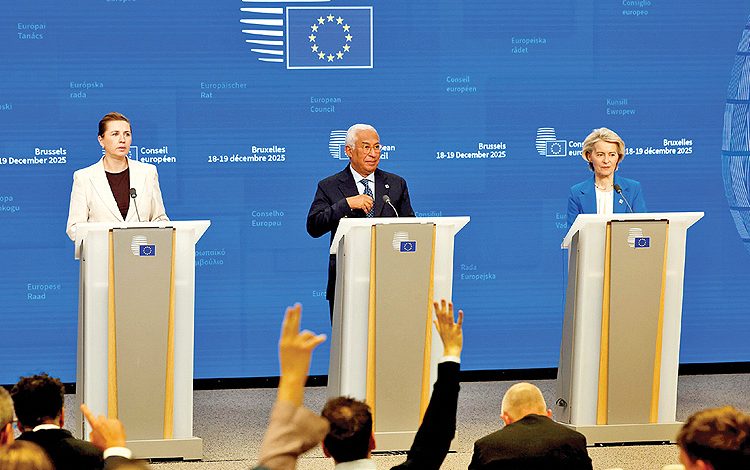
European Union leaders decided on Friday to borrow funds themselves rather than use frozen Russian assets in order to provide a €90 billion ($105 billion) loan to finance Ukraine’s defense against Russia over the next two years. With this decision, they temporarily set aside disputes over an unprecedented plan to finance Kyiv using Russian sovereign funds. The leaders also tasked the European Commission with continuing work on the so-called “reparations loan” plan based on seized Russian assets; however, this option was deemed unfeasible for now, largely due to opposition from Belgium, where most of these assets are held.
According to CNN and forecasts by the International Monetary Fund, Ukraine was expected to face a budget deficit of about $160 billion (€137 billion) over the next two years, partly due to the suspension of U.S. financial assistance. The EU was seeking to cover two-thirds of that amount—around $105 billion (€90 billion). The idea of EU-wide borrowing initially appeared impossible because it required unanimous approval, and Hungary’s Prime Minister Viktor Orbán, who maintains friendly ties with Russia, opposed it. Ultimately, however, Hungary, Slovakia, and the Czech Republic agreed to allow the plan to move forward, provided it would have no financial impact on them.
Reuters reported that EU leaders said Russian assets worth €210 billion within the EU will remain frozen until Moscow pays war reparations to Ukraine. Should Russia ever take such a step, Ukraine could use those funds to repay the loan. German Chancellor Friedrich Merz said, “This is good news for Ukraine and bad news for Russia—and that was exactly our intention.” The risk of failing to secure financing for Kyiv was extremely high, as without EU financial support Ukraine would face a budget shortfall in the second quarter of next year and would likely lose the war—an outcome the EU fears could bring Russian threats closer to the bloc.
The decision followed hours of debate among leaders over the technical details of an unprecedented loan based on frozen Russian assets—a plan that proved too complex or politically difficult at this stage. The main challenge was providing sufficient guarantees to Belgium, which holds about €185 billion of the total Russian assets in Europe, against potential financial and legal risks stemming from possible Russian retaliation. Belgian Prime Minister Bart De Wever said at a press conference, “There were too many questions surrounding the reparations loan, so we had to turn to the alternative plan. Reason prevailed.” He added, “The European Union avoided chaos and division and remained united.”
Given the strain on public finances across the EU due to high debt levels, the European Commission had proposed either using Russian assets to lend to Kyiv or engaging in joint borrowing backed by the EU budget. Choosing the latter option allowed Orbán to claim a diplomatic victory. An EU diplomat said, “Orbán got what he wanted: no approval of a reparations loan and EU action without financial participation from Hungary, the Czech Republic, and Slovakia.” Several EU leaders arriving at the summit stressed that finding a solution to finance Ukraine and sustain the fight over the next two years is vital. They were also keen to demonstrate European strength and resolve, particularly after U.S. President Donald Trump described them as “weak” last week. / Donyaye Eghtesad