

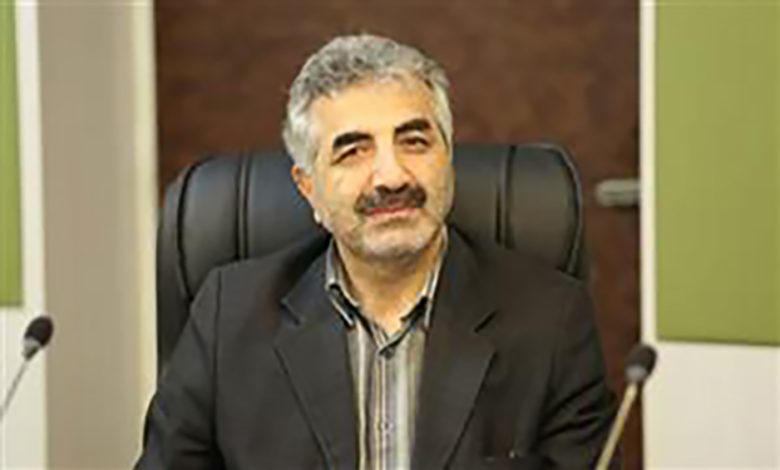
 Dr. Gholamhossein Biabani; Secretary of the Iranian Association for the Development of Detective Science and Innovation Studies
Philip Kotler, in his book Marketing Management, divided the most important trends in the business environment into six broad domains: demographic, economic, governmental, environmental, socio-cultural, and technological. This classification can be summarized using the initials of these domains in English under the acronym DIGEST.
This simple classification provides a very powerful tool for improving human understanding of the surrounding world. Without such frameworks, people face a chaotic set of trends that are difficult to organize and interpret. Using the DIGEST framework allows one to systematically think about demographic trends, economic trends, governmental trends, and so on. Through this approach, multiple trends can be grouped into overarching major trends that encompass them all. The role and importance of the six DIGEST domains are as follows:
-
Demographic:
Each individual has unique abilities, needs, and aspirations. Awareness of changing human characteristics—such as place of residence, age, gender, health status, education, language, and more—has become increasingly important in a multicultural and globalizing world. -
Economic:
The economy is the source of jobs, income, and goods essential for life. However, global economic systems are constantly changing, creating new opportunities for businesses and employment while simultaneously posing major challenges for individuals and societies. -
Governmental:
Laws and regulations are continuously evolving and affect all aspects of life. Governments levy taxes, wage wars, enact laws, manage educational institutions, and oversee social security systems. In most countries, government remains the dominant actor in the overall system. -
Environmental:
The human physical environment consists of the natural environment plus buildings and other human-made structures. The environment provides air to breathe, water to quench thirst, and food to satisfy hunger. In the past, the environment was considered stable and unchanging, but today it is constantly evolving and must not be ignored. -
Socio-cultural:
Education, science, media, arts, sports, leisure, entertainment, and other cultural and social activities occupy a significant portion of human life. They shape people’s thoughts, knowledge, and values. Trends in this domain affect not only private life but also have substantial impacts on the economy, governance systems, and other sectors. -
Technological:
New technologies transcend traditional human boundaries and transform lives. To remain up to date, individuals must develop a general understanding of developments in computing, communications, biotechnology, the internet, and related fields. While new technologies raise living standards and protect lives, they also bring a range of challenges, such as advanced weapons, privacy concerns, and other risks that can endanger human life if ignored.
As previously discussed, predicting the future is not possible; however, there is a need to explore the future by combining information obtained from various techniques. This approach strengthens planning, which Wilkinson and Coopers argue can reassure leaders about the uncertainty of the future. They emphasize that the future is, at best, a hypothesis rather than a precise fact. Such preparedness supports rapid adaptation in times of crisis, enabling leaders to manage uncertainty and make appropriate trade-offs. This involves more extensive planning, greater openness and transparency, and a willingness to share resources and experiences.
Various methods can be used for planning and foresight, including:
-
Evidence-based policing: a research-based method for decision-making about what works in policing and which strategies and activities most efficiently achieve police objectives.
-
Scenario planning: focusing on key issues and developing alternative scenarios for plausible events that are important to a police organization or service.
-
The Delphi forecasting method: examining issues on which experts reach consensus.
-
SWOT analysis: summarizing strengths, weaknesses, opportunities, and threats facing the police.
-
PESTLE analysis: an acronym for Political, Economic, Sociological, Technological, Legal, and Environmental factors, used to examine environmental impacts on an organization to guide strategic decision-making.
Increased research and planning foster greater coherence among academics, researchers, and practitioners. This approach strengthens the link between theory and practice and supports flexibility, innovation, and experimentation.