Iran’s Customs Administration has released the country’s foreign trade performance for the first nine months of the current year, figures that indicate a decline in value alongside an increase in volume. According to the published data, the decline in the value added of Iran’s export goods continues. On the import side, a drop in value is also observed, which economic actors attribute partly to a reduction in gold imports and partly to a global decline in prices of certain commodities.
At the same time, investment-related data have raised concerns about a possible decrease in imports of capital goods.
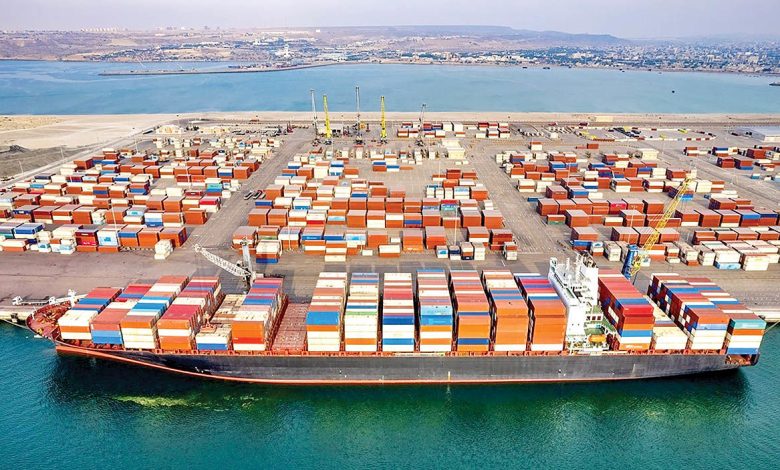
According to a report by Tasnim News Agency, Iran’s total foreign trade during the first nine months of the year reached 148.226 million tons, valued at $85.394 billion, reflecting a 10.92% decline in value and a 1.36% increase in volume.
Of this total, 118.901 million tons of goods worth $41.243 billion were exported to various countries, marking a 1% increase in volume but a 5.78% decrease in value compared to the same period last year.
Meanwhile, 29.325 million tons of goods valued at $44.151 billion were imported, representing a 2.75% rise in volume and a 15.23% drop in value year-on-year.
Continued Reliance on Raw Material Exports
Commenting on the latest trade figures, Seyyed Yousef Ghazi-Asgar, Vice Chairman of the Import Management Commission at the Iran Chamber of Commerce, told Donya-e-Eqtesad that foreign trade cannot be assessed using a single indicator and must instead be analyzed commodity by commodity and across different product groups.
He noted that the sharp rise in the exchange rate this year has prevented a more significant decline in export values, as higher foreign currency rates have increased incentives to export.
Regarding imports, he explained that the bulk of Iran’s imports consist of essential goods, whose global prices—ranging from oilseeds to sugar and livestock feed—have experienced downward trends at various points. This decline, he emphasized, is largely driven by global market conditions rather than domestic factors. Lower global prices have reduced input costs, a trend visible in sectors such as steel and food industries.
He further pointed out that large volumes of essential goods and livestock feed raw materials remain stuck on ships at ports or behind customs checkpoints due to the central bank’s failure to allocate foreign currency. Valued at several billion dollars, these goods should be economically recognized as imports, yet they have not been recorded in official customs statistics.
A review of the nine-month trade data shows that while Iran’s foreign trade has grown in volume, it has declined significantly in value. Exports have increased quantitatively but generated lower value added, as a substantial portion still consists of raw materials rather than high value-added finished goods.
Import values have also declined, mainly due to reduced gold imports and lower global prices for certain products. Economic stakeholders argue that current policies effectively encourage imports while penalizing exporters.
In this context, the depreciation of the national currency, which could have boosted export value, failed to produce a meaningful positive impact on trade due to export barriers.
Business actors believe that unless currency issues are resolved and exports shift toward higher-value products, Iran’s foreign trade will remain large in scale but limited in impact, ultimately ceding regional markets to competitors.
/ Donya-e-Eqtesad