

The First Image from the “Tolou-3 (Paya)” Satellite Has Been Received
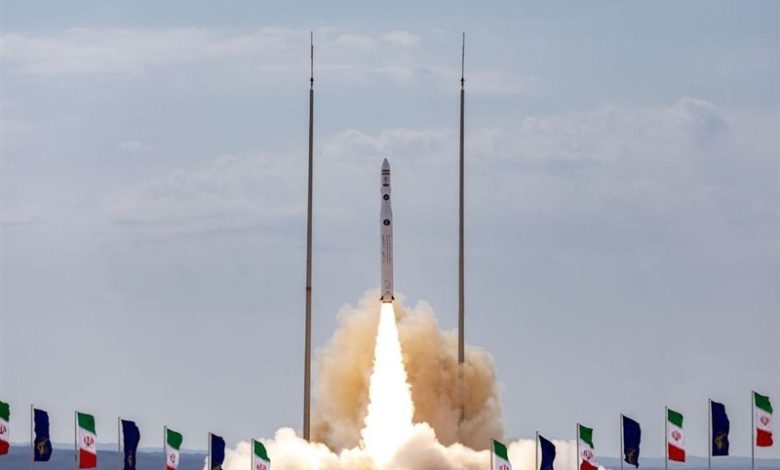
Hassan Salarieh, Head of the Iranian Space Agency, commented on the latest status of three Iranian satellites recently launched into space, stating:
“Last week, on the 7th of Dey, at exactly 16:48, three Iranian satellites were launched by the Soyuz launch vehicle and were successfully placed into orbit.”
He added:
“According to prior predictions, the injection process of all three satellites was fully completed between 19:00 and 21:30 on the same day. Based on earlier planning, we successfully established communication with the satellites one by one between 21:30 and 22:00.”
Referring to the reception of initial signals, Salarieh said:
“The initial communications established on the night of the 7th of Dey with all three satellites, and the signals received, indicated the correct injection and proper functioning of the satellites during their first orbital passes.”
Resolving the Rotational Speed Challenge of the ‘Paya’ Satellite
Salarieh went on to mention a challenge encountered with one of the satellites, noting:
“As previously announced on the Ministry of Communications’ website, during the injection process of the Paya satellite, we faced a minor challenge, as the satellite’s rotational speed after launch was somewhat high.”
He emphasized:
“Fortunately, through the process carried out over the past week, the stabilization operation of the Paya satellite was successfully completed, and the issue was resolved. Currently, as also stated by the Minister of Communications, all three satellites are in very good condition.”
Start of Orbital Testing Phase and Subsystem Evaluation
The Deputy Minister of Communications explained post-launch technical measures, stating:
“According to operational planning, the orbital testing phase usually begins within the first one to two months after launch. Although satellites undergo numerous tests on the ground, the performance of all subsystems must be carefully reassessed in space.”
He added:
“These subsystems include communications (telemetry and telecommand), power generation and distribution, stabilization, thermal control, and various payloads installed for imaging or communications.”
Noting that no major challenges existed other than the angular speed issue of the Paya satellite, Salarieh said:
“In line with the plan, subsystem testing has begun. Over the past week, power generation and distribution subsystems were examined, which are extremely critical, as any defect could render the satellite completely inoperable.”
Critical Importance of Communications at a 500-kilometer Orbit
Emphasizing the importance of space-based data collection, Salarieh stated:
“Communications, telemetry, and command transmission from Earth to space are crucial. The satellite operates at an altitude of 500 kilometers, and sensors collect data and transmit it to Earth via the communications subsystem. Proper functioning of this system is vital; otherwise, contact with the satellite would be lost.”
He continued:
“Sending commands from Earth is essential. Based on received data, specific commands are issued. These processes, including thermal control, rotational stabilization, and others, are carried out step by step with precision and under strict procedures approved by space industry experts. Fortunately, nearly all subsystem tests of the Paya satellite have been completed and confirmed.”
Activation of the Main Payload and Reception of the First Image
The head of the Iranian Space Agency announced the activation of the satellite’s main payload, stating:
“The significant development for the Paya satellite is that its cameras, which constitute the main imaging payload, were activated yesterday, and we are now in the process of testing the imaging payload.”
He added:
“In fact, the Paya satellite is ahead of the predicted orbital testing schedule. All stages of its multiple subsystem tests have been approved, and we are now in the imaging payload testing phase, which represents the satellite’s primary mission. The first image was received yesterday, as confirmed and announced by the Minister of Communications.”
Commencement of the Sensitive Camera Calibration Process
Salarieh noted that expectations for the three satellites have been met, explaining:
“In the coming days and weeks, we will enter the very important process of camera calibration. The received images require various corrections, including geometric, spectral (color), and positional corrections.”
He explained:
“Geometric correction ensures that objects and shapes appear in images exactly as they are on Earth, preserving proportions and angles. Spectral calibration ensures that recorded colors and light spectra accurately match real conditions on the ground.”
Salarieh attributed the need for these corrections to harsh space conditions, stating:
“Launch shocks, various accelerations, and extreme temperature differences cause orbital conditions to differ significantly from laboratory environments. Even minute changes, on the order of micrometers, in camera geometry can affect image quality; therefore, performing these corrections from Earth is essential.”