

Aftershocks of Maduro’s Abduction
From Iran to Venezuela
The think tank Tactics for Security and Counterterrorism in a note dated January 6 addressed recent reports and speculations about the possibility of renewed U.S. military action against Iran following the detention and abduction of the ousted President of Venezuela. The think tank noted that just a few hours after the announcement of Nicolás Maduro’s abduction by the United States, Yair Lapid, leader of the Israeli opposition, issued a warning to the Iranian government. Lapid, in an unfounded claim on X, stated that Iran should closely monitor the situation in Venezuela. He further claimed that Iran might also feel the effects of the U.S.’s bold action in Venezuela.
Maduro’s removal and abduction occurred just days after Donald Trump, President of the United States, spoke with Benjamin Netanyahu, Prime Minister of Israel, again threatening Iran with military action and raising concerns that these separate events could be inextricably linked.
The think tank further added: the key question is whether Maduro’s abduction increases the risk of war with Iran. According to the report, although Washington’s conflicts with Caracas and Tehran arise from different political and strategic contexts, analysts warn that Trump’s decision to target Maduro could accelerate the path to confrontation with Iran. This view stems from the idea that a new lawlessness destabilizes everything and increases the likelihood of war. Whether Trump directly confronts the regime or signals Israel to conduct a similar operation, the course could clearly shift toward confrontation. Additionally, tensions from Maduro’s abduction could push Iran toward actions that escalate militarily, including accelerating military deterrence or undertaking preemptive measures against potential U.S. or Israeli attacks.
The Future of Diplomacy with Tehran
The London-based think tank added that the U.S. operation in Venezuela highlights Trump’s maximalist approach to foreign policy and further reduces the prospects for diplomacy with Iran. The report stated that with Maduro removed, the White House plan to limit Iran’s geopolitical influence regionally and globally has taken on new dimensions, which undoubtedly affects Trump’s view of diplomacy. At the same time, the administration’s insistence also entails complete submission from Iran and advancing a zero-enrichment policy, which Tehran has repeatedly stated it will not comply with. The lack of diplomatic avenues leaves confrontation as the only option, meaning that Israel, Iran, and the United States are on a potential collision course. Furthermore, Maduro’s abduction has deepened skepticism within Iran’s political structure toward U.S. intentions and reinforced arguments for developing nuclear deterrence.
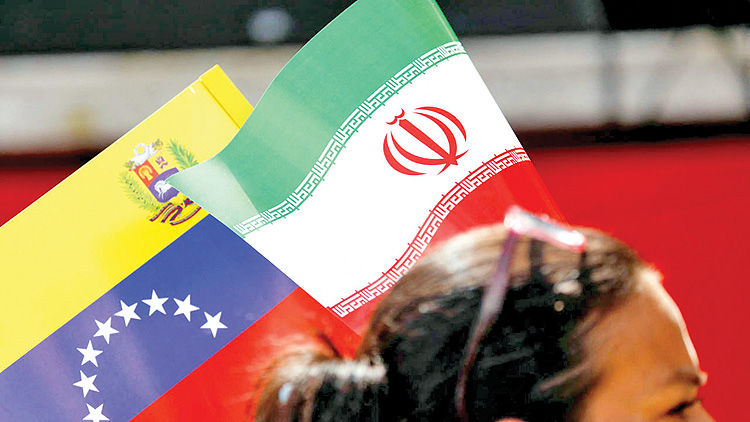
The think tank also wrote: a fundamental question is why the Iran-Venezuela alliance matters to Washington. The U.S. attack that led to Maduro’s abduction came after months of escalatory rhetoric by Trump and senior U.S. officials against Venezuela. Washington has accused Maduro of leading a drug trafficking organization, while Trump and his advisers have increasingly claimed that the United States has the right to access Venezuela’s massive oil reserves. Marco Rubio, U.S. Secretary of State, has repeatedly highlighted Caracas’s ties with Tehran in recent months and, without evidence, accused Venezuela of enabling Hezbollah to establish a foothold in the Western Hemisphere. It is undeniable that Maduro has long been a close ally of Iran, and over the past decades, the two sanctioned countries have developed bilateral trade estimated in the billions of dollars.
Toward Escalation
Al-Araby Al-Jadeed also reported that Maduro’s removal from the geopolitical axis could have broader repercussions than currently apparent. Ryan Bull, a Middle East analyst, told the outlet that Maduro’s absence will undoubtedly be felt by Tehran, but the depth and long-term implications will reveal themselves over time.
He added that it all depends on how much the U.S. can influence Venezuela’s future regime. If the future government of Caracas takes a Western-aligned approach, it would be detrimental to Tehran and lead toward further tensions. But if the future government in this Latin American country adopts a moderate stance, it is possible to hope the situation will remain under control. However, the most decisive factor is the economic dimension. According to James Dewin, professor of international relations at Allison University, the impact of this event on Iran’s economy and oil exports remains to be seen, and it could influence the future of diplomacy between Tehran and the West.
These developments occur amid intensified efforts to peacefully resolve disputes between Iran and the United States. According to Al Jazeera, Qatar’s Foreign Ministry spokesperson on Tuesday, January 6, emphasized that any potential escalation against Tehran would threaten not only regional stability but the international community as a whole. Majid Al-Ansari, the Qatari spokesperson, added: “We support all efforts and consultations between Iran and the U.S. to reach a diplomatic solution.” He continued that Qatar is in contact with Tehran and Washington and supports any dialogue to prevent tensions. Al-Ansari concluded: “There is still time for diplomatic and political solutions regarding Iran.”/Donyaye Eghtesad