

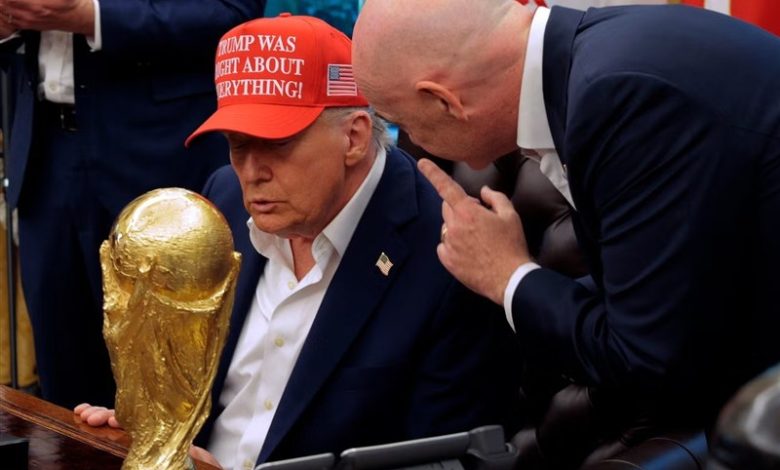
The 2026 FIFA World Cup, set to be jointly hosted by the United States, Mexico, and Canada, will be the first edition featuring 48 teams, but it is also shaping up to be one of the most controversial tournaments in football history amid recent political developments. In a detailed report, the British newspaper The Independent examined the possibility of a boycott by some European countries.
According to the report, senior officials at FIFA and UEFA are primarily concerned about the political repercussions of U.S. interest in Greenland, which could draw football into a serious diplomatic crisis. Although no official meetings or public statements have been issued so far, all eyes are on FIFA President Gianni Infantino, as the organization’s highly centralized structure places responsibility squarely on his shoulders.
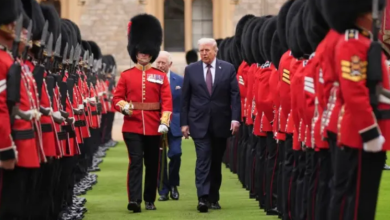
The report notes that Infantino’s visible closeness to Donald Trump has made him a central figure in a potential crisis. Under normal circumstances, FIFA might portray itself as a victim of geopolitical events, but the personal relationship between its president and the U.S. president has significantly undermined that option.
Some sources believe Infantino is hoping the issue will fade away, as many previous Trump-related controversies have. However, even without concrete action, the situation is unprecedented for FIFA. Should matters escalate, the 2026 World Cup—expected to be the most profitable in history—could instead become the most damaging.
In this context, the World Cup has effectively become a “political pressure point” for European football federations. Reports have already emerged of discussions around threatening a boycott in German political circles, as well as petitions signed in the Netherlands. Experts suggest that it would be striking if European leaders did not seriously consider boycott scenarios.
Football officials are also concerned that the precedent set by Russia’s ban after hosting the 2018 World Cup has left little room for maneuver, particularly since the current crisis is unfolding before the tournament rather than afterward. Some have even raised the prospect of a unified European stance and expressions of solidarity with Denmark.
Once again, attention has turned to Infantino, who has repeatedly emphasized football’s role in “uniting the world” and has described the upcoming World Cup as “the greatest moment in history.” Critics, however, argue that his close ties to Trump and other powerful leaders have politicized FIFA to an unprecedented degree, potentially turning that into a major vulnerability.
Ultimately, global football finds itself in a state of anticipation and uncertainty. Although the 2026 World Cup is scheduled to take place from June 11 to July 19, 2026, politics has intruded into the heart of the game more than ever before, creating a crisis that could profoundly shape the fate of this historic tournament./ tasnim