

Opponents of the Islamic Republic who refer to themselves as “regime-changers” have never constituted a uniform or cohesive movement. This spectrum ranges from monarchists and liberal republicans to left-wing groups, the MEK (Mujahedin-e Khalq), pejoratively referred to in Iran as “Monafeqin,” ethnic separatists, and a network of media activists and expatriate celebrities—an incoherent collection with a long history of internal disputes, mutual attacks, and rejection of one another.
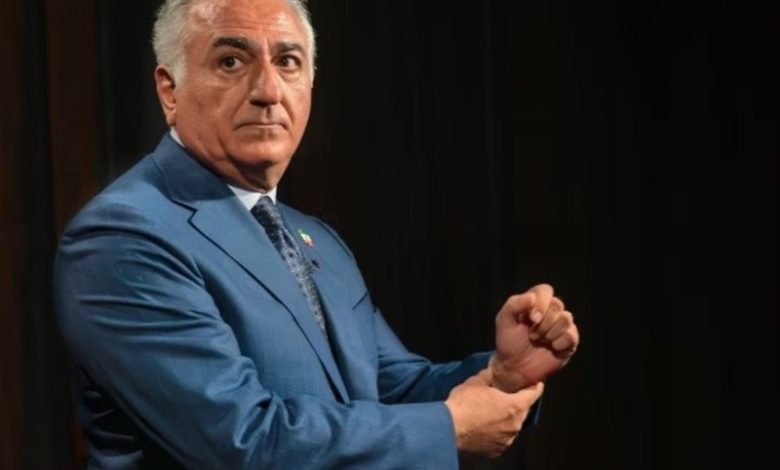
Nevertheless, in recent months a media and political line has clearly emerged that seeks to elevate Reza Pahlavi as the “leader,” or at least the “standard-bearer,” of this regime-change camp; a line that is not the result of genuine consensus, but rather the product of external pressure and a perceived propaganda need.
The reality is that regime-change groups are inherently lacking in cohesion. Factors such as ideological differences, personal rivalries, competition for visibility, and the absence of a clear leadership and organizational structure have always prevented the formation of a unified front among them.
This time, too, the situation is not the outcome of political maturity, but of external compulsion. Informal and public signals from certain American figures—especially those around Donald Trump—have conveyed the notion that “external support is not possible without a single, seemingly unified and coherent figure.”
Yet this very notion has been met with skepticism by Trump himself. In his latest remarks about Reza Pahlavi, he explicitly stated that he does not know whether the Iranian people would accept his leadership or not.
Despite these doubts, the regime-change opposition—particularly the monarchists—has made every effort to project a form of minimal and imposed unity; a unity that is far more the product of threats, exclusion, verbal abuse, and psychological pressure on internal dissenters than the result of any genuine agreement among the various groups…
A Repetition of a Failed Outcome
Approximately two years ago, six opponents of the Islamic Republic—Reza Pahlavi, Abdullah Mohtadi, Shirin Ebadi, Nazanin Boniadi, Masih Alinejad, and Hamed Esmaeilion—attempted to project an image of “unity” and “collective leadership” by holding meetings and issuing joint statements. However, this alignment was less the product of genuine strategic convergence than a short-lived media performance that quickly collapsed.
They formed an alliance under the name “Solidarity for Democracy and Freedom in Iran,” yet this highly publicized coalition fell apart after just one or two meetings, during which the six figures were, in effect, forced to sit together.
Disputes over leadership, political ambitions, relations with foreign governments, approaches to sanctions, and even personal and reputational issues rapidly turned this group into a stage for open conflict. Some of these figures accused one another of incompetence, opportunism, dependence on foreign powers, and even betrayal. Critical discourse was swiftly replaced by harsh, insulting, and at times crude rhetoric, and the rifts became so deep that any possibility of reviving the coalition was effectively eliminated.
Hamed Esmaeilion was the first to withdraw from this so-called alliance, citing the influence of “pressure groups” that were attempting, “from outside” and through “undemocratic methods,” to impose their views on the collective. One of the groups he referred to—indeed, the most prominent—was the monarchists.
Following Esmaeilion’s departure, Reza Pahlavi also stepped away. Nevertheless, the remaining four issued a statement reaffirming their commitment to solidarity and the continuation of the path—an assertion so hollow that neither public opinion nor even the signatories themselves took it seriously. This paper alliance thus effectively came to an end.
Notably, after the collapse of this grouping, no meaningful effort was made to heal the divisions. Instead, each individual pursued a separate media and political trajectory, and in some cases, undermining and discrediting others became part of their political conduct. This precisely reflects a long-standing reality about the opposition to the Islamic Republic: an unwillingness to tolerate one another. It also highlights the absence of a shared program, the lack of decision-making mechanisms, and an inability to accommodate dissent within the opposition—clearly demonstrating that the exiled opposition, even with external media and political support, lacks the minimum organizational maturity required to manage internal disagreements and present a coherent alternative.
Reza Pahlavi: An Unrivaled Option or the Only Imposed Choice?
Reza Pahlavi is now being put forward not because of any genuine social legitimacy inside Iran, but rather due to the absence of a broadly agreed-upon alternative within the opposition—making him a “marketable” option for the West.
For segments of the regime-change camp—particularly leftists, republicans, and even the MEK—monarchism is not merely unacceptable; it evokes a past toward which they harbor deep ideological hostility. Nevertheless, pressure to “remain silent for the sake of unity” has, for the time being, swept these objections under the rug. This pressure relies heavily—alongside Iran International television (operating under the guidance of Israel’s Mossad) and certain other actors—on a harsh and intimidating atmosphere on social media, where any dissenting voice is met with coordinated attacks, insults, and smear campaigns, designed to deter others from expressing opposition.
The Stigma of Foreign Intervention: An Irreparable Rift
At the same time, one of the most significant scandals surrounding the regime-change opposition must not be overlooked: the act of begging foreign powers to launch a military attack on Iran—an issue that will most likely become one of the very factors that bring down this latest performance as well.
Appealing to foreign governments for a military assault on Iran cannot be dismissed as a mere political tactic. It represents a historic disgrace that will permanently stain this movement. A demand so shameless that even many within the opposition itself are unwilling to bear its moral and historical responsibility—a demand that, in practice, entails accepting the killing of civilians, the destruction of the country, and the repetition of catastrophic regional scenarios.
In this regard, monarchists—and Reza Pahlavi personally—appear more eager than others to pursue this line, going so far as to openly describe the shedding of Iranian blood as the “cost of war.” In various forms, and in both Persian and English, they have sent messages to Trump and Netanyahu calling for the acceleration of a military strike on Iran—openly, not covertly.
Abusive Rhetoric: The Only Common Ground
That said, the opposition to the Islamic Republic is not entirely devoid of common ground. What unites most of these factions is neither a political program nor a clear vision for the future, but rather abusive language, insults, and the verbal elimination of opponents. Experience has shown that whenever external pressure or media-driven excitement subsides, this movement swiftly reverts to its “factory settings”: public infighting, internal exposés, and personal attacks—making little distinction between monarchists, the MEK, or others.
Under these circumstances, it can be predicted—based on existing evidence—that the current regime-change “unity” will be short-lived and unstable, heavily dependent on external pressure and hopes for foreign backing, and will collapse at the first political setback or moment of indifference from foreign actors. / Tasnim