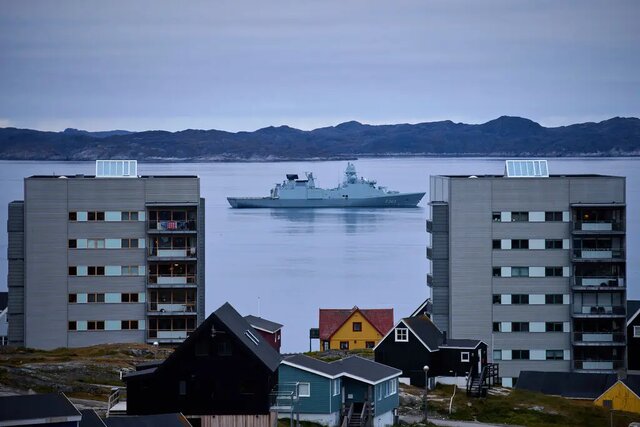


How Many Bases Does the US Have in Greenland?
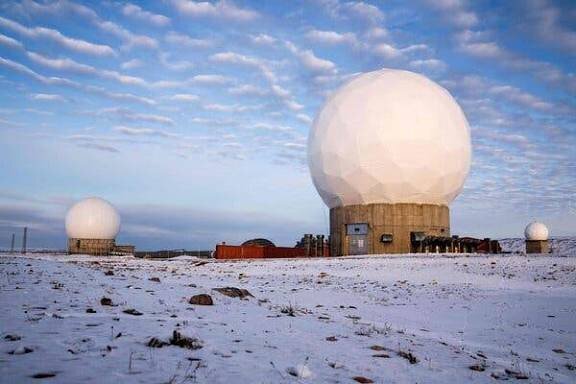
The United States once operated dozens of bases in Greenland, but today only one remains.
In a report, The New York Times wrote that several decades ago the United States maintained a broad presence in Greenland, including thousands of troops, more than a dozen bases, strategic bombers, weather stations, and even a massive facility built beneath the ice. Today, however, only one active base remains — a remote missile defense station.
Some former bases have been converted into commercial airstrips, while others have deteriorated into rusting ruins.
US President Donald Trump has said that the United States needs Greenland for its national security. Having previously threatened that the island could be taken by force, he has recently signaled that he is also considering compromise. One proposal under discussion involves the United States owning portions of land in Greenland to establish military bases.
Greenland, an autonomous territory of Denmark, along with the Danish government, has been highly sensitive and opposed to any transfer of sovereignty, and it remains unclear whether such a plan would be feasible at all.
What is currently in Greenland?
The United States operates the Pituffik Space Base — using the Danish pronunciation — in northwestern Greenland. Around 150 personnel at the base manage missile defense systems and space surveillance operations. The base’s location, near the northernmost reaches of the planet and not far from the North Pole, allows its radar systems to detect missiles in the earliest moments of flight.
Danish defense analyst Peter Ernstved Rasmussen says:
“This base is literally America’s most distant defensive eye. Pituffik is where the United States can detect a missile launch, calculate its trajectory, and activate its missile defense systems. This base is irreplaceable.”
What used to exist in Greenland?
A great deal. During World War II, Nazi Germany occupied Denmark and established secret weather stations along Greenland’s eastern coast. At the same time, the US military built its own weather stations on the island’s western coast to forecast conditions for the fighting in Europe.
Shortly thereafter, the United States began constructing airstrips in areas such as Narsarsuaq, Ikateq, and Kangerlussuaq in the southern half of the island. These runways served as staging points for long-range bombers flying between the United States and Europe.
After the war, many of these bases were closed. Some, including the Sondrestrom Air Base in Kangerlussuaq, remained under US control until 1992. During the Cold War, the United States established a network of early-warning radar stations across the island capable of detecting missiles flying over the Arctic.
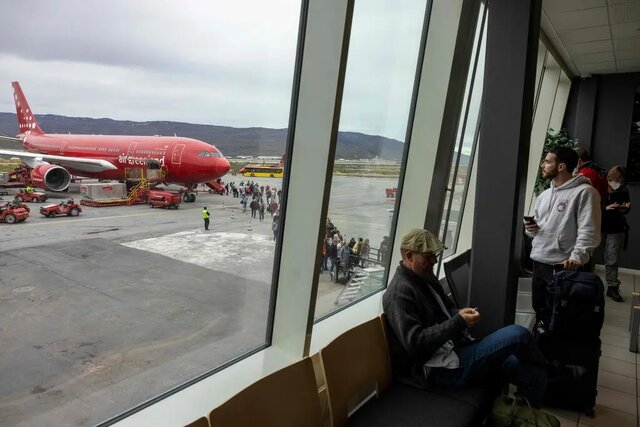
Today, some of these old runways—such as Kangerlussuaq—have been upgraded into small commercial airports and are used by Air Greenland, the island’s national airline.
Other bases, including Narsarsuaq and Ikateq, have fallen into ruin. Most Cold War-era radar installations have been dismantled, although one still stands atop a hill in Kangerlussuaq. Locals call it “Mickey Mouse” because its two large circular dishes, inactive for decades, resemble giant ears.
How could the US military presence expand?
Most former US bases are so deteriorated that restoring them would be nearly impossible.
According to Troy J. Bouffard, director of the Center for Arctic Security and Resilience at the University of Alaska Fairbanks, the most likely option for expanding the military presence would be around the active Pituffik base. The base is relatively lightly defended, and one possible option would be the deployment of short- to medium-range air defense systems around it.
“Otherwise,” he says, “Pituffik could be easily destroyed, and then we would be blind.”
A Danish military official has also said that Kangerlussuaq Airport could be another plausible option for expansion, given its significance during World War II, its relatively protected location, and favorable weather conditions.
Trump has spoken about deploying missile interceptors in Greenland as part of the missile defense shield known as the “Golden Dome,” but it remains unclear exactly where such systems could be deployed.