

The United States is seeking to dominate Africa’s mines…
In light of the intensifying competition among advanced technology companies across the global village to gain access to critical and strategic minerals for the production of superconductors and electronic chips, undeniable evidence has recently emerged regarding activities by the White House aimed at gaining control over Africa’s mineral resources.
This comes as the first Critical Minerals Summit is set to be held next week in Washington, D.C., the capital of the United States. Although the event appears industrial and mining-focused, it reflects the White House’s latest efforts to create competition against China’s activities in Africa’s mineral supply chains.
According to published reports, among the invitees to the summit, the name of Félix Tshisekedi, President of the Democratic Republic of the Congo (DRC), stands out. This is because the Congo is recognized as one of the most important countries in mineral production, particularly in the field of critical and strategic materials.
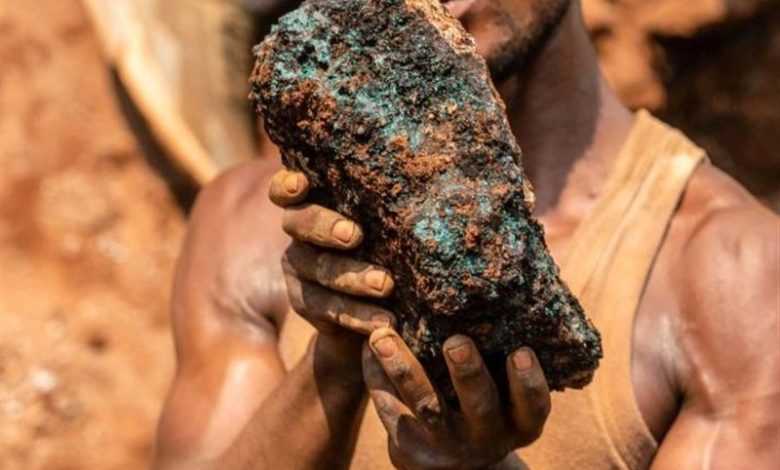
These reports indicate that the DRC is known as one of the world’s major holders of significant reserves of cobalt and copper—both of which play a vital role in the production of solar panels, electric vehicle batteries, and wind turbines. For example, according to the United Nations Environment Programme (UNEP), the country possesses 70 percent of the world’s cobalt reserves, amounting to approximately 3.5 million tons of the mineral.
At the same time, a noteworthy point regarding the Congolese president’s attendance at the summit is that officials from the U.S. government and Kinshasa have, in recent months, been engaged in consultations over the details of a strategic partnership in the field of minerals, particularly critical and strategic ones such as cobalt and copper in the Congo.
Some senior organizers of the summit, who declined to be named in the report, emphasized an important aspect of the new U.S. mineral policies aimed at achieving dominance over mineral resources across the African continent: ministers from Guinea, Kenya, and Zambia are also included in the guest list of the summit. Each of these countries holds a notable position in the production of key mineral resources.
A primary example supporting this claim is the recent statement by U.S. Secretary of State Marco Rubio, who wrote on the social media platform X that, following previous government initiatives in the field of critical minerals—including the “Mineral Security Partnership”—the upcoming summit and engagement with influential mineral-producing countries will take shape.
On the other hand, Zainab Usman, Senior Research Fellow at Columbia University’s Center on Global Energy Policy, while confirming the importance of countries gaining access to critical and strategic mineral resources for the future of related industries, stated: “These initiatives in the United States began with extensive publicity, but many projects in the country are now in a state of uncertainty.”
Thus, it is clear that critical and strategic minerals—essential for powering many of the world’s most important advanced technologies, from electric vehicle batteries to artificial intelligence data centers—are of very serious importance to the Trump administration. At the same time, the administration has been heavily planning to secure these resources and to push China, its main rival, away from access to these metals.
Usman also points out that the high importance of securing minerals required for advanced and emerging technologies was such that they were largely excluded from Donald Trump’s tariff policies since the beginning of his administration, and that the government has proceeded cautiously and with a clear plan regarding tariffs in this sector.
According to the senior researcher at Columbia University’s Center on Global Energy Policy, on the other side of the equation, the main challenge for African governments in negotiations with the U.S. lies in the fact that these countries prefer to move beyond exporting raw minerals and instead seek to produce materials and products with higher added value.
She also believes that many mineral-rich countries are now seeking economic support to move up the value chain. At the same time, the United States under President Donald Trump—having apparently learned from China’s dominance in downstream processing—is exploring ways to secure its position in this segment of the supply chain, including through agreements that encourage American companies to invest.
In this context, Tony Carroll, a board member of the international mining conference “Mining Indaba,” which will also be held next month in Cape Town, stated: “This is a real opportunity.” He added: “If the United States is seeking exclusive supply, this policy must be accompanied by something—security support, infrastructure, or both—and that is where real negotiations take place.” / Tasnim