


People-Centered Economy (Part Ten)
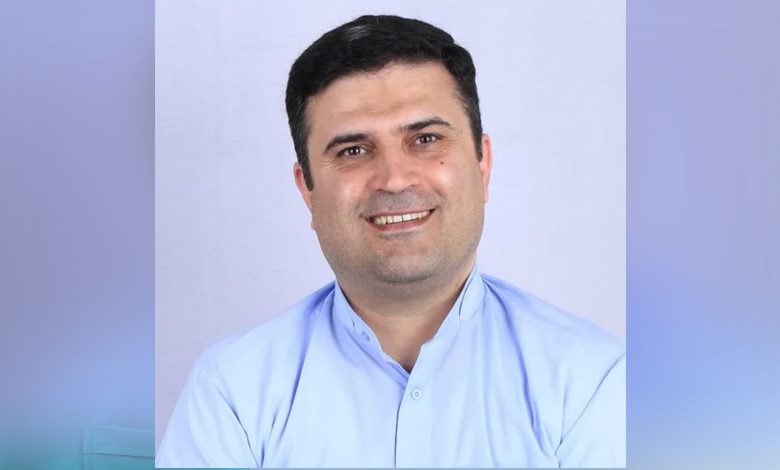
 Amirhossein Khodaei, Researcher
People-Centered Economy (14)
A Prerequisite for Removing the Preferential Exchange Rate: A People-Based Economy
The issue of the preferential exchange rate in Iran has for years been reduced to a simple binary choice:
either it must be abolished all at once, or preserved indefinitely.
Yet both economic experience and lessons from nature show that sustainable solutions usually emerge along a middle path—where gradual reform replaces abrupt decisions.
The main question is not whether the preferential exchange rate is good or bad;
the real question is which goods can be gradually produced domestically without placing direct pressure on the people.
The Failed Removal of the Preferential Exchange Rate
If the gradual removal of the preferential exchange rate is to become a genuine, sustainable, and socially defensible reform, it must be stated clearly that without a participatory and people-centered economy, such removal will be neither just nor successful.
The country’s core problem is neither a shortage of resources nor merely the failure of a specific policy; rather, it is an economy in which people have no real stake. Wherever people have been mere recipients rather than partners, even well-intentioned reforms have resulted in livelihood pressure, distrust, and the reproduction of rent-seeking.
The Central Issue: Removing the Preferential Exchange Rate in a Non-People-Centered Economy
The most serious problem with removing the preferential exchange rate is that this policy is usually implemented before the economy becomes people-centered. Under such conditions, the foreign-exchange subsidy is removed, while monopolies, rent-seeking, imbalanced power structures, and closed production and distribution chains remain intact.
The outcome is clear: direct pressure on lower-income deciles, without providing them any opportunity for compensation through production or participation. Therefore, the first priority is not removing the exchange rate subsidy, but redefining the role of people in the economy.
Core Emphasis: A Participatory Economy as a Prerequisite for Gradual Removal
A participatory and people-based economy means that citizens, cooperatives, funds, families, and local communities play a real role in production, distribution, investment, and even economic decision-making. In such an economy, the preferential exchange rate is no longer a crisis-control tool; instead, it is gradually replaced by people’s share in production and value creation. The removal of the preferential exchange rate becomes low-cost and low-risk only when people have already gained the capacity to stand on their own feet.
Structural Barriers to People-Centering the Economy
The first barrier is the concentration of economic power within limited circles of import, distribution, and finance—circles that have benefited the most from the preferential exchange rate.
The second barrier is the weakness of genuine participatory institutions; many cooperatives, funds, and foundations are either ineffective or have deviated from their original mission.
The third barrier is policy uncertainty and instability, which makes public participation—especially for lower-income groups—highly risky.
The fourth barrier is the lack of insurance, guarantees, and support networks for small-scale, people-led economic activities.
The Participation Ladder: The Real Path to Empowering People
People-centering the economy is not a sudden leap; it is a gradual process that can be explained through the “participation ladder model.”
At the first step, the government must safeguard livelihood security so that people, out of fear of falling, do not oppose any reform.
At the second step, people enter low-risk economic participation through micro-funds, cooperatives, and small-scale projects.
At the third step, people’s share in production, value chains, and trade becomes institutionalized.
At the final step, people become not only producers, but also active claimants and partners in economic decision-making.
The removal of the preferential exchange rate must occur simultaneously with society’s ascent up this ladder.
Social Priority: Exiting Lower-Income Deciles from the Subsidy Cycle
The main objective of this program should be empowerment rather than subsidy payments. Young couples, families with children, retirees, female-headed or poorly supervised households, individuals without insurance coverage, and communities supported by the Relief Committee and the Welfare Organization must be purposefully included in participatory schemes. This inclusion should take the form of micro-ownership, cooperative shares, participation in local funds, and productive projects—not merely the receipt of cash assistance.
The Vital Role of Cooperative Funds and Foundations
Local, regional, and thematic funds are the backbone of a people-based economy. The experience of rural micro-funds and funds for female-headed households in Iran shows that when local management, transparency, and limited risk are present, sustainable participation emerges.
In Germany, cooperative foundations have kept local economies alive.
In Norway, participatory funds in aquaculture have distributed profits within local communities.
In China, rural funds have become a bridge between the government and the people.
Without these funds, removing the preferential exchange rate means abandoning people in an unequal market.
In Norway, people-based economic models in sectors such as aquaculture enabled the government to focus on smart regulation instead of artificial price controls. Local participation reduced hidden costs and lowered the need for direct subsidies.
Why Does the Sudden Removal of the Preferential Exchange Rate Fail?
When the economy is not people-centered:
• Removing the preferential exchange rate means directly transferring pressure to the people
• Small producers lack the capacity to absorb the shock
• Consumers face sudden price surges
But in a people-based economy:
• Gradual growth of domestic production neutralizes the impact of subsidy removal
• People become partners in reform rather than its victims
• Public trust is preserved
The Direct Relationship Between a People-Based Economy and Exchange Rate Reform
This relationship can be stated simply:
the stronger the participatory economy, the less the need for a preferential exchange rate;
and the faster the preferential exchange rate is removed without a people-based economy, the greater the social pressure becomes.
Therefore, people-centering the economy is not a consequence of removing the preferential exchange rate, but a prerequisite for making it possible.
⸻
Items That Can Be Gradually Domesticized Without Immediate Removal
The reality is that not all goods covered by the preferential exchange rate are the same. Some of them are inherently dependent on imports, and removing support for them could harm food security and public health. However, in contrast, there is a group of items that have real capacity for gradual domestic production.
⸻
Livestock and Agricultural Inputs
Animal feed corn, barley, soybean meal, oilseeds such as canola and sunflower, the substitution of low-water crops such as grain and forage sorghum, triticale, ear corn, forage beet, vetch, and forage chickpeas, as well as basic chemical fertilizers, are at the top of this list.
The main obstacle in this area is neither technical knowledge nor farmers’ capacity; rather, it is policy instability and the low cost of imports supported by the preferential exchange rate—an arrangement backed by powerful economic stakeholders.
As long as certain interest groups view the preferential exchange rate as a tool for their own benefit, domestic production will not be given the opportunity to grow.
⸻
Standard Infant Formula
The majority of infant formula consumed in the country (standard types, not specialized or disease-related formulas) is technically feasible to produce domestically.
By guaranteeing the market and supporting families, dependence can be reduced over a few years without causing social or economic pressure.
⸻
General Medicines and Simple Pharmaceutical Raw Materials
Specialized medicines and treatments for rare diseases require stable imports; however, general medicines and basic pharmaceutical raw materials can be gradually produced domestically.
The experience of other countries has shown that focusing on active ingredients and general medicines provides a reliable foundation for gradual self-sufficiency.
The Missing Link: Production, Land, and People
The production of livestock inputs and essential goods without attention to land is incomplete and unsustainable.
Iran has approximately 85 million hectares of rangelands, more than half of which (40–45 million hectares) are in poor or very poor condition.
In addition, there are around 30–32 million hectares of deserts and desertified lands, a large portion of which is comparable to Africa’s Green Belt and is capable of restoration.
If land restoration and desertification control proceed with the participation of people and local communities, both the capacity for livestock feed production will increase and economic benefits will be removed from the monopoly of powerful stakeholders and placed in the hands of the people.
The African Model (Ethiopia and Niger):
Delegating land management to local communities has resulted in reduced imports, increased livestock feed production, and ultimately the restoration of vegetation cover.
⸻
Germany and the Smart Inclusion of the Powerful: People-Centering the Economy Instead of Elimination
One of the world’s successful models in this field is the German economy. Germany has shown that even in industries requiring government support, it is possible—through backing small industries and encouraging public participation—to remove the economy from the monopoly of large corporations and powerful stakeholders and return it to the people.
In Germany, instead of pursuing a policy of eliminating economic elites and powerful actors, a policy of engaging them was adopted—on the condition that, in a supportive role, they strengthen small industries and the people-centered economy. This approach removed the barriers created by powerful actors and led them to support small industries and reforms, rather than resist them.
In Iran, it is also possible to:
• Strengthen small and medium agricultural and livestock industries
• Entrust the production of livestock inputs, infant formula, and general medicines to local communities and small-scale units
• Distribute economic power and profits among the people through support mechanisms, instead of maintaining monopolies by economic stakeholders
This approach not only reduces dependence on imports and the preferential exchange rate, but also ensures economic sustainability, rural livelihoods, and employment.
⸻
Using Cooperative Digital Platforms (Without Platform Monopoly)
⸻
Conclusion
Even with the removal of the preferential exchange rate, consumer prices will not surge, because hidden costs will have been eliminated.
3. Financial Dimension: Replacing Cheap Dollars with People’s Capital
Problem with the Preferential Exchange Rate:Cheap dollars serve as a tool for non-transparent financing.
Participatory Solution: • Local and regional investment funds • Crowdfunding (collecting small-scale public capital) • Participation of municipalities, cooperatives, and local private sectors
Result:Producers are connected to social capital instead of being dependent on foreign currency.
⸻
4. Consumption Dimension: Direct Support for People Instead of Importers
Problem with the Preferential Exchange Rate:Subsidies reach goods, not people.
People-Based Solution: • Targeted and smart subsidies to households • Replacing subsidies and ration cards with justice shares, giving people a stake and partnership in the economy • Coupons or purchase credits for essential goods • Linking consumer subsidies to domestic production
Result:Removing the preferential exchange rate does not create livelihood pressure because purchasing power is maintained.
⸻
5. Land and Natural Resources Dimension: Returning Production to the Ecosystem
Problem with the Preferential Exchange Rate:Dependence on imports has intensified land degradation.
Participatory Solution: • Delegating the management of rangelands (80 million unused hectares) and water resources to local communities • Linking land restoration with livestock input production • Developing low-water aquaculture or recirculating water systems near rivers, sea cages, and smart aquaculture with public participation
Result:Land becomes productive and the need for subsidized imports is reduced.
⸻
6. Governance Dimension: Changing the Role of Government
Problem with the Preferential Exchange Rate:The government becomes involved in currency allocation and price control.
People-Centered Solution: • Transforming the government from a currency distributor to a market regulator • Increasing transparency in the import-to-consumption chain • Engaging local institutions in decision-making
Result:Gradual removal of the preferential exchange rate is accompanied by reduced corruption and increased public trust.
7. Social Dimension: Transforming People from Victims into Partners in Reform
Problem with the Preferential Exchange Rate:Sudden removal creates social distrust.
People-Based Economy Solution: • Participation of people in local decision-making • Transparent communication about the reform process • Sharing the benefits of domestic production with society
Result:People support the reform instead of resisting it.
⸻
8. Regional Dimension: Balanced Development Instead of Concentrated Imports
Problem with the Preferential Exchange Rate:Imports are concentrated in a few specific points in the country.
Participatory Solution: • Development of regional production clusters • Linking production in each region to local comparative advantages • Establishing cooperative networks between provinces
Result:Reduces pressure on large cities and increases the resilience of the national economy.
⸻
Removing the Preferential Exchange Rate Without Public Participation is Neither Reform Nor Sustainable
If we want to correctly understand the relationship between a participatory, people-centered economy and the gradual removal of the preferential exchange rate, we must first discard an old misunderstanding:The preferential exchange rate is not an economic policy; it has been a temporary substitute for the absence of a people-centered economy. Wherever production and distribution were monopolized by a few groups, the government was forced to use cheap dollars to prevent social pressure. Therefore, gradual removal of the preferential exchange rate without people-centered economic participation is neither reform nor sustainable.
⸻
Why Did the Preferential Exchange Rate Arise?
The preferential exchange rate became dominant when: • Domestic production was controlled by large, non-competitive units • The supply chain from land and production to consumption was not people-centered • The main profits went to importers, not producers or consumers
In these circumstances, instead of structural reform, the government relied on cheap imports to control prices. This policy created short-term calm but weakened domestic production and increased dependency in the long term.
Participatory Economy: A Prerequisite for Shock-Free Removal
A participatory economy means that people, cooperatives, small units, and local communities are the main actors in production and distribution, not mere spectators of the market. In such an economy: • The real cost of production is manageable and controllable • Profits are not accumulated in a single point • Price shocks are absorbed more effectively
For this reason, countries with strong participatory economies have less need for currency and price subsidies.
⸻
What Does Global Experience Say?
In Germany, family businesses and cooperatives form the backbone of the economy. Instead of cheapening imports, the government has made domestic production competitive through market guarantees and small-scale financing. The result is that support is gradually reduced without social unrest.
In China, gradual removal of subsidies coincided with transferring production to villages and local cooperatives. People not only tolerated the shock but became agents in reducing costs themselves.
⸻
Principle of Low Risk: Condition for Real Participation
People, especially low-income groups, do not engage in high-risk activities. Therefore, people-driven projects must be: • Small-scale • Market-guaranteed • Insured for production and prices • Backed by guarantee funds
Bank facilities should be guarantee-based and participation-based instead of collateral-based.
⸻
Successful Domestic and International Models: Comparative Overview
In Iran, successful agricultural cooperatives, some local industrial clusters, and knowledge-based companies have shown that real participation is achievable.
In Germany, family businesses and cooperatives grew without subsidy shocks.In China, subsidies were removed only after people-centered production was established.In Norway, participatory economy reduced the need for artificial price controls.
The common feature in all these countries: people were empowered before the removal of support.
⸻
Rent, Mafia, and Economic Powers
The reality is that powerful economic networks may resist the people-centered economy. However, experience shows that direct confrontation often fails. The solution is intelligent inclusion: allow profit and activity on the condition of involving people, cooperatives, and small-scale industries in the trade chain. In this way, rents are reduced and benefits are distributed.
⸻
Knowledge-Based Economy: High Returns with Low Cost
A knowledge-based economy is one of the lowest-risk pathways for replacing subsidized imports. Commercialization of localized technologies in food, medicine, energy, and water can reduce currency dependency. Supporting the transfer of technology domestically, not just for internal consumption but also to become a reference in certain advanced technologies, should be prioritized.
Taxation: A Tool to Regulate Justice
Taxes should be used against rent-seeking, speculation, monopolies, and profiteering, not against people-centered production.Targeted exemptions for cooperatives and participatory projects, alongside heavy taxes on unproductive activities, can provide the necessary resources for the gradual removal of the preferential exchange rate.
⸻
Advocacy and Public Movement
No reform succeeds without public demand.Universities, professors, media, civic organizations, local councils, and even cooperatives themselves must have a common demand: • People’s share in the economy, not temporary subsidies.
This advocacy must be continuous, documented, and accompanied by proposed solutions.
⸻
Comprehensive Proposed Program
Short-term: • Preserve livelihood support • Establish and strengthen local funds • Transparency in currency allocation • Start low-risk participatory projects
Medium-term: • Gradual reduction of the preferential exchange rate • Expansion of cooperatives • Technology transfer • Targeted participation of low-income groups
Long-term: • Complete removal of the preferential exchange rate • Sustainable people-centered economy • Structural poverty reduction • Increased national economic resilience
⸻
Institutional Responsibility Sharing • Government: Regulator and facilitator, not distributor of rents • Parliament: Anti-monopoly legislation and cooperative support • Banks: Small-scale, guarantee-based, and insurance-based financing • Universities: Linking knowledge, technology, and people-centered production • Support Institutions: Transform beneficiaries into economic partners Transition from a Monopolistic Economy to a Participatory Economy
In order for the gradual removal of the preferential exchange rate not to turn into a social and economic crisis, it must inevitably be seen within a larger project: the transition from an import-oriented and monopolistic economy to a participatory and people-centered economy.Below, I examine diverse strategies for people-centered economic reform from various dimensions, precisely in connection with currency reform, in a way that is meaningful for policymakers and understandable for the general public.
⸻
1. Production Dimension: From Subsidized Imports to Participatory Production
Problem of preferential currency:Cheap currency has made imports profitable and domestic production high-risk.
People-centered solution: • Develop production cooperatives in agriculture, livestock, and aquaculture • Gradually transfer the production of goods receiving preferential currency to small and local units • Restore tens of millions of hectares of unused pastures • Desertification removal of tens of millions of hectares • Guarantee government purchase during the transition period, instead of supporting importers
Result:With increased domestic supply, the removal of the preferential currency will gradually be neutralized in final prices.
⸻
2. Distribution Dimension: Reducing Middlemen
Problem of preferential currency:A large portion of the currency subsidy is absorbed in intermediate distribution chains.
People-centered solution: • Strengthen local and regional distribution cooperatives • Impose taxes on intermediaries • Create direct producer-to-consumer markets
⸻
Simple Medical Consumables
Examples: syringes, gloves, hospital consumable setsThese items have repeatedly been produced in Iran, but fluctuations in currency policy have stalled their production.
Key point:Supporting these items is directly related to public health but does not require constant imports.
⸻
Aquaculture Feed
Concentrates and fish/shrimp feed absorb part of the preferential currency, while: • Their raw materials (corn, soy, agricultural residues) can be produced domestically • Iran has high potential for cage and marine aquaculture along rivers and northern and southern coasts, using water efficiently and reducing production costs • Domestic feed production creates local employment
Foreign example:Vietnam and Indonesia reduced currency dependency and boosted exports by developing domestic aquaculture feed production.
⸻
Iran, if it wants to overcome the deadlock of preferential currency, water scarcity, and livelihood pressures, needs above all a shift in perspective—a change that sees the economy not from above or behind a desk, but from the ground, water, and people.One of the clearest examples of this shift is participatory aquaculture with optimized water use along rivers and coasts of the north and south—a path that has both global experience and compatibility with Iran’s realities.
For years, the economic debate in Iran has been limited to exhausting dichotomies:
• Either imports with preferential currency, or sudden removal of subsidies;
• Either state production, or complete market liberalization.
While the experience of successful countries shows that sustainable solutions usually emerge between these two poles; where the government plays the role of supporter and regulator, and the people are the main actors in production.
⸻
Water exists, if used properly
Contrary to common perception, Iran’s main problem is not “lack of water,” but rather how water is used.
Aquaculture with recirculating water systems, which purify and reuse water, has shown that sustainable and economically viable production is possible with very little water.
These methods can be implemented along rivers, coasts, and even near cities, without putting direct pressure on natural resources.
On the northern coasts, this model can revitalize coastal villages that have long suffered from overfishing and unemployment.
In the south, participatory aquaculture (in cages) can both strengthen food security and support non-oil exports, without requiring large and costly government projects.
⸻
People-based economy; an experience proven worldwide
In Germany, the backbone of the economy is not giant corporations, but small and medium family businesses.
Instead of eliminating powerful actors, the government turned them into supporters of the people-centered production chain.
The result has been a sustainable economy resilient to crises.
In China, agriculture and aquaculture development began in villages.
The government guaranteed infrastructure and markets but entrusted production to the people.
Millions of small units gradually replaced imports, and food security improved without price shocks.
In Norway, aquaculture is not merely an industry; it is a governance model.
Local cooperatives, municipalities, and the central government jointly manage production.
Profit is not concentrated in one place but circulates in the local community.
In Vietnam, small-scale aquaculture with family participation transformed villages into export engines.
Even with limited resources, the country demonstrated that people’s participation can make them major players in the global market.
In Africa, countries like Ethiopia and Niger, by transferring land and water management to local communities, both curbed desertification and increased production.
People, when owners of the benefits, become guardians of the resources.
⸻
The missing link: currency, land, and people
Preferential currency becomes a problem when it is tied only to imports.
However, if the same support is gradually transferred to domestic producers and consumers, it can become an opportunity to rebuild the economy.
Participatory aquaculture stands exactly at this point:
• It is not fully dependent on imports;
• It does not require sudden removal of subsidies;
• It does not rely on heavy government projects.
This path allows people to have a real share in production, gives the land a chance to recover, and enables the government to reform support policies without shocks.
⸻
Vaccines and non-sensitive veterinary drugs
A significant portion of general veterinary vaccines and medicines are imported with preferential currency, while:
• Iran has a history of producing vaccines (e.g., Razi Institute)
• Many of these items do not require complex technology
• Cheap imports have made domestic production uneconomical
Domestic model:
Past experience in producing livestock vaccines has shown that with government purchase guarantees, domestic production becomes sustainable.
Strategic advantage:
Reducing feed input costs → Reducing price pressure on meat, poultry, and dairy products.
Preferential currency is neither an absolute evil nor a permanent blessing.
The correct strategy for items such as livestock feed inputs, regular infant formula, general medicines, and basic pharmaceutical raw materials is gradual replacement through domestic production, not sudden removal.
Gradual reform preserves public trust and reduces costs.
Land restoration and natural resource management are prerequisites for the success of any currency or production reform.
The experience of Iran and other countries shows that a large share of goods subject to preferential currency has not been produced domestically not due to lack of capability, but because of unstable policies and subsidized imports.
The solution is not the abrupt removal of support, but the smart transfer of support from imports to domestic production and consumers.
Wherever land, people, and production have been connected, currency reform has been possible without shock.
Key message:
The real question is no longer whether preferential currency should stay or go, but rather:
How can land, production, and livelihoods be saved simultaneously while reducing dependence on imports and foreign-exchange subsidies?
If the gradual removal of preferential currency is viewed merely as a financial decision, it will reach a dead end.
But if it is understood as part of a broader project of popularizing the economy, it can become a sustainable reform.
In this path, the government acts as a supporter and regulator, not a distributor of cheap dollars;
and people transform from passive consumers into producers and economic partners.
Ultimately, the key question is not when preferential currency should be removed;
the question is whether the economy has become people-centered enough to stand without it.
If removing preferential currency is treated solely as an exchange-rate decision, it will fail;
but if embedded in a comprehensive program of economic popularization, it becomes a historic opportunity.
Participatory economy:
• Spreads the cost of reform
• Absorbs shocks
• Preserves public trust
• And ultimately shows that the most sustainable alternative to cheap dollars is empowered people