

The Decline of U.S. Tourism
While the global tourism industry has returned to a growth trajectory after the shock of the COVID-19 pandemic, the United States experienced a reverse path in 2025.
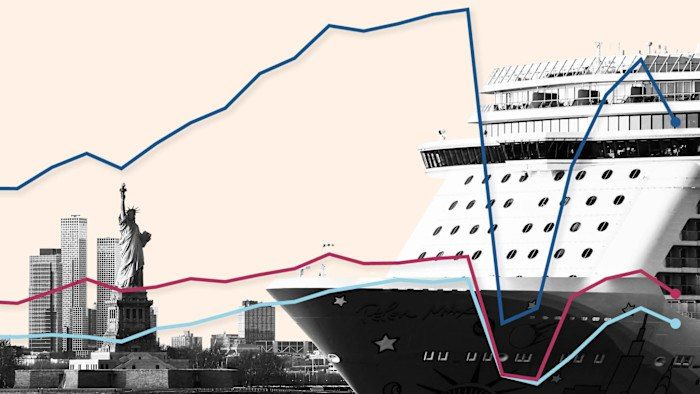
The latest data show that the number of inbound foreign tourists to the United States declined by 4.2 percent in the first year of Donald Trump’s second presidential term— a drop that stands in clear contrast to the 4 percent growth in international travel worldwide. This divergence is not merely a statistical fluctuation, but rather a sign of the direct impact of politics on economic and tourism flows.
International tourism is considered one of the stable sources of foreign exchange earnings, employment, and soft power for the U.S. economy. A reduction of more than 11 million foreign tourists translates into the loss of approximately $50 billion in revenue and hundreds of thousands of jobs. At a time when many advanced economies are competing to attract more tourists, the United States has effectively become the only major global destination that is losing its share of the international travel market.
The roots of this decline must be sought in a combination of the Trump administration’s immigration, security, and trade policies. The mix of travel bans, the suspension of visa issuance for dozens of countries, and increased security screenings has sent a message to the global travel market that the United States is no longer a destination characterized by easy access and open policies. This image—regardless of policymakers’ intentions—has quickly influenced the decisions of potential tourists and intensified a sense of uncertainty.
Meanwhile, reactions in key tourism markets have been notable. A decline of more than 10 percent in travel by Canadians to the United States, a drop in arrivals from Europe and the Middle East, and even explicit statements by some foreign citizens about avoiding travel to the U.S. all indicate that the issue is not limited to administrative barriers, but is closely tied to political and social perceptions. According to the Financial Times, analysts have compared this trend to Britain’s experience after Brexit, where politics led to a weakening of travel and trade ties.
The economic consequences of this trend have quickly become visible in related sectors. For the first time since the peak of the pandemic, the U.S. hotel industry has faced a decline in revenue per available room, and airlines—especially European carriers—have reported reduced demand on profitable North American routes. Even giants such as Disney have warned of “headwinds” in international visitation to U.S. theme parks.
Looking ahead, the 2026 World Cup could represent an exceptional opportunity to repair this image. This event could potentially serve as a major showcase for reintroducing the United States to the world.
However, experts warn that if the political and security environment does not change, this opportunity itself could turn into a costly negative advertisement—an outcome that would cast a shadow not only over tourism, but also over America’s long-term position in the global economy.
The experience of 2025 is a reminder that in today’s interconnected world, domestic policies can have consequences beyond national borders and can severely affect even an apparently non-political industry such as tourism.