

A New Chapter in Japanese Politics
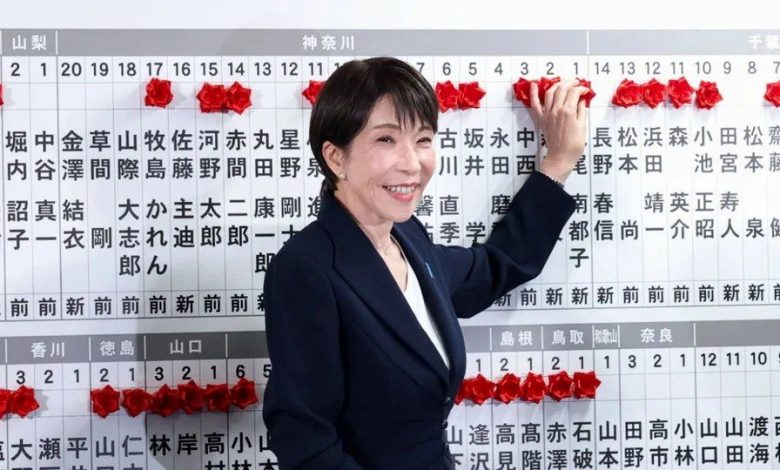
The landslide victory of Japan’s Liberal Democratic Party (LDP) in the snap election for the House of Representatives marks a turning point in the country’s politics—an election that not only consolidated Prime Minister Sanae Takaichi’s position but also ushered in the party’s unchallenged return to political hegemony.
Securing a two-thirds majority in the lower house—without critical reliance on a coalition partner—grants Takaichi a level of authority that few Japanese prime ministers have enjoyed in recent decades.
This outcome reflects less the party’s popularity than the prime minister’s “personal political capital.” As the first woman to hold the office, Takaichi has succeeded in projecting a new image of political leadership—one reinforced by a straightforward style, a middle-class background, and an active presence in both public and digital spheres. By contrast, the centrist opposition, formed through a hasty and ideologically fragmented coalition, failed to deliver a coherent message to voters and effectively ceded the political field.
From a structural perspective, the election signals the end of a period of political fragility for the ruling party. After successive scandals and the erosion of parliamentary majorities in recent years, the LDP had been reduced to a vulnerable governing position. It has now decisively regained the upper hand.
This comeback is not merely the result of weak rivals; it also reflects Japanese society’s preference for stability amid growing international turbulence—a period in which security and geopolitical concerns increasingly shape voter behavior.
From The Economist’s perspective, this victory could shape Japanese politics for years to come. With an overwhelming majority in the lower house, the government can override resistance from the upper house and effectively take control of the legislative process. This situation significantly expands Takaichi’s room for maneuver while pushing intra-party rivalries to the margins.
On the economic front, the prime minister has promised an “active yet responsible fiscal policy.” Temporary cuts to consumption taxes on food items and increased industrial investment are appealing to voters in the short term and may help stimulate demand. However, this approach sends mixed signals to the bond market and intensifies concerns over rising public debt—an issue that could unsettle investors.
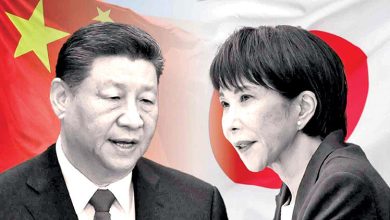
In the security domain, Takaichi has explicitly emphasized strengthening defense capabilities, ranging from easing arms exports to establishing new intelligence institutions. While this direction aligns with the evolving security environment of East Asia, it is also likely to heighten tensions with China. Consequently, domestic power consolidation does not necessarily translate into a smoother path for Japan on the international stage.
Japan’s recent election represents more than a simple electoral victory; it marks the beginning of a new chapter—one in which political power is more centralized, while economic and geopolitical risks are more pronounced than ever before.
—Donya-e Eqtesad