


The Yen Continues to Fall
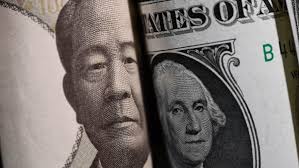
According to the news website Sedaye Sama, Japan’s economy, considered the world’s fourth-largest economy, is currently grappling with a serious crisis in the value of its national currency.
The yen’s exchange rate against the U.S. dollar has fallen to its lowest level in 40 years, turning the issue into one of the main challenges in the economic relations between Washington and Tokyo.
At the center of the crisis is a serious disagreement over monetary policy between Scott Bessent, the U.S. Treasury Secretary, and Sanae Takaichi, Japan’s prime minister. Over the past year, Bessent has repeatedly emphasized the need for higher Japanese interest rates to strengthen the yen.
Takaichi, however, is concerned that a rapid increase in interest rates could weaken Japan’s economic growth, and therefore has resisted such pressure.
Although the Bank of Japan has raised interest rates twice since Takaichi took office in October last year, the rate remains at the very low level of 1%.
Meanwhile, interest rates in the United States have been set at between 3.5% and 3.75%. This significant gap has created a strong incentive for investors to borrow in yen at low interest rates and invest in higher-yielding U.S. assets to generate substantial profits.
This phenomenon, known as the carry trade, is itself one of the major factors weakening the yen.
In an unprecedented move, the United States intervened directly for the first time since 1998 to purchase yen and support its value. However, the intervention took place on the same day that the Bank of Japan decided to leave interest rates unchanged.
Peter Vassallo, an investment manager at BNP Paribas in the United States, described the move as a missed “golden opportunity,” because markets had been expecting an interest-rate increase, which could have helped strengthen the yen.
As a result, the U.S. intervention failed to halt the yen’s decline, and the Japanese currency once again fell below the level of 160 yen per dollar.
Experts believe that as long as the interest-rate gap between Japan and the United States remains this wide, pressure on the yen will continue, and government interventions will not be able to reverse the market trend.
But what makes this crisis particularly important for the United States is a more significant issue. Japan holds $1.143 trillion in U.S. Treasury securities, making it the largest foreign holder of these securities.
U.S. officials are deeply concerned that Japan may be forced to sell part of these Treasury holdings to obtain the funds needed to support the yen.
Such a move would push down the prices of U.S. Treasury bonds and increase their yields, thereby raising borrowing costs for the U.S. government, companies, and even ordinary Americans—from mortgages to auto and personal loans.
According to Mostafa Fahmi, a senior investment expert, the United States has stepped in to protect itself and its bond market, because an outflow of Japanese capital from U.S. Treasury securities could act like a “bomb” posing a serious threat to the U.S. debt market.
At the same time, Takaichi is attempting to support Japan’s economic growth by keeping interest rates low. However, the weakening yen has increased the cost of imported goods, particularly oil and gas, raising the cost of living in Japan.
Japan imports most of the energy it needs and has therefore been heavily affected by these rising costs. This has also reduced the prime minister’s popularity in recent months.
Despite Bessent’s promises to cooperate with Japan to strengthen the yen, CNBC reported that the U.S. intervention failed to change the market trend.
Investors continue to seek higher returns in the United States, and this trend is likely to continue as long as the interest-rate gap between the two countries remains.
Markets are now closely watching the Bank of Japan’s next meeting in September, and many expect an interest-rate increase.
However, the yen’s fall below 160 per dollar shows that there is still a long road ahead before the currency can recover, while the effectiveness of government interventions in the short term appears limited and negligible.
— Fars News Agency